Serie A / Top Coaches
Rúben Amorim at AC Milan: the gamble reshaping San Siro
AC Milan have appointed Rúben Amorim as men's first-team head coach, a decision that now frames their identity, dressing room and transfer window.
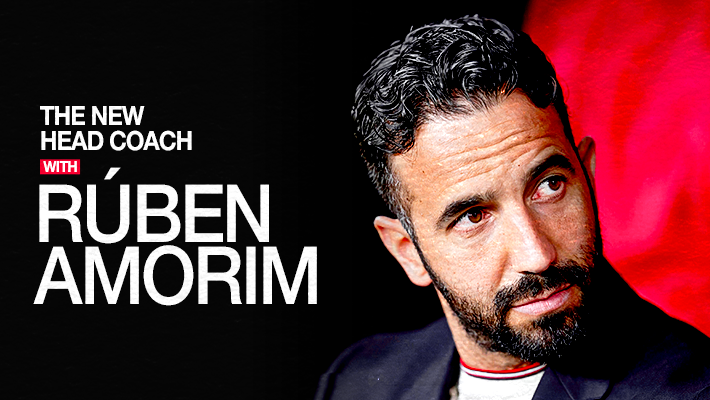
AC Milan have confirmed Rúben Amorim as head coach of the men's first team, and the appointment is bigger than a routine change of bench. Announced by the club and reported by BBC Sport, the Portuguese coach's arrival gives Milan a new way to frame the next stage of their project: a historic club wants a sharper, more demanding and more recognisable identity after a period in which sporting and institutional pressure have made every major decision feel heavier.
The central point is clear. This is no longer corridor talk. AC Milan's official announcement names Amorim as head coach of the men's first team, while BBC Sport places the move inside his recent career path, including the difficult English spell that preceded it. That double confirmation allows the story to be treated as fact without exaggerating what it does not yet prove. Milan have chosen a coach. They have not yet won the gamble attached to that choice.
That is exactly why the news matters. Amorim arrives with a reputation built on strong football ideas, the ability to impose a collective framework and a personality already exposed to elite-level scrutiny. He also arrives with questions, because European football does not give long grace periods to transitions that are badly managed. At Milan, every coach inherits huge history, impatient supporters and a league where the distance between renewal and doubt can shrink quickly.
Milan are looking for a clearer direction
AC Milan are never a neutral job for a coach. The role carries memory, aesthetic expectation and a demand for results. When the club changes coach, it is not merely replacing a technician. It is choosing a way to speak to the dressing room, the supporters, the transfer market and Italy's rivals. Amorim's appointment should therefore be read as a directional decision, not just a reaction to one sporting sequence.
Modern Milan live in a permanent tension between heritage and reconstruction. The name of the club imposes high ambition, but the sporting reality of European competition demands method. Amorim fits the idea of a coach who can create a recognisable structure. His reputation comes from building teams that are compact, aggressive at the right moments, ready to attack through rehearsed patterns and able to defend through collective discipline.
For Milan, that clarity can be valuable. Big clubs going through transition do not always lack talent. Sometimes they lack a shared language. A coach like Amorim can provide that language: who presses, who covers, who attacks space, who fixes the build-up, who accepts the work without the ball. Those details sound technical, but they become political in an elite dressing room.
The Amorim gamble after England
BBC Sport notes that this appointment comes months after the end of Amorim's time at Manchester United. The easy shortcut would be to reduce him to that spell. That would be too simple. A coach does not disappear because one experience became painful, especially when he has already shown elsewhere that he can build a serious project. Still, the English episode belongs to the context and Milan cannot pretend it does not exist.
Amorim's challenge will therefore be double. He must prove that his principles remain strong, while also showing that he has absorbed the lessons of an environment where media noise, urgency and internal imbalance can wear down a coach quickly. Serie A is not less demanding. It is demanding in a different way: more tactical in certain details, more patient in its traps and very hard on teams that lose their organisation between the lines.
This step can suit him if Milan give him the conditions for real work. Amorim is not merely a dressing-room manager brought in to calm a crisis. His value lies in construction. He needs training time, compatible profiles and a sporting direction that does not turn every setback into a referendum. The difficulty will be protecting the project without making it look as if standards have been lowered.
A dressing room to convince quickly
Amorim's first battle will not be the media one. It will be internal. A coach arriving with strong ideas must convince players that those ideas make them better, not simply more controlled. At Milan, where individual expectations are high, that phase is decisive. Senior players want to understand their role, younger players want to see a clear path and potential signings want to know what kind of football they are joining.
Amorim's style will require buy-in. It can demand coordinated effort, constant attention to distances between the lines and discipline in transition. That kind of football becomes powerful when the dressing room believes in it. It becomes vulnerable when a few players apply it halfway. The difference appears quickly, especially in Serie A, where opponents know how to invite pressure and then use the space left behind.
Milan will therefore need a precise preparation period. The club must avoid selling an abstract revolution. It has to build concrete reference points: the position of defenders in build-up, the height of the block, the role of wing-backs or full-backs depending on the system, the protection of midfield and the management of weaker spells in matches. Those points will reveal more about the start than presentation-day statements.
The transfer window becomes a coherence test
Appointing Amorim also changes the reading of Milan's transfer window. A coach with strong ideas cannot fairly be judged with a squad built for a different kind of football. That does not mean everything must be overturned. It means every decision has to match the plan. The profiles signed, kept or moved on must answer a simple question: can they serve the Milan Amorim wants to build?
The classic risk in this type of appointment is mixed logic. A club can announce an ambitious tactical project and then recruit according to market opportunity, without real alignment. Milan must avoid that trap. Amorim will need players who can understand multiple roles, handle intensity without the ball and remain clean in the first or second pass depending on the zone. The window should not only add quality. It must add compatibility.
That coherence will also matter for the message sent to Serie A. Inter, Juventus, Napoli, Roma and the rest will not look only at the name of the new coach. They will watch how quickly Milan become identifiable. A club that knows exactly what it wants to do commands more respect than one collecting interesting players without a clear hierarchy.
What the appointment says about Serie A
Amorim's arrival also underlines that Serie A remains a league capable of attracting coaches with a strong identity. Italy is not simply a tactical refuge or a place for reconstruction. It is a demanding laboratory, where ideas are tested every week by opponents able to change plan, break rhythm and create uncomfortable games.
For Amorim, that dimension can become an opportunity. Serie A offers a context in which tactical detail is understood, debated and often decisive. If he succeeds, his personal restart will not only be a narrative comeback. It will prove that his methods can travel, adapt and survive inside a major club under pressure. For Milan, the reward would be bigger still: recovering a football identity capable of supporting domestic and European ambition.
Caution remains necessary. An appointment guarantees nothing. Ideas must meet players, calendar pressure, dressing-room health and institutional patience. But Milan have chosen a strong direction. Amorim receives a huge bench, with all the prestige and danger it contains. The next phase will show whether this meeting becomes a new cycle or simply another promise in a game that rarely leaves promises alone for long.