Football business
Manchester United on Prime Video: why All or Nothing matters
Manchester United have confirmed an All or Nothing series on Prime Video. Beyond the documentary, the club is exposing its season, image and global strategy.
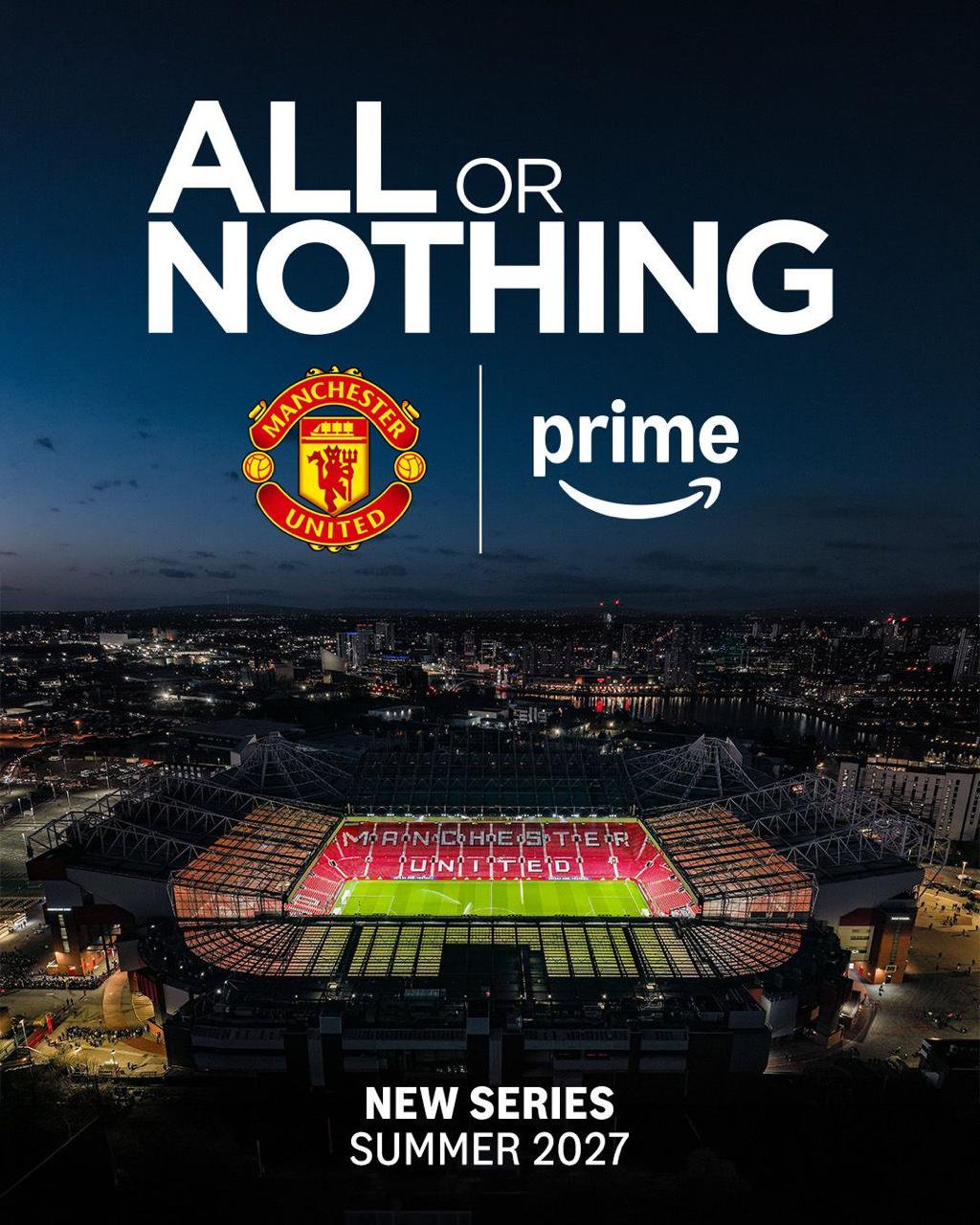
Manchester United are opening their doors to Amazon Prime Video. The club have announced that the next All or Nothing series focused on United will follow the team through the 2026/27 season before a planned release in 2027. This is not just another entertainment note on the football calendar. It says a lot about where elite clubs now sit in the global game, where sporting pressure, brand strategy and behind-the-scenes access increasingly overlap.
The story is firm because it starts with Manchester United. The club presented the project as a Prime Video production built around the coming campaign, and the BBC also carried the news in its football coverage. That gives the item a clear status: United are not dealing with a leaked filming plan or a vague streaming rumour. The club have accepted a structured level of exposure through one of the most recognisable sports-documentary formats.
For a club of this size, the decision matters. Manchester United already operate under constant scrutiny, but a documentary camera creates another kind of narrative. Training ground moments, meetings, pressure points, dressing-room reactions and the rhythm of a full season can all be shaped later into a global story. Football remains the centre of the project, but the implications go well beyond matchday.
An official move into the club-media age
Manchester United have never lacked visibility. Old Trafford, European history, commercial power, a worldwide supporter base and a permanent place in English football debate have made the club one of the most watched institutions in sport. An All or Nothing series changes the texture of that visibility. It turns a campaign into a continuing story, with episodes, characters, tension and a streaming-friendly dramatic arc.
That is very different from normal coverage. A football outlet reports matches, asks questions after games, studies tactical decisions and follows dressing-room shifts from the outside. An authorised documentary steps closer to the guarded space. Even if the final edit is controlled and boundaries will clearly exist, the format promises a level of access that press conferences cannot provide.
This fits a wider movement in modern football. Major clubs no longer sell only tickets, shirts and broadcast rights. They want to own more of their story, reach international audiences who consume football through content as much as through live games, and extend emotional attachment beyond the fixture list. In that context, United become a sporting subject and an editorial product at the same time.
It is still important not to confuse access with absolute truth. A series of this kind can show a great deal, but it also chooses what to show. Supporters will see an angle, a mood, personalities and selected moments that have passed through a production process. The appeal lies in that tension: close enough to fascinate, curated enough to remain compatible with the image of a global club.
Why the timing gives the project extra weight
Following Manchester United during the 2026/27 season gives the project a particular charge. United are a club where every sporting cycle quickly becomes a referendum on direction, recruitment, team stability, playing identity and the ability to become a lasting reference point again in English and European football. A camera placed inside that environment is never filming a neutral season.
The documentary will not create pressure around United, but it will make parts of that pressure more visible. Every run of results, every major staff decision, every important injury, every change in dressing-room momentum can take on a second life when the series is released. Scenes that feel ordinary during the season can become decisive once edited, narrated and placed inside the wider story.
That is the risk a club accepts with this level of exposure. If the campaign goes well, the series can strengthen the idea of a group being built, a club becoming aligned and an identity returning. If the season is uneven, the same format can underline contradictions, frustrations and moments of tension. United understand the harshness of the English football media cycle well enough to know that image can turn quickly.
The timing will matter for players too. Some footballers benefit from this type of production because it shows leadership, standards or their relationship with the dressing room. Others can suffer when a normal reaction becomes a widely shared clip. Elite football is already a permanent theatre; the documentary adds a longer camera, a patient lens and then an edit that can harden public perception.
What Prime Video is buying in English football
Prime Video have not chosen Manchester United by accident. The United name carries an audience that very few clubs can match. Even during irregular seasons, the club remains a media magnet. It attracts loyalty and opposition in equal measure, which is valuable for a platform: supporters will watch through attachment, neutrals through curiosity, and rivals because the behind-the-scenes view is too tempting to ignore.
English football also gives this kind of content a strong setting. The Premier League is one of the most exported sports products in the world. Its stadiums, rivalries, coaches, owners, transfer markets and media intensity already provide ready-made narrative material. United add a recent history full of arguments about governance, sporting reconstruction and the relationship between past prestige and present demands.
For Amazon, the value goes beyond one documentary. A series like this places Prime Video inside a continuing football conversation. It is not limited to live rights or match highlights; it occupies the emotional space where supporters want to understand what happens behind closed doors. The platform is buying attention, but also a long-form story: a whole season becomes something to follow again.
For United, the equation is more delicate. The club gain another global shop window and can show parts of their operation that are rarely visible. But they also provide material that the public will interpret freely. A meeting, a team talk or a dressing-room scene can be read as evidence of seriousness or as a sign of disorder depending on how the sporting context develops. Editorial control does not fully control reception.
A transparency test for the dressing room and the hierarchy
The word transparency needs careful handling. A series produced with a club's agreement is not an independent audit. It is an authorised story. Even so, the prolonged presence of a production team forces an organisation to live with an extra layer of observation. Players know parts of their daily work may become public. The staff must manage concentration, confidentiality and internal communication.
In an elite dressing room, those details matter. Coaches need protected workspaces, players need areas where mistakes remain private, and executives must make sure communication does not start to overshadow football. The success of this project will depend on the line drawn between access and protection. Too little access would make the series cold. Too much could become a distraction.
Manchester United have the media experience to manage the project, but the size of the club makes every image more sensitive. Any moment of tension can travel far beyond the platform. A sentence, a look or a reaction can become shorthand on social media. The series will be produced to tell a story, but it will be consumed in an environment that cuts, comments and amplifies.
That is why the choice is fascinating. United are placing themselves in a position where the official narrative will meet public interpretation. The club can show its work, ambitions and personalities, but it cannot decide entirely what supporters will remember. For an institution that lives through image as well as results, this is an editorial bet as much as a commercial project.
Why the series can shape how United are remembered
The documentary will not directly change Manchester United's results. Matches will still depend on squad quality, tactical clarity, player fitness and the staff's ability to navigate difficult periods. But the series can influence how that season is remembered. It will attach faces and scenes to dynamics that supporters usually sense only from a distance.
If United build positive momentum, All or Nothing can become a symbolic reconstruction tool. Supporters may see the unseen work behind progress, the staff's method, the group's discipline and the daily pressure accepted by the players. At a club where memory carries enormous weight, showing the work can help reconnect the present with historical ambition.
If the campaign is more complicated, the same device can have the opposite effect. Doubt, tense meetings or individual frustration will be watched with a sharper reading. Football is unforgiving when stories are retold after the fact: an ordinary line in a good season can become a symbol in a bad one. United know that exposure does not always forgive.
That is why the announcement deserves more than a streaming brief. It touches the way major clubs want to exist: as teams, as global brands, as content producers and as institutions trying to control their story in an environment that can never be fully controlled. Manchester United's Prime Video gamble will be followed on the pitch first, then replayed through the public eye in 2027.