World football
Mbappé puts France back at the centre of the Golden Boot race
Mbappé is moving in a long-distance duel with Messi, but France must turn his individual threat into collective strength.
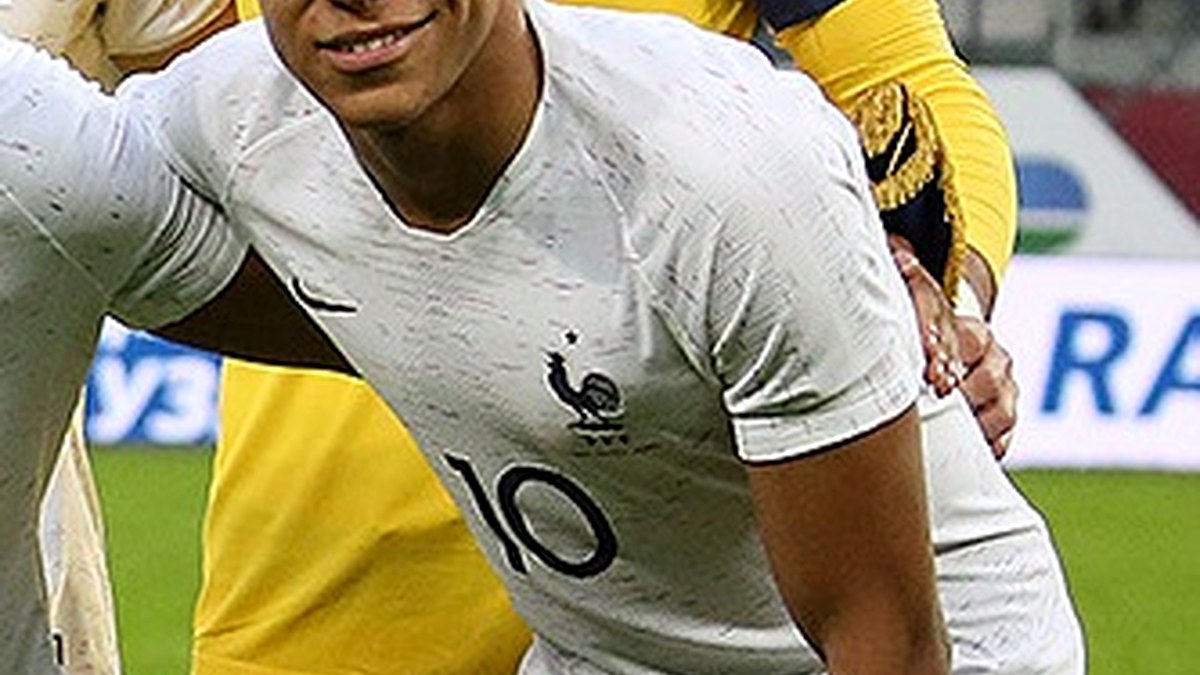
Kylian Mbappé has pushed France back into familiar territory: the place where collective ambition and individual legacy meet without becoming the same thing. The Guardian published a Sunday night piece built around his appetite in the Golden Boot race, with Lionel Messi as the natural point of comparison. BBC Sport, in its tournament records overview, also places Mbappé among the players capable of turning this World Cup into a personal landmark. For France, the issue is clear: the captain can chase records, but the team’s credibility will depend on how well it feeds that threat without becoming trapped by it.
Photo credit: Kirill Venediktov / Wikimedia Commons / CC BY-SA 3.0. Real Kylian Mbappé France photo, cropped by SokaIQ for editorial publication.
That tension makes the story compelling. Mbappé is not merely a star expected to perform. He is one of the few forwards whose every acceleration can change the reading of a match, a group and sometimes an entire tournament. When his name is placed next to Messi in a scoring race, the story becomes bigger than a column of numbers. It describes two ways of inhabiting a World Cup: the legacy of an Argentine monument and the urgency of a French leader still expanding his own legend.
The essential point, though, is balance. France cannot treat this symbolic duel as a separate contest. They have to fold it into their football. If Mbappé receives too deep, he carries too much of the progression. If he waits only for runs behind, France become predictable. If the team combines around him, draws defenders and releases space at the right moment, the threat becomes far harder to control. That is where the real value of his tournament will be decided.
Mbappé is not only in a scoring race
The Golden Boot race naturally draws attention because it offers a simple reading of a tournament: who is scoring, who is moving, who is imposing himself. But reducing Mbappé to that table would miss the bigger point. His influence comes as much from what he forces opponents to do as from what he produces himself. A defence that drops early gives French midfielders extra metres. A full-back who anticipates his speed can leave an inside lane. A compact block built to watch him may release the opposite side.
That invisible pressure is what separates great players in an international tournament. They can touch the ball rarely during one sequence and still remain the main problem. Mbappé forces teams to decide before the move even starts. Should they defend deep to protect the space behind? Should they jump to the passer to stop the release? Should they accept a risky individual duel? Every answer opens a different weakness.
In that context, the Messi comparison works as a prestige marker rather than a tactical copy. Messi influences matches through tempo control, final passes and the ability to appear between the lines. Mbappé attacks the fear of space more directly. Both can drive a scoring race, but they move defences in different ways. For France, that difference is an asset: their leader can punish a closed match without needing to control every minute of it.
France must feed their star without shrinking around him
The danger for France would be to confuse efficiency with dependence. Having Mbappé as a focal point is a huge advantage. Looking for him in predictable conditions can become a trap. The national teams that go deep in World Cups know how to vary the routes toward their major player. They can use him as finisher, decoy, accelerator and sometimes simply as a magnet who frees a teammate.
That nuance changes a lot. If France build several routes before finding him, the opponent has to defend multiple problems at the same time. Midfielders can draw pressure, full-backs can offer runs, nearby forwards can occupy centre-backs. Mbappé then becomes the visible edge of a wider mechanism. His individual quality remains decisive, but it is no longer isolated.
The Guardian’s piece highlights the player’s hunger, and that hunger matters in a tournament where major nations must send signals. But individual hunger has to remain connected to collective rhythm. A Mbappé who is too hurried can force actions. A Mbappé served at the right time can tilt a match in seconds. The difference lies in that attacking patience, in France’s ability to prepare the acceleration rather than demand it too soon.
The long-distance duel with Messi adds useful pressure
The long-distance duel with Messi adds an emotional layer to the tournament. It is not a direct meeting every matchday, but a constant comparison between two figures carrying very different stories. Messi plays with the weight of a career already fixed in global memory. Mbappé plays with the feeling that he can still widen his own place in that memory.
That pressure can be useful if it stays controlled. Great forwards often like visible markers. A ranking, a rival, a target: all of it can sharpen concentration. But the line is thin. An individual race can tempt a player to finish too early, shoot instead of pass or drift outside the collective frame. Mbappé’s maturity will also be measured there: keeping the hunger without losing clarity.
For France, the media duel also creates a narrative opportunity. It keeps Les Bleus close to the centre of global attention and confirms that their captain belongs to the group of players who define a competition. But teams do not win World Cups with a story alone. They win because that story rests on defensive balance, coherent circulation, involved substitutes and a careful management of weaker moments.
Records should not hide the tactical context
BBC Sport places Mbappé in a wider list of possible records, and that perspective is legitimate. World Cups leave lasting traces: goals, appearances, streaks, national marks and generational landmarks. But records rarely arrive in a vacuum. They emerge from a favourable tactical context, from a team that puts its player in the right areas and from a tournament calendar that allows rhythm to be maintained.
For Mbappé, the right areas are not only inside the box. They also exist in transition space, down the left channel, in diagonal runs and in the moments when a defence hesitates between stepping up and dropping back. France will need to recognise those windows precisely. A late pass turns a dangerous run into a closed duel. An early pass can isolate the forward. Good synchronisation, by contrast, makes his advantage almost impossible to cover.
The physical context will matter too. In a dense tournament, repeated sprints can weigh on explosive players. France will have to manage minutes, pressing sequences and the periods when Mbappé can stay higher without unbalancing the side. The Golden Boot is often won through finishing, but it is prepared through intelligent economy of effort.
A strong signal for France’s next step
The Guardian article lands at a useful moment: early enough to set the theme, late enough for the tournament to have shown its first patterns. Mbappé is expected to deliver, Messi remains a reference point and France know their ambitions will be read through the output of their captain. None of that guarantees a path. But it does provide a clear direction.
If France find the right balance, the individual race can become a collective engine. Mbappé draws the light, but he can also draw defenders, free teammates and force opponents to sit deeper than they would like. That double value is why his tournament matters so much. The question is not only how often he scores. It is whether his presence gives France an attack that is more varied, calmer and harder to read.
The coming matches will show whether this duel with Messi remains an attractive media frame or becomes one of the World Cup’s main threads. For now, it already has one virtue: it reminds everyone that great World Cups are often built around figures who can turn a match into an event. Mbappé is one of those players. France now have to make sure his individual story fully serves the collective one.