News
VAR Under Fire: How Controversial Decisions Continue to Overshadow Football
The Video Assistant Referee (VAR), intended to bring clarity to football, remains a lightning rod for controversy. From contentious Premier League calls to passionate fan reactions, the technology is under intense scrutiny, threatening to undermine the very essence of the beautiful game.
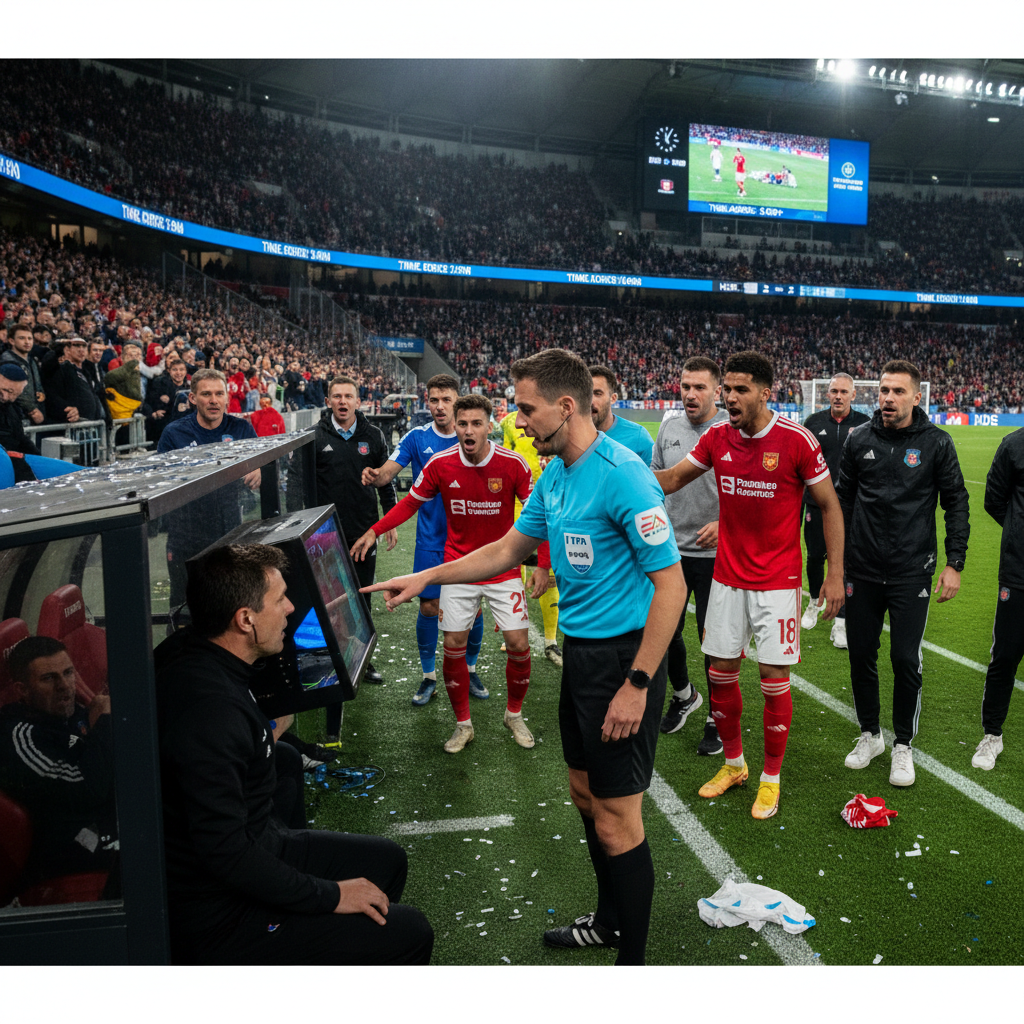
The introduction of the Video Assistant Referee (VAR) into football was heralded as a revolutionary step, promising to usher in an era of unparalleled fairness by eradicating clear and obvious errors that could determine the outcome of matches, seasons, and even careers. Yet, far from settling debates, VAR has become an endless source of contention, often overshadowing the on-field spectacle and fueling growing frustration among players, coaches, and fans alike. Recent incidents in the Premier League, notably the disputed penalty decision in Manchester City vs Wolves and Everton's disallowed goal against Aston Villa, are just the latest examples of a systemic issue that continues to divide the football world.
The Decisions That Spark Debate: When Interpretation Trumps Clarity
The case of the Manchester City versus Wolves match starkly highlighted the persistent complexity and subjectivity of officiating, even with technological assistance. The refusal to award a clear penalty to Manchester City, despite VAR intervention, drew the ire of Pep Guardiola and had direct consequences for referee Farai Hallam, who was subsequently dropped from the next round of fixtures. This situation is emblematic: VAR is meant to correct clear and obvious errors, but its application sometimes seems to introduce new ambiguities, transforming objective situations into matters of subjective interpretation. Fans are left questioning whether the technology truly serves sporting justice or merely adds another layer of complexity to rules already difficult to apply uniformly. Such moments of tension can significantly impact [football predictions](https://www.sokaiq.com/en/predictions) for upcoming games, as confidence in officiating wavers.
Another striking example occurred during the clash between Everton and Aston Villa, where an Everton goal was disallowed after a lengthy VAR review. Liverpool legend Peter Crouch's reaction, sharing his six-year-old son's disbelief at the decision, perfectly illustrates how these judgments can be perceived as illogical, even by the youngest of observers. These episodes erode public trust in the system and foster a feeling that the game is increasingly fragmented by endless interruptions and analyses. The spontaneity and fluidity of football, elements cherished by purists, are undermined by these prolonged stoppages, which break the rhythm and emotional flow of the match.
Eroding Trust and Visceral Reactions
The repeated occurrence of these controversies has a detrimental effect on the overall perception of VAR. Beyond the immediate impact on [match results](https://www.sokaiq.com/en/results), it is the credibility of officiating, and by extension, the integrity of football, that is at stake. Players, often the first to suffer the consequences of these decisions, express their frustration, while coaches find themselves having to manage the psychological impact on their teams. Supporters, for their part, voice their displeasure in various ways, from protest chants to more radical actions, such as the incident in Germany where a masked fan unplugged the VAR monitor mid-match. This act, though reprehensible, speaks volumes about a growing exasperation with technology perceived as flawed or misused.
This distrust is not without consequences for fan engagement. Football is a sport of passion, emotion, and decisive moments. When these moments are constantly questioned by technological interventions perceived as arbitrary, some of the magic fades. The question is no longer whether VAR is necessary, but how it can be improved to serve the game without distorting it. Discussions about VAR referee training, protocol clarity, and decision-making speed are more relevant than ever. For a deeper dive into tactical and regulatory issues, our [SokaIQ blog](https://www.sokaiq.com/en/blog) regularly features articles on these pressing topics.
Towards a Clearer Future for VAR?
Faced with this wave of criticism, football's governing bodies are under pressure to re-evaluate VAR's implementation. The initial objective was to reduce errors, not to create new controversies. Adjustments are necessary to ensure a more consistent and transparent application. This could involve better communication of decisions to the public, simplification of protocols, or even a re-evaluation of the types of situations where VAR should intervene. The stakes are high: reconciling technology with the spirit of the game, so that VAR becomes a helpful tool rather than a permanent source of discord. Without this, the debate over its utility will continue to dominate post-match conversations, diverting attention from what should be paramount: football itself. Punters building their [accas](https://www.sokaiq.com/en/accas) are also affected by the uncertainty these refereeing decisions can create, making match analysis even more complex.