World football
Messi, Mbappe and Kane turn the World Cup into a record chase
BBC Sport has put Messi, Mbappe, Kane, Ronaldo and Haaland at the centre of a World Cup record race that is already shaping the tournament.
The World Cup has already moved into record territory today. BBC Sport published a 21 June breakdown that captures the moment well: Lionel Messi, Kylian Mbappe, Harry Kane, Cristiano Ronaldo and Erling Haaland have all turned the early tournament into a historic race. The expanded format brings more matches, quicker second appearances and more openings for marks that once looked protected by the legends of previous eras. But the core of the story is still football. The elite forwards have started sharply, the major national teams need them immediately, and every upcoming fixture can shift another line in the competition's history.
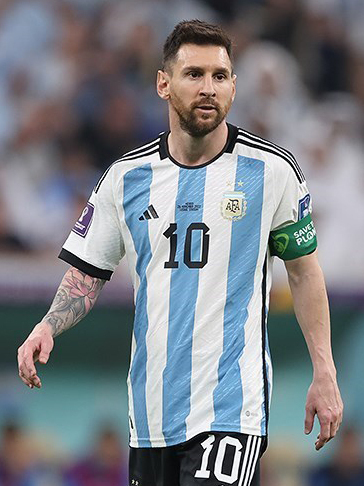
Photo credit: Hossein Zohrevand / Tasnim News Agency / Wikimedia Commons / CC BY 4.0. Real Lionel Messi photo with Argentina, cropped by SokaIQ for editorial publication.
BBC Sport's piece focuses on several fronts. Messi has reached the top level of the World Cup scoring list, with Miroslav Klose still the modern reference point. Mbappe is close enough to make the chase feel alive while already carrying another major mark for France. Kane is now beside the English benchmark represented by Gary Lineker in this tournament. Ronaldo keeps stretching his Portugal story through longevity. Haaland, meanwhile, gives Norway an immediate frame in a competition where his country does not carry the same statistical tradition as the biggest European or South American powers.
That density matters because it is not just a collection of numbers. It tells us how the first forty-eight-team World Cup exposes stars more quickly to decisive matches, varied opponents and constant narrative pressure. Records become a thread because they connect the calendar, the form of the teams and the status of players who can shape more than one generation.
Messi and Mbappe pull the scoring race into a new era
The most symbolic chase remains the all-time World Cup scoring race. BBC Sport notes that Messi has moved level with Klose after Argentina's powerful start. The detail matters because it places Messi in a double frame: he is already one of the most decorated players in football history, yet he can still turn a final international campaign into a standalone statistical mark. In a competition often judged through a few decisive actions, that sort of threshold adds weight to every touch near goal.
Mbappe makes the situation even more compelling. The France captain is described by BBC Sport as his country's all-time leading scorer, and his World Cup rhythm keeps him within sight of the biggest names. The issue is not only who finishes above whom on a table. It is about the speed at which Mbappe keeps stacking major tournament moments, his ability to repeat elite output, and the way France still arrange their attack around his bursts.
That indirect Messi-Mbappe duel gives the tournament a clear generational story. Messi represents duration, precision in historic moments and the memory of a vast international career. Mbappe represents continuity, explosion and the chance to move reference points before the final phase of his own career has even begun. For a World Cup that is already looking for defining images, that tension is enough to keep global attention high.
Kane turns England's debate into something measurable
Harry Kane brings a different kind of historic weight. BBC Sport underlines that he is pushing against England's World Cup scoring reference, with Lineker as the comparison. The timing is important for England because Thomas Tuchel is looking for a side that can combine control, aggression and efficiency in the final third. Kane is not only the captain who finishes moves. He is the fixed point that gives meaning to the runs around him.
England's case becomes more concrete because Kane connects two registers. On one side, he remains the striker who can change a tight match without needing a stream of chances. On the other, his back-to-goal play, layoffs and reading of movement create air for Bellingham, the wide players and midfielders attacking space. If England want to go deep in this World Cup, the question is not only whether Kane breaks a national record. It is whether his current level lets the whole attacking structure breathe.
That makes England's next step more visible. Kane can move beyond a historic national mark, but he can also confirm that England are not just a team of names. Records, in his case, work as a test of collective maturity. When a captain is close to a national line, every Tuchel decision around him becomes sharper: crossing rhythm, presence in the box, second-ball quality and the management of quieter spells.
Ronaldo and Haaland frame the two ends of the story
Cristiano Ronaldo occupies the other end of the map. BBC Sport recalls that he has joined Messi among the players to appear at six World Cups and that another goal would strengthen a unique longevity case. Portugal no longer read Ronaldo in the same way they did at the start of his career, but his presence still changes the emotional gravity of a match. His international story has become a matter of memory, management and selected moments.
Haaland gives the tournament the opposite energy. His first World Cup campaign with Norway does not have the same historical depth, but it can create landmarks quickly. BBC Sport notes that he has already moved alongside Norway's leading mark in the competition. For a national team without the statistical inheritance of the regular winners, that is a huge accelerator. One player can alter how a country is seen internationally, create anticipation around every fixture and place a team inside a wider global conversation.
The simultaneous presence of Ronaldo and Haaland is therefore valuable for the tournament's narrative. One extends the age of icons, the other opens the page of a giant finally appearing on the world stage. Between them, the World Cup gains rare depth: records are not only viewed through the past, they are projected toward what the next decade could become.
The expanded format speeds up the chase
The forty-eight-team format does not create great players, but it changes how often they are exposed. More national teams, more crossed calendars and quicker second matches increase the chance of major names adding minutes and chances. BBC Sport describes a tournament that has already entered history only days after beginning. That feeling comes from the context as much as from individual performance.
The records still need nuance. A larger format can open more doors, but it guarantees nothing. Rotations, injuries, suspensions, heat management and tactical matchups can cut off a run just when it looks ready to grow. That uncertainty is exactly why the chase is compelling. Every threshold feels close, yet every national team must still protect its balance.
For supporters, the immediate benefit is clear. Every matchday adds another layer of meaning: one fixture can alter the scoring table, restart the Golden Boot race, install a new national leader or extend a career already outside normal comparison. The World Cup is therefore not limited to the result of the night. It is building memory in real time, and that memory already gives the 2026 edition a particular weight.
Why this sequence matters for the rest of the tournament
The strength of this moment is that several major stories are moving at once. Messi can separate himself at the top. Mbappe can close the gap at rare speed. Kane can deepen his England legacy. Ronaldo can extend a longevity record few players will ever approach. Haaland can give Norway a world-stage footprint almost immediately. That simultaneity creates a tension no organiser can manufacture.
It will also affect how the next matches are read. Opponents know these players carry not only a football threat but also a media and emotional weight. Defending Messi, Mbappe, Kane, Ronaldo or Haaland means defending against a team and a global story at the same time. Staffs will have to manage that pressure without allowing their plans to become individual chases.
The cleanest conclusion is simple: the 2026 World Cup has already found its historical spine. Numbers will never replace the game, but they give the tournament a structure. If the next matches confirm the trend described by BBC Sport today, this edition could be remembered as the one in which several generations of goalscorers shared the same stage at the same time, each with a record within striking distance.