FIFA / World Football
Canada vs Qatar: Kone injury shows the real price of a World Cup surge
Canada produced a powerful home World Cup night, but Ismael Kone's injury has already shifted the focus toward Jesse Marsch's midfield balance.
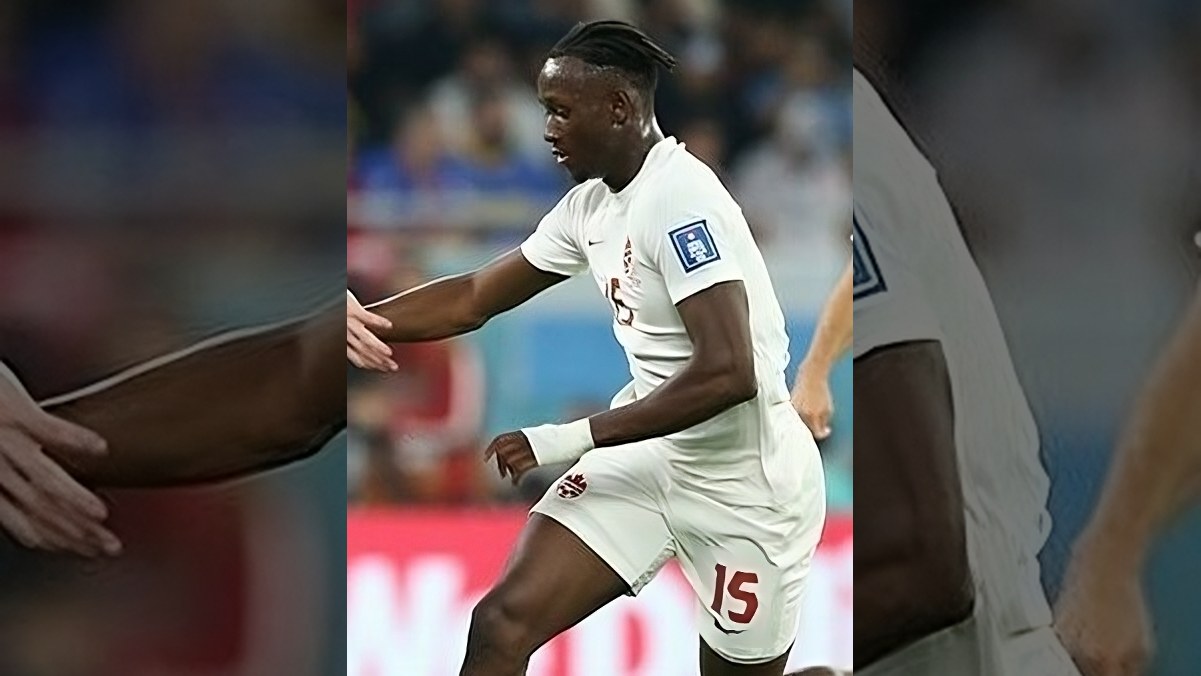
Canada lived one of those nights that can change the tone of a home World Cup, but not as a simple celebration. The BBC and The Guardian reported that Canada's emphatic win over Qatar in Vancouver was overshadowed by the injury to Ismael Kone, who was carried off after a challenge that immediately shifted attention from the result to the condition of the midfielder. Jesse Marsch then described him as a major loss for the group, a sign that the moment has already moved beyond the emotion of the match.
Photo credit: Hossein Zohrevand, Wikimedia Commons, Creative Commons Attribution 4.0 licence. Real photo of Ismael Kone, cropped and stored for SokaIQ editorial publication.
For Canada, the story of the night is therefore double. On one side, the co-hosts found the surge every home nation hopes to create in front of its public: aggression, verticality, sharp movement and the feeling that the competition can become a platform for national belief. On the other, Kone's injury was a cold reminder of tournament football's brutality. A team can produce its most convincing performance and still leave the stadium with a concern heavier than the celebration.
A historic night that became more complicated
Canada needed a foundational moment, and the setting gave them one. Playing a World Cup at home changes the relationship between a national team and its environment. Matches are no longer only sporting events; they become episodes of collective memory. In that frame, a dominant performance against Qatar should have offered a clean narrative: Canada are not only hosting the tournament, they intend to occupy it.
That narrative still exists, but it is no longer pure. Kone's injury introduced an emotional break. The celebrations continued, the crowd understood the scale of the result, but the face of the match changed. International football often lives through symbols, and this one was harsh: just as Canada appeared to be stepping into a wider public moment, one of their most important midfielders left the stage in uncertainty.
That mixture is exactly why the episode matters. An ambitious team has to hold both truths at once. It must recognise the strength of the message sent to the tournament, without hiding the possible cost of the night. In a World Cup, maturity is not only about winning. It is about absorbing what happens around the win.
Why Kone matters so much to Canada's balance
Ismael Kone is not just another name on a team sheet. In a side that wants to play quickly, press high in spells and attack space with conviction, his profile connects several needs. He can carry the ball, resist pressure, cover ground when the block stretches and give continuity to a possession game that might otherwise become too direct.
A possible absence would therefore not be measured only in individual quality. It would touch the structure. Canada can keep energy, dangerous forwards and a tournament rhythm, but they may have to redistribute responsibilities in midfield. Who secures the first pass under pressure? Who covers when a full-back advances? Who stops an opposition transition before it becomes an open run at the defence?
These questions are not theoretical. Major tournaments compress time. A staff does not have weeks to rebuild an equilibrium. It works between recovery, medical care, video sessions, short training windows and the urgency of the next game. If Kone misses time, Marsch will have to choose between a continuity solution that protects the original idea and a more cautious adaptation that gives the central lane extra security.
Marsch faces the most concrete test of the tournament
Jesse Marsch's Canada have been built around a clear intensity. The team wants to be proactive, make opponents run, provoke mistakes and give the crowd the feeling of front-foot football. That identity can be a huge force in a tournament played at home. It creates atmosphere, feeds the stands and gives players a powerful emotional frame.
But a major injury is exactly the kind of event that tests the strength of an identity. A team that depends only on adrenaline can lose its shape. A team with deeper principles can adjust roles without losing the thread. Canada's question is therefore clear: was the performance against Qatar only a collective explosion, or evidence of an organisation capable of surviving a blow?
Marsch will also have to manage the public language. Overdramatising the situation can weaken the group. Minimising the concern can sound disconnected. The right tone is to respect the human impact of the injury while making clear that the tournament continues. Inside a dressing room, that message can matter almost as much as the tactical adjustments. Players watch how a staff turns shock into shared responsibility.
Qatar, intensity and the reading of the match
Reducing the match to the injury would be unfair to what Canada produced with and without the ball. Their pressure clearly weighed on Qatar, whose evening became increasingly difficult as the game moved on. When a home team maintains that much speed and presence in dangerous zones, it forces the opponent to play with less comfort and less time.
That dominance gives Canada a base of confidence. It proves the group can impose tempo, convert stadium energy into concrete actions and push an opponent backwards. In a tournament where opening stretches can trap a team in doubt, that is valuable. The players now know their intensity can have an immediate effect on a World Cup match.
The risk now would be to misread that strength. Intensity must not become a rush forward. If the midfield has to be reshaped, Canada will need to choose more precisely when to press, when to slow the game and when to accept a tighter defensive block. The win showed power; the next step will show whether that power can become a sustainable method.
A win that opens the door, an injury that shows the price
Canada leave this night with a more visible status. The international audience saw a team capable of tilting a match with conviction. The home support received the moment it was waiting for: proof that the tournament can be more than a showcase. For a country trying to grow within world football, nights like this matter enormously.
But football rarely allows a story to stay that clean. Kone's injury places a shadow in the centre of the picture. It is a reminder that the strongest competitions are also decided by squad resilience, bench depth, careful medical judgement and the ability of players to gather around a team-mate who has been hurt.
That is why Canada's next step will be so revealing. If Kone returns quickly, the team will have survived a scare while keeping its momentum. If he has to miss upcoming matches, Marsch will have to prove Canada possess more than one explosive night: they need a side stable enough to turn a historic win into a tournament path. The World Cup has just reminded Canada that ambition is often measured by the way a team celebrates without forgetting how to repair.