Analysis
Zone 14: The Strategic Heart of Attacking Football
A deep dive into 'Zone 14', the critical area in front of the penalty box that separates elite attacking sides from the rest.
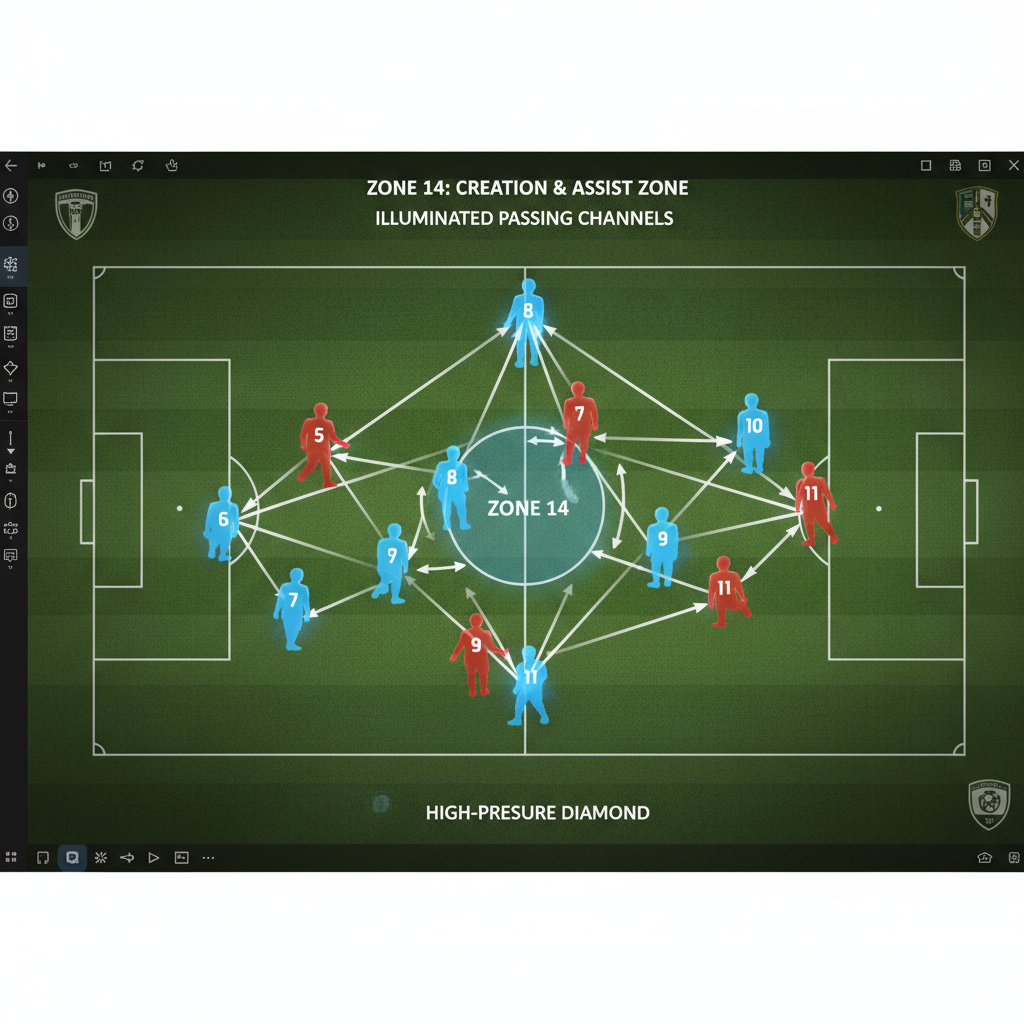
The Strategic Geography of the Final Third
In the realm of modern football tactics, not all areas of the pitch are created equal. While wing play offers width and defensive stretching, the ultimate battle for goal-scoring efficiency is fought in 'Zone 14'. This specific area, located centrally just outside the opposition's penalty box, was first brought to prominence by tactical researchers at Liverpool John Moores University and later adopted by the FA. It is widely regarded as the 'golden square' of creativity. Statistics consistently show that successful teams—those winning major trophies—utilize this zone significantly more than their competitors. The reason is simple: Zone 14 provides a central vantage point from which a player can assist to the left, to the right, or play a direct through-ball. It is the most dangerous area for a defender to lose track of an opponent, as it represents the shortest path to the goal.
Breaking the Low Block via the Center
As more teams adopt a 'low block' defensive strategy to negate pacey wingers, the importance of Zone 14 has only intensified. A disciplined defensive line can easily track crosses from the flanks, but they struggle immensely when an attacking midfielder pivots in Zone 14. This positioning forces the center-backs to make a split-second decision: step up to challenge the ball-carrier and risk leaving space behind, or drop deeper and allow a clear sight of goal. The 'half-turn' reception in this area is a lethal weapon. When a player receives the ball facing the goal in Zone 14, the entire defensive structure is immediately under pressure. This forces the opposition's defensive midfielders to drop deeper than they would like, often creating a disconnect between their midfield and forward lines, which further allows the attacking team to dominate the game's rhythm.
Technical Mastery and Spatial Awareness
Operating successfully in Zone 14 is not for the faint of heart. It is the most congested area on the pitch, often referred to as the 'phone booth' of football. Players who thrive here must possess exceptional spatial awareness, often referred to as 'pre-scanning'. Before the ball even reaches them, they must know where the pressure is coming from and where the openings lie. One-touch passing and rapid combinations are the primary tools of the trade. One of the most effective ways to exploit Zone 14 is the 'up-back-through' combination: a vertical pass into the striker, who lays it back to a midfielder in Zone 14, who then slides a through-ball to a third runner. This speed of thought and execution is what differentiates players like Martin Ødegaard or Bernardo Silva. Furthermore, the modern 'inverted winger' is designed specifically to vacate the touchline and drift into this zone, creating numerical overloads that even the most organized defenses find impossible to track over ninety minutes.
Conclusion: The Ultimate Deciding Factor
Ultimately, the ability to control and exploit Zone 14 is the hallmark of a world-class attacking side. It requires a perfect blend of tactical instruction and individual brilliance. Teams that rely solely on the wings become one-dimensional and predictable, whereas those that can consistently find their creative sparks in this central hub will always find a way through. As defensive systems continue to evolve and become more compact, the quest for dominance in Zone 14 remains the ultimate challenge for coaches and players alike. It is where games are won, where legends are made, and where the true beauty of footballing intelligence is most visible. Mastering this space is no longer an optional tactic; it is the fundamental requirement for any team aspiring to reach the pinnacle of the sport.