News
Haaland Mbappé, Norway France becomes the World Cup duel
Norway France in Boston puts Erling Haaland and Kylian Mbappé at the centre of Group I, with two different attacking models under pressure.
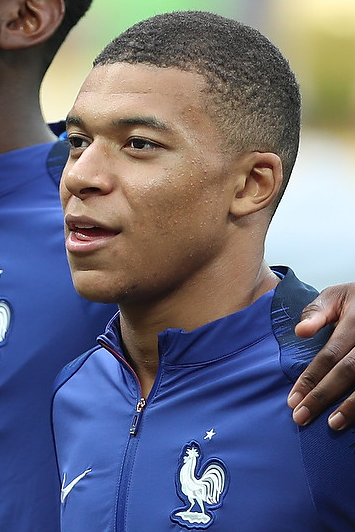
Norway France puts Haaland and Mbappé at the heart of the World Cup tonight because the Boston meeting brings two rare attacking stories into one group-stage fixture. The Guardian published its comparison of the two forwards today, FIFA framed the game as a match within the match, and Al Jazeera placed it in the battle for Group I control. The core tension is simple: Norway arrive with a striker who turns limited service into maximum danger, while France rely on a captain who can carry the ball, attack space and bend a defensive block out of shape.
This is not a fixture built only on hype. It arrives with competitive weight, ranking pressure and a clear psychological edge before the tournament moves toward knockout football. Haaland and Mbappé do not play the same game. They do not receive the ball in the same spaces, and they do not carry the same kind of international responsibility. That contrast is exactly what makes the match valuable as a measure of where both teams stand.
Two superstars, two different kinds of pressure
Haaland gives Norway a gravitational pull in attack. Even when his team do not dominate the ball, his presence changes how centre-backs defend. He does not need a long sequence of touches to shape a match. One run can push a line deeper, open a layoff, force a full-back to narrow or make a holding midfielder protect the space behind. For a national team that cannot match the deepest squads player for player, that efficiency becomes a structure.
Mbappé creates pressure in another way. France can use him as a finisher, but also as a transition runner, a wide receiver, an inside threat and a player who forces defenders to make uncomfortable choices before the penalty area even appears. When he receives facing forward, the opponent has to decide whether to block the outside lane, protect the inside channel, cover the cutback or accept a running duel.
The difference also reflects their national teams. Norway ask a huge amount of their centre-forward because so much of the attacking plan bends toward him. France have more ways to distribute responsibility, yet Mbappé remains the player who gives the side its most visible change of speed. In a tight match, that ability to alter rhythm can matter more than long spells of possession.
Norway face a maturity test in Boston
Norway are not arriving only with a headline name. They are arriving with a question about competitive maturity. How does a team still growing at this level handle a night when much of the football world watches its attacking leader as the main event? Haaland knows elite pressure from club football, but international football has a different texture. Combinations are rehearsed less often, difficult spells can last longer, and one poor transition can expose the whole team.
The Norwegian challenge is to avoid becoming too direct too early. Haaland can punish any defence from limited chances, but he is even more dangerous when the service is varied: quick passes into the channel, crosses attacked with timing, lay-offs into midfield and decoy movements that free team-mates. Martin Ødegaard therefore matters as much to the rhythm as Haaland does to the finish. Norway need tempo, not just hope.
There is also a mental layer. A team with an elite striker can become tempted to force the ball into him. The stronger Norwegian version will accept patience, defensive running and spells without control. Haaland can be the face of the fixture, but he can only shape it if the team around him stays compact enough to stop France releasing Mbappé into open grass.
France need control without losing edge
France have more options, but that depth brings a different demand. Having Mbappé does not solve a match by itself. France must find him in the right moments without tilting the whole team out of balance. The temptation is always to look early into space. Against a Norway side prepared for that threat, France will need variation: fix one side, switch play, draw the block in, then accelerate.
Mbappé can influence several phases. He can start wide, drift inside, attack the second ball or become the release point when France play through pressure. That range forces Norway to defend collectively. If the full-back jumps too soon, the inside lane opens. If the centre-back drops too early, France can move their midfield higher. If the block retreats before contact, the French attack gains the territory it needs to combine.
The match will therefore test French control as much as French talent. They may dominate phases without immediately creating a flood of chances. They need to stay patient, protect the ball after turnovers and stop Haaland turning one loose recovery into a defining moment. At this level, the more gifted team on paper often has to prove it can manage the opponent's transitions as well as its own attacks.
The individual duel is really a team story
The Haaland versus Mbappé comparison is compelling because it looks direct, but it will not happen in a single lane. The forwards do not mark each other, defend the same space or depend on the same supply line. The Guardian's piece today underlined the stylistic divide: Haaland as a penalty-area reference point, Mbappé as a mobile carrier and wide accelerator. That distinction changes the tactical reading of the match.
If Haaland dominates, it will probably mean Norway have managed to move their block up at the right times and deliver into areas where he can attack the ball with momentum. If Mbappé dominates, it may mean France have generated enough disorder before isolating him. In both cases, the headline duel will be the result of work done elsewhere. Defenders, midfielders, full-backs and goalkeepers will decide the quality of the service each star receives.
That matters because World Cup games rarely reward an individual alone. They reward the star who finds the more stable collective frame. Haaland needs Norway to survive long enough to create his decisive moments. Mbappé needs France to convert technical superiority into useful runs rather than comfortable possession. The player who looks most decisive may simply be the one whose team solves the surrounding details better.
Why this meeting already shapes the tournament narrative
Beyond the spectacle, Norway France will influence how both teams are viewed. A strong Norwegian performance would reinforce the belief that Haaland can drag his country deep into a tournament where margins are thin. A composed French answer would confirm that Mbappé remains a major accelerator in a squad with ambitions for the final stages. The match will also show how both teams handle a premium fixture before the World Cup becomes less forgiving.
For anyone tracking the tournament, the useful cues are clear: where Haaland receives, how often Norway can play out cleanly, which zones Mbappé attacks, and how France secure the ball after losing it. The result will matter, but the pattern may say even more. Major tournaments are often built on signals like these: a leader imposing tempo, a team protecting its best player, a defensive unit winning the right duels at the right time.
Tonight's fixture offers more than two famous names. It offers a clash of attacking models. Norway look for lethal verticality around their finisher. France look for controlled acceleration around their captain. Between Haaland and Mbappé, the World Cup has one of its first true prestige matchups.