CAF / world football
Senegal and Mané are walking a World Cup tightrope
Senegal’s final group match has become a wider test of identity, leadership and governance as Sadio Mané and Pape Thiaw try to keep the campaign alive.
Senegal have reached the kind of pressure zone that major national teams rarely enter quietly. According to The Guardian, the Lions of Teranga now need one final response against Iraq to keep their World Cup alive, while problems around federation governance have become part of the wider story. This is therefore more than a poor sporting sequence. It is a test of continuity for a national project that had long looked unusually stable.
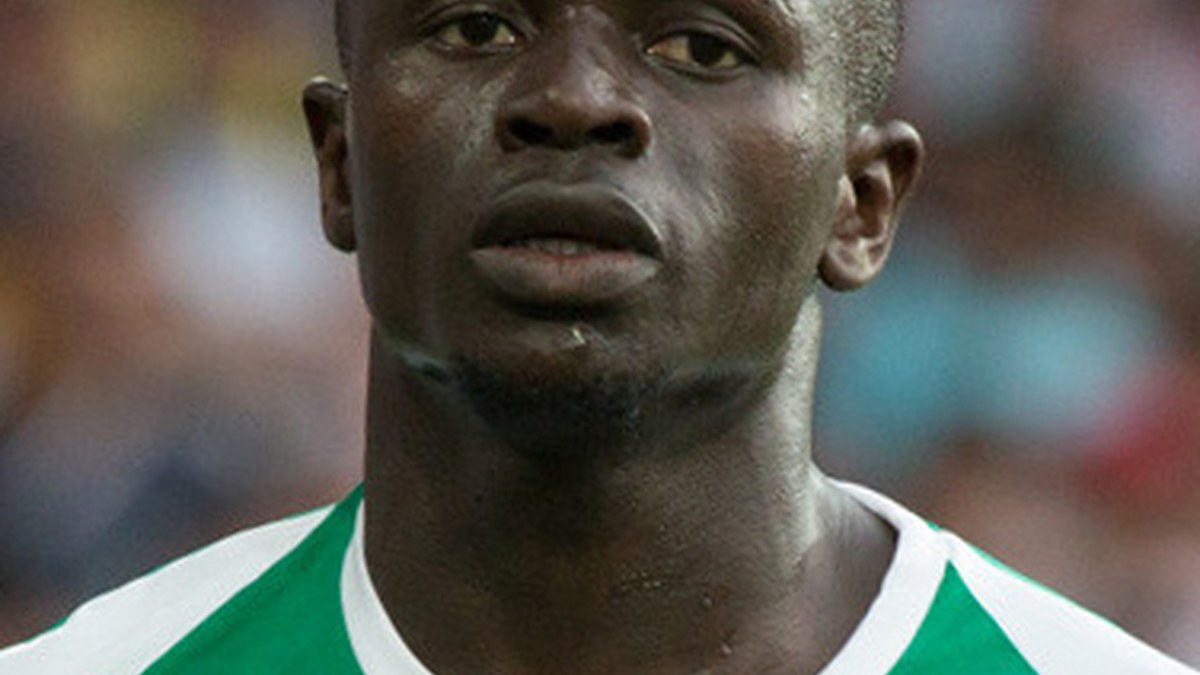
Photo credit: Екатерина Лаут / soccer.ru, via Wikimedia Commons, CC BY-SA 3.0. Real photo of Sadio Mané with Senegal at the 2018 World Cup, cropped by SokaIQ for editorial publication.
The Guardian reports that former Senegalese football federation president Augustin Senghor chose to stay quiet after losing last year’s election, saying he wanted to allow the new administration to take charge with his cooperation and support. That restraint makes the current contrast sharper. Senegal are not being judged only on the next result. They are being judged on whether they can remain coherent when sporting pressure and institutional pressure rise together.
Pape Thiaw now faces a difficult equation. His team need to win their final group match with enough authority to extend their tournament, but they also need to recover a clear identity. In an expanded World Cup, there is room to survive an imperfect start. The question is whether Senegal can produce a response that looks organised, with leaders able to pull the group back in the right direction.
Senegal are facing more than one decisive match The easy version of the story would reduce everything to one decisive evening. That would miss the point. Senegal built their recent continental status on seriousness: a strong generation, a relatively stable federation, regular presence in major tournaments and a pipeline of high-level players. When a team like that begins to wobble, the problem is rarely only tactical.
The Guardian points to a sequence of off-field errors and a less convincing governance picture since the leadership change at the federation. For a national team, those details are not abstract. Players can remain professional, but the environment around them still shapes preparation, communication and collective confidence. A major tournament does not leave much room for uncertainty.
The Iraq match therefore becomes a test of structure. It will show whether Senegal can turn urgency into useful energy, or whether internal tension continues to weigh on the football. At a World Cup, the teams that move forward are not always those that start perfectly. Often, they are the teams that correct quickly without losing their spine.
Sadio Mané still carries huge symbolic weight Sadio Mané remains central to this reading because he represents a long period of Senegalese success. The Guardian writes that Senegal’s long-time talisman has been largely inconsequential at this World Cup and that Thiaw needs him to rediscover his attacking spark. That matters because Mané is not just another player in this squad’s public imagination. He is memory, ambition and emotional connection rolled into one figure.
But that burden can also become heavy. At this stage of his international career, Mané cannot be treated as the answer to every problem. Senegal have to help him as much as they hope he will help them. That means cleaner passing routes, smarter occupation of wide areas and a stronger collective presence around the final third.
The point is not to ask Mané to reproduce the best years of a generation by himself. The point is to create a context in which his experience still has value. An attacking leader can change a spell of pressure when the team gives him runners, support angles and emotional stability. Without that, even the biggest names can look isolated.
Pape Thiaw must repair both the pitch and the message For Pape Thiaw, the difficulty is double. He must prepare a plan bold enough to keep the campaign alive while avoiding the disorder that often comes with desperation. This is a familiar tension in final group games: attack without running everywhere, accelerate without gifting transitions, send a strong message without confusing emotion with control.
The coach is also playing for credibility. The Guardian notes that his time in charge could become fragile if Senegal fail to extend their tournament. In that context, his starting choices, substitutions and ability to keep the dressing room aligned will all be watched closely. A national team can live with a short crisis if it still believes the staff has direction.
That is where senior management becomes essential. Mané, experienced defenders and midfielders responsible for balance need to feel that the plan is clear. Younger or less established players need simple roles. In major tournaments, clarity can be as valuable as courage.
Governance has become a sporting factor The change at the top of Senegalese football is not a side note. In international football, governance often becomes visible when things go wrong. When results are strong, tensions remain hidden. When the team starts to drift, questions about preparation, responsibility and communication become much louder.
Senghor’s comments to The Guardian indirectly underline how much administrative stability had accompanied Senegal’s recent progress. That does not mean the past was flawless or the present is doomed. It means Senegal now have to rebuild a chain of trust quickly between federation, staff, players and public.
A World Cup gives very little time to solve these issues properly. But it can reveal what is urgent. If the Lions respond, the crisis may remain a warning. If they go out without recovering a clear line, the Senegalese debate will move well beyond the pitch.
Why this story matters beyond Senegal Senegal’s situation matters to African football more broadly. For several years, major CAF teams have tried to turn individual talent into sustained international continuity. Senegal were one of the strongest examples of that ambition. Seeing them walk a tightrope is a reminder that elite performance is never built on player quality alone.
The final group match will say a lot, but not everything. Qualification would not automatically remove the questions. It would simply provide time and oxygen. Elimination would force a sharper review of the project, the governance structure and the transition between generations.
For now, Senegal have not lost their identity. They have put it at risk. That is exactly why the Iraq match feels like more than a fixture-list obligation. It is a moment of truth for a team that must prove it still has enough collective strength to survive its own turbulence.