FIFA / world football
Harry Kane, Wonderwall and England: the song that changed the World Cup mood
After England's win over Croatia, Harry Kane placed the Wonderwall singalong with supporters among his favourite national-team moments.
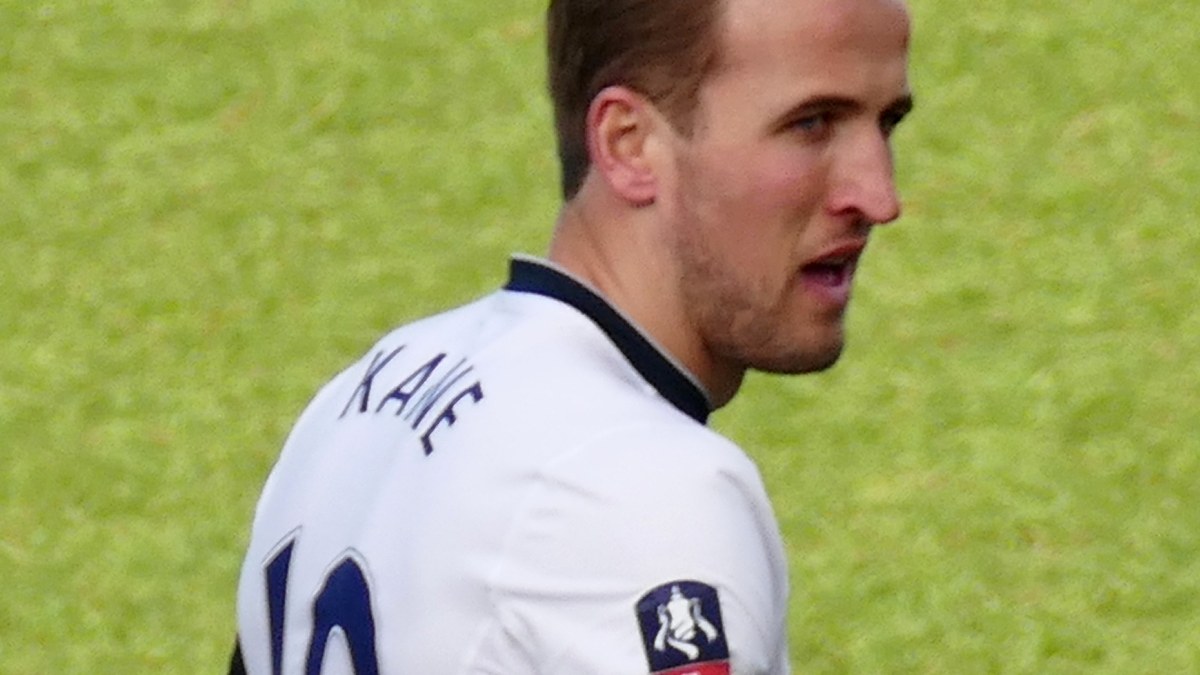
BBC Sport reported on Friday that Harry Kane described singing “Wonderwall” with England supporters after the win over Croatia in Dallas as one of his favourite moments in a national-team shirt. The scene quickly became more than a terrace ritual: it gave Thomas Tuchel's side a lighter, more human image in the middle of a World Cup where every contender is being measured under pressure.
Photo credit: enviro warrior from England / Wikimedia Commons / CC BY-SA 2.0. Real photo of Harry Kane, cropped and stored for editorial publication.
International football often turns on details that never appear on a match sheet. A song carried by thousands of supporters, a captain staying on the pitch to share the noise, a stadium stretching the night rather than emptying immediately: none of those things add points to the table, but they change the texture of a campaign. For England, this pause matters because it arrives in a tournament where national pressure can easily squeeze the joy out of performance.
Kane did not need to turn the sequence into a grand declaration. His reaction was enough to show that the relationship between a team and its public is not built only in press conferences. It is built in those suspended minutes when players briefly become supporters of the story they are living. England have often carried a heavy mythology; in Dallas, they found a simple, popular moment that can travel with them into the rest of the tournament.
A terrace scene that softens England's burden
England always carry a particular relationship with major tournaments. The talent is scrutinised, the manager's choices are pulled apart, media expectation rises quickly and the smallest sign of tension becomes a national story. In that context, a shared song can look secondary. It is not entirely secondary. It reminds everyone that the team can also breathe, smile and connect with a public that wants more than tactical explanations.
The power of “Wonderwall” in this moment comes from its familiarity. It is not an official anthem manufactured for the event. It is a piece of popular culture many England supporters already know, a song capable of crossing generations. When it breaks out after a World Cup match, it turns the stadium into a shared space. The players are no longer just controlling the ball; they are entering a scene written with them by the crowd.
For Kane, that dimension matters. The England captain has lived through enough tournaments to know that the atmosphere around a squad can become either a resource or a burden. A collective moment of joy does not guarantee a run, but it can soften the days that follow, especially when the tournament imposes recovery, video analysis and constant judgement. A team that feels carried without being crushed already has a healthier environment.
Kane still connects the football and the story
Harry Kane remains central because he links several layers of England's story. He is the captain, the finisher and the experienced face of a group trying to win without being trapped by what came before. His comment on the Dallas scene was not just a line of satisfaction; it showed that he understands the symbolic value of these moments for a national team whose every tournament is framed as a public quest.
Leadership from a captain is not limited to instructions. It is also about choosing what to emphasise in public. By speaking about a moment shared with supporters, Kane placed connection above self-congratulation. He avoided reducing the night to an individual performance or a promise about the future. It was a measured way of saying that the team is moving with its public, not simply in front of it.
That posture can help England. Major tournaments are rarely straight lines. There will be harder matches, less fluid spells, perhaps injuries or selection debates. When those moments arrive, the memory of a successful communion will not solve tactical problems, but it will offer a positive image to return to. Campaigns that last often feed on simple scenes as much as on big strategic decisions.
Tuchel gains a more open atmosphere
Thomas Tuchel knows elite football, its tensions and its narrative cycles. With England, he is managing a group that can never be viewed only as a club-style team. The national side carries history, public expectation, memories of missed chances and an intense media culture. In that setting, every sign of ease around the squad matters.
The Dallas scene gives the manager something useful: evidence of a team that can create attachment. The supporters are not merely accompanying the side; they are shaping the atmosphere. For a staff, that energy can help if it stays balanced. Too much euphoria can distract, but controlled joy can strengthen confidence without turning the dressing room into an unrealistic bubble.
Tuchel will, of course, have to bring the group back to work quickly. A song does not defend transitions, fix distances between lines or protect the penalty area. But modern management is also about understanding the emotional state of a team. After a significant win against a serious opponent, the task is to keep the freshness of the moment while avoiding a rush of overstatement.
England supporters are looking for a team to believe in
England supporters have never asked only for efficiency. They look for a team they can recognise and inhabit emotionally. Generations change, styles shift, but the need remains: players who can carry the shirt without seeming imprisoned by it. That is what the “Wonderwall” scene suggested, at least for one night.
The song also carries media force. In a global World Cup, terrace images travel as quickly as match actions. They create the visual and sonic memory of a tournament. For England, being attached to a joyful scene rather than an anxious debate is already a small narrative gain. It does not alter the sporting difficulty, but it changes how the group steps into the next few days.
The team still has to stay lucid. The warmest memories can become fragile if performances drop. Supporters can sing with the same intensity that they can criticise. That is why the best use of this communion is to accept it as energy, not as final validation. England have won a moment; they still have to build a campaign.
A human signal in a pressure tournament
What this sequence finally shows is the place of the human element inside a World Cup saturated with analysis. Numbers, systems, physical loads and match plans are essential. But teams that shape tournaments do not live only on tactical boards. They also find signs of cohesion, shared memories and moments when the public stops being scenery.
Kane has enough experience to know that such an instant matters only if it remains attached to daily work. This is not about turning “Wonderwall” into a sporting promise. It is about understanding that an ambitious team sometimes needs these breaths to carry the pressure. In the noise of a World Cup, a song can become a reference point.
England therefore leave with more than a win discussed by their captain. They leave with an image: a group able to share its momentum with the people following it. It is not a trophy, and it is not a guarantee, but it is a good sign of life. In a tournament where tension rises quickly, a good sign of life can matter more than it first appears.