Women’s football / international transfer market
Mary Earps to London City Lionesses: the signing that changes a promoted club’s status
Mary Earps has joined London City Lionesses after leaving PSG, giving the promoted English side a major recruit and a strong sporting signal.
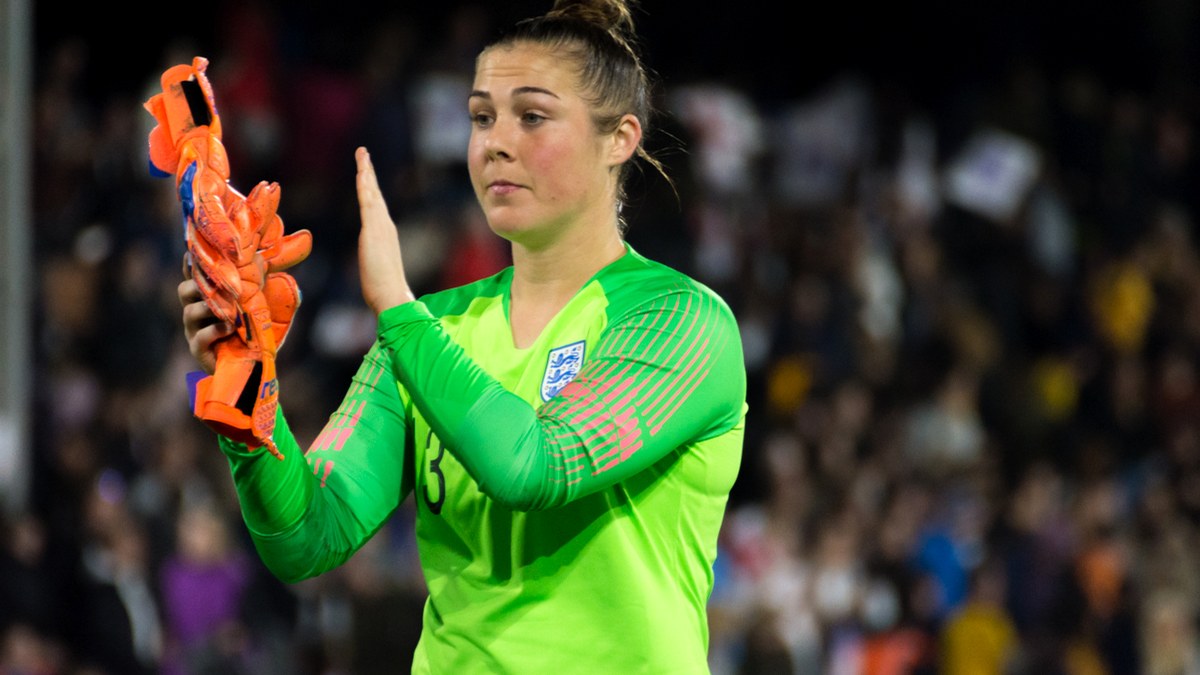
BBC Sport reported on Friday that Mary Earps has joined London City Lionesses on a two-year deal after leaving Paris Saint-Germain. The club's official player page also presents the former England goalkeeper as a summer 2026 signing. For London City, this is not only a high-profile arrival: it is a message to the Women's Super League at the moment the club is trying to turn promotion into a sustainable project.
Photo credit: EL Loko / Wikimedia Commons / CC BY. Real photo of Mary Earps with England, cropped and stored for editorial publication.
English women's football changes tempo when a name of this size joins an ambitious promoted side. Earps is not arriving as a routine squad option. She brings international pedigree, major-tournament experience, rare visibility for a goalkeeper and the ability to change how a club is perceived. In a league where the gap between established places and new entrants can be severe, this kind of signing immediately gives a recruitment strategy a different weight.
London City Lionesses had to show that their return to the top flight would not be a cautious adventure. By attracting Earps, the club is talking about standards, visibility and competitiveness. The question is no longer only whether the team can survive the first season. It becomes broader: how can London City build a side able to withstand the league's intensity while giving supporters a figure around whom the project can make sense?
A signing that changes how London City are viewed
A promoted team is often assessed through its limits. Does it have enough depth, enough experience and enough personality to live with the level week after week? Mary Earps' arrival partly reverses that instinct. It forces London City to be viewed as a club capable of attracting a major player, not simply as a side moving up and hoping momentum will carry it.
The symbolic value is clear. Earps is known beyond the specialist audience. She has represented England, played in elite environments and developed a public profile that stretches beyond her position. For a club trying to establish itself in a heavily watched league, that visibility matters. It can draw neutral attention, strengthen sporting credibility and make the project easier for other players to understand.
Symbolism, however, is not enough. The real test begins when the season brings its constraints: travel, fixture congestion, difficult runs, injuries, internal competition and collective adaptation. Earps can help precisely because her position is one of stability. An experienced goalkeeper gives a defence reference points, calms difficult spells and sometimes keeps a team alive in a match even when control slips away.
Why the goalkeeper position makes this strategic
For a promoted team, the first emergency is usually the management of pressure. Opponents quickly test defensive coordination, set pieces, crosses into the box and the ability not to panic after a sustained spell without the ball. A high-level goalkeeper does not remove those problems, but she offers a clear anchor.
Earps brings game reading that can accelerate London City's organisation. Her communication, positioning and experience of high-exposure matches can help a defensive line gain time. That is not a detail in a league where every error is punished faster. A newly promoted side needs leaders who speak before danger becomes obvious to everybody else.
Her arrival can also change how London City approach matches against established teams. Against contenders, a promoted side may spend long periods without possession. In those phases, the goalkeeper becomes part of the resistance plan. If Earps maintains structure, delays turning points and gives confidence to the players in front of her, the club can turn difficult games into more competitive contests.
A strong signal in the women's football market
The signing also says something about the market. English clubs increasingly try to connect performance, profile and commercial ambition. A player such as Earps touches all three areas. She raises the sporting level, naturally draws media attention and gives a clear story to tell around a club trying to grow.
For London City, that narrative dimension is useful. The club has to exist in a landscape already occupied by powerful institutions and established squads. A major signing creates an entry point for the public. It gives the opening weeks an immediate question: how will a reference goalkeeper influence a team stepping into a more demanding level?
Still, the move needs proportion. A big name does not build a season by itself. London City will need midfield balance, clean progression, attacking depth and a defensive unit that learns its automatisms quickly. Earps can be an accelerator, not a magic shortcut. That is what makes the transfer interesting: it gives the project a credible base while leaving the pitch to judge the collective coherence.
Paris lose a figure, London City gain a reference point
The Paris Saint-Germain background adds an important layer. Leaving a visible European club for London City may look surprising at first, but it also shows that women's football can no longer be read only through a few obvious destinations. Projects, proposed roles, personal visibility and sporting timing increasingly matter.
For Earps, this choice can offer an immediate central role. In a project still being built, her influence can go beyond the usual boundaries of a goalkeeper. She can help set daily standards, guide younger players and give the dressing room a higher-level language. For London City, that is exactly the kind of profile that can turn ambition into habits.
Paris, meanwhile, lose a player whose visibility goes beyond her position. Even if major clubs are used to refreshing squads, this departure is a reminder that leading goalkeepers are now strong actors in the market too. Their value is not limited to the spectacular save; it includes leadership, image, communication and the capacity to represent a project.
Continuity will decide the value of the move
The announcement gives London City an immediate victory in perception. The league will demand something else: continuity. Earps' arrival now has to fit into a coherent build. The club must protect its new signing with a clear structure, avoid asking her to solve every wave of pressure alone and turn her leadership into collective improvement.
If that integration works, London City will not only have gained a high-profile goalkeeper. The club will have gained an emotional and sporting spine. Promoted teams that settle are often the ones that find reliable reference points quickly. Earps can become that reference point, provided the wider project advances with the same level of seriousness.
The signing therefore deserves to be read as a serious act of ambition. It guarantees nothing, but it makes the project more credible, more visible and more compelling to follow. For a team entering a demanding league, that already matters: London City do not only want to take part, they want to be taken seriously from the start.