International transfers
Marc Cucurella joins Real Madrid: what the official transfer changes
Real Madrid have announced Marc Cucurella and Chelsea have confirmed his departure. The move strengthens Madrid’s left side and raises a clear squad-balance question.
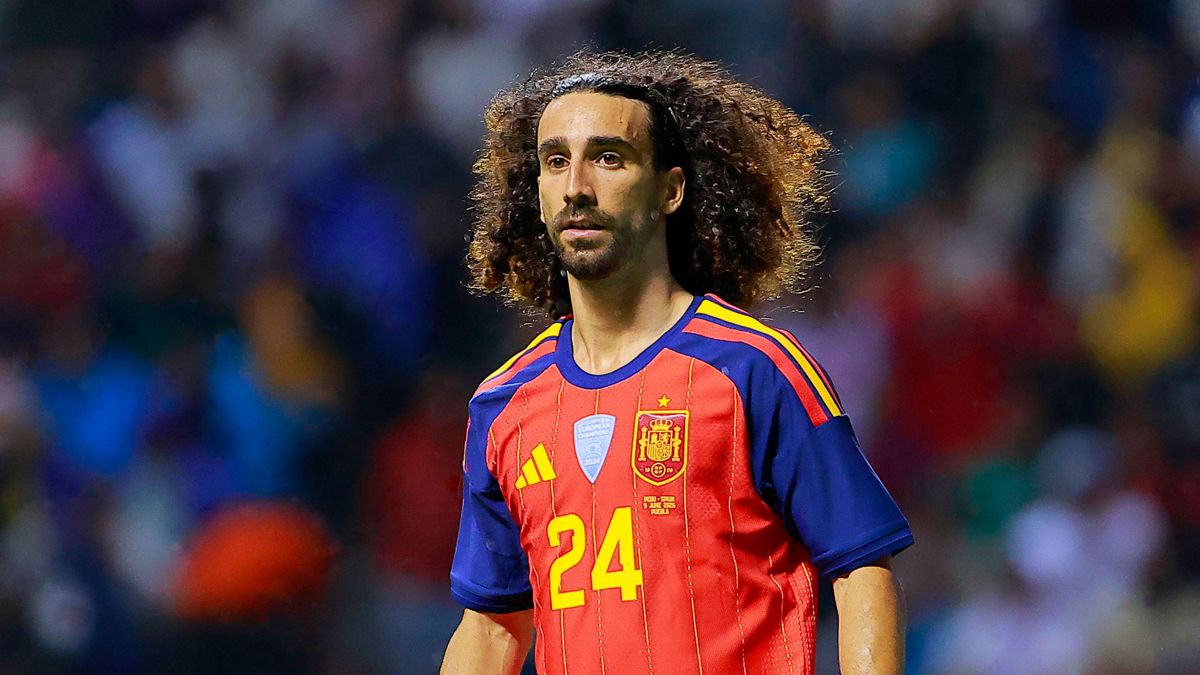
Marc Cucurella is officially a Real Madrid player. The Spanish club announced the signing, and Chelsea confirmed in a separate statement that the left-back has completed a permanent move to LaLiga. That double confirmation changes the story from transfer noise into a firm football development, and it gives the deal a clear sporting frame: Madrid have added an experienced, high-energy defender from the Premier League at a position that can shape the entire balance of a side.
Cucurella is not a decorative signing. He is a left-sided defender with a strong engine, a Spanish technical base and several seasons of English football behind him. He has played through pressure, defended in open games, pressed aggressively and learned to survive in a Chelsea environment that has rarely been quiet. For Madrid, that matters. The club is not only buying a position on a team sheet; it is adding a player used to scrutiny and heavy rhythm.
Official confirmation turns the story into a football fact
In transfer coverage, source quality is everything. A rumour can be interesting, but it should not be treated like a completed move until the clubs involved put their names to it. This deal has crossed that line. Real Madrid published an official announcement on Cucurella, and Chelsea confirmed his departure to the Spanish side. That is the threshold required to analyse the move as a fact rather than as market speculation.
The distinction matters because the modern transfer cycle is full of half-steps: talks, agreements in principle, medical expectations, agent signals and social-media hints. Some of those clues eventually become true, and some disappear quickly. Here, the institutional record is clear. Madrid have announced the arrival. Chelsea have confirmed the exit. The next question is not whether the move exists, but what it changes.
Cucurella brings a recognisable profile. He is energetic, competitive in duels and comfortable enough on the ball to fit a side that expects defenders to contribute to build-up. His Chelsea spell came in a turbulent collective context, but that context also tested him. He has faced quick wingers, stretched defensive phases and matches where the full-back is asked to solve several problems at once.
That background explains part of Madrid's logic. Elite clubs need players who are technically secure, tactically alert and mentally ready for attention. Cucurella still has adaptation work ahead of him, but he is not moving as an unknown quantity. He arrives with a body of work from one of Europe's fastest leagues and with enough tactical education to understand the demands of Spanish football.
Why Cucurella's profile makes sense for Madrid
The modern full-back is no longer just a runner outside the winger. At the highest level, the role is hybrid. A full-back must defend space behind him, join pressure after turnovers, support the first pass from the back, offer width in possession and sometimes step inside to help midfield circulation. Cucurella is valuable because he can cover several of those demands without losing his core intensity.
His first obvious strength is volume. He likes repeated efforts, quick pressure after loss and physical engagement with his direct opponent. For a dominant team, that can be useful because control is not only built with the ball. It is also built by winning the next duel quickly and preventing opponents from escaping their own half. A full-back who reacts fast can keep a possession team high up the pitch.
His second strength is flexibility on the left side. Cucurella can play wide, where he stretches the pitch and supports the winger, but he can also sit closer to the centre-back when the team needs a safer passing lane. That gives the coach different solutions depending on the match. Against a deep block, he can help circulate and overload. Against a side that counters into the channels, his recovery habits become important.
There are risks, as there are with any major club move. Madrid's demands are particular. The Bernabeu environment can be unforgiving, and a defender's timing is constantly judged: when to press, when to hold, when to attack the space, when to keep the ball simple. Cucurella will need to build trust with the players around him. But the sporting fit is not difficult to understand. Madrid have added intensity, competition and a left-sided option who already knows pressure.
What Chelsea lose with his departure
Chelsea's side of the deal is not only about one player leaving. It is about squad management. The London club have operated with a large and changing group, and exits can be as important as arrivals when a club is trying to clarify roles. Moving Cucurella on may help Chelsea reshape the left-back hierarchy, create space and continue a broader recalibration of the squad.
On the pitch, though, Chelsea lose a player with Premier League experience and defensive edge. Cucurella's time in west London was not always easy, partly because the team around him often lacked stability. Full-backs can look exposed when the collective structure is loose. Even so, his aggression, work rate and willingness to defend difficult situations gave Chelsea a recognisable option on the left side.
The risk for Chelsea is that acclimatised players carry value that can be underestimated. English football punishes hesitation in defensive organisation. A full-back who understands the tempo, physicality and weekly pressure of the league can help protect a team during difficult phases. If Chelsea have a ready successor, the move can be read as clean squad planning. If they do not, the absence may become more visible during congested runs.
There is also a dressing-room angle. Big squads need players capable of handling competition, public criticism and changing roles. Cucurella had already lived through that environment. His departure removes not only a left-back, but a player who had adapted to the emotional rhythm of Chelsea. The club may still judge the sale as necessary, yet the sporting cost should not be ignored.
How Madrid's balance could change
Real Madrid's constant challenge is to add talent without disturbing structure. Cucurella's arrival touches that challenge directly. A reliable left-back can influence build-up, transition defence and the relationship between the winger and midfield. The position may look narrow on paper, but it often decides whether a team attacks with clean spacing or becomes too central.
In matches where Madrid dominate possession, Cucurella can help hold width and keep the opposition winger occupied. That creates interior lanes for midfielders and makes it harder for the defending side to crowd the centre. In more open matches, his intensity can help Madrid defend higher, provided the cover behind him is well organised. The signing therefore gives the coach tactical options rather than just another name in the squad.
Competition is another part of the story. At Madrid, internal competition is not a side issue. It is a mechanism that keeps standards high and allows the coaching staff to select profiles for different opponents. A more conservative full-back, a more attacking option and a high-energy pressure defender do not produce the same match. Cucurella increases the range of choices on the left.
The key will be his chemistry. A Madrid full-back never plays alone. He needs a connection with the nearest centre-back, the midfielder covering his side, the winger ahead of him and the attacking midfielder who may drift into the channel. If those relationships develop quickly, the transfer can have immediate value. If they take time, Cucurella may first need to win minutes through defensive reliability and simple choices in possession.
A deal that says plenty about the current market
This transfer also reflects a broader market trend. Europe's biggest clubs still chase future stars, but they also value players who can handle elite rotation immediately. The calendar is too heavy for thin squads. Domestic football, European nights, cup matches and international duty demand depth that is not merely numerical. The depth has to be playable.
Cucurella fits that need. He is not arriving as a mystery prospect. He brings intensity, league experience, tactical education and a clear identity. Madrid know what kind of player they are adding. The upside is not only in his individual performances, but in the way his presence can protect the squad from fatigue, tactical repetition and injuries across a long season.
For Chelsea, the move underlines the importance of decisions that simplify a group. A club cannot keep adding players without defining who truly belongs in the next phase. Selling an established left-back can be painful, but it can also be part of a necessary reset if the replacement plan is convincing. That judgement will depend on what Chelsea do next and how quickly their left side settles.
For Madrid, the question now becomes role, not relevance. Cucurella could become a regular starter, a major rotational player or a tactical specialist for certain match plans. What is already clear is that the move is official, sourced by both clubs and significant enough to reshape the left side of Madrid's squad discussion. In a market full of noise, this is a concrete football story with immediate tactical consequences.
Sources and image: Real Madrid official announcement, Chelsea official statement, with additional coverage checked through BBC, Sky Sports and The Guardian. Image imported from Real Madrid's official editorial asset and hosted by SokaIQ with Real Madrid source credit.