World Cup 2026
Back in the world’s biggest room: why Scotland’s Boston opener against Haiti is a structural, not just symbolic, test
Scotland return to the World Cup is about far more than a one-off opener. The match in Boston against Haiti is already a test of team structure, communication under noise, and how a long-absent squad handles the first minutes of a tournament under scrutiny.
This is not only a sentimental comeback, it is an organizational test Football often frames long-absent teams as stories of history, and this is understandable. FIFA places the opener at Boston Stadium against Haiti, and that fact alone turns the match into a tournament marker. Scotland is not arriving for ninety minutes of football; it arrives with a team narrative that has been waiting for a long time.
For followers of international competitions, the useful insight is that this is not a story finished by its symbolism. The opening game in a major tournament is a structural exam. Preparation details, communication rhythm, and internal confidence are put under the same pressure as tactical plans. The return after a long absence is therefore less about one dramatic day and more about whether the group can convert expectation into stable choices when every action is scrutinized.
The BBC framing around a long period away from the World Cup adds emotional charge, but strong reporting has to go one step further. Emotion can be the ignition, while structure decides whether the ignition becomes a full-length engine or burns out after a few minutes.
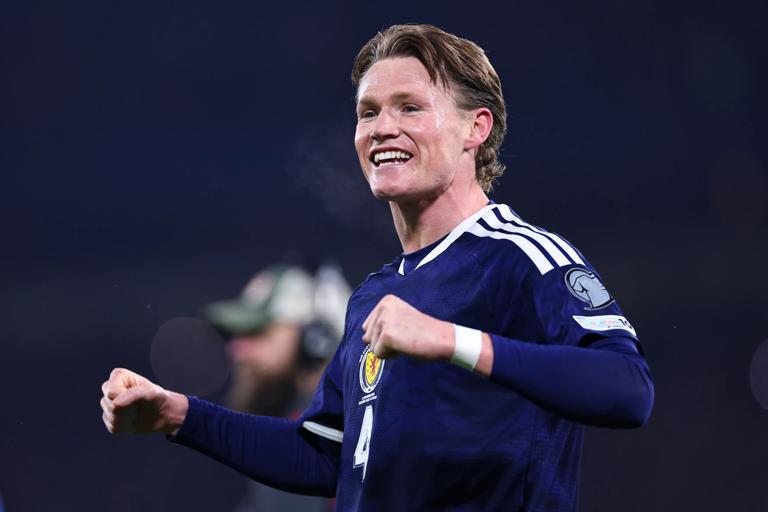
The McTominay indicator: a context signal, not a guarantee FIFA’s coverage reports that McTominay rejoined the squad at an important moment before the opener after missing part of the build-up due to a stomach issue, and that his presence brought visible relief to supporters. This is a useful factual anchor when explained correctly.
A returning key figure can improve collective rhythm because teammates reconnect to known cues. In practical terms, that can reduce early fragmentation in pressure zones, improve timing in transition phases, and make tactical corrections easier to implement. It does not remove uncertainty; it removes one uncertainty layer.
The responsible angle is to avoid turning this into a certainty narrative. We state what changed, and also what remains unknown. That distinction is the difference between analysis and hype.
Why Boston, the venue and the timeline, matter Boston is not a generic backdrop. It is a match environment where fan voice, travel rhythm, and media density converge. The first three hours of a team’s return campaign include more than one tactical plan: there is also conditioning of focus, recovery management, communication channels, and the emotional transition from planning to execution.
When expectations are high, teams that do this well do not appear less talented on paper. They simply make fewer avoidable mistakes in moments of transition. They keep the same baseline when the scoreline pressure rises, and they maintain language with teammates around the field rather than relying on improvised heroics.
In that sense, this opener is not just a ceremonial start; it is an endurance test in real time. The match sets a tone of control, or it reveals a delay in group alignment that can cost precious opportunities later.
Why this opener can shape the first week of tournament options A short opening narrative rarely contains the whole tournament in one scene, but it can constrain or enlarge the menu for later matches. If the team processes the first game well, it enters the second one with better decision speed; if it oscillates under pressure, every subsequent change in opposition becomes harder.
Three practical patterns matter most after this first match: how the team handles recovery and tempo changes after pressure, whether the defensive line keeps meaningful spacing during long build-up phases, and how quickly the group re-centres itself after long stoppages and set-piece transitions. These are not glamorous signals. They are the signals that differentiate teams that live in tournament rhythm from those that chase it.
What this means for readers: not prediction, but a practical lens The practical value is a clear viewing lens, not a prophecy. The useful match lens is concrete: team-level rhythm in the first 20 minutes, communication and spacing after the opening block, adjustment speed around the first tactical restart, and calmer transitions in the second-half phase.
If these patterns hold, the narrative becomes less about opening-day sentiment and more about how the group can hold quality across the first matchday cycle.
Responsible boundaries and reader trust The editorial discipline is non-negotiable: no score predictions, no guaranteed margins, no conversion of hot news into betting certainty. The same game can make headlines in many ways; the angle stays in structural explanation. It is anchored on verified facts, clearly states what is known, and leaves the result to be decided by play and data later available on SokaIQ.
For a site that combines prediction surfaces and newsroom-style explanation, this is the correct split: use hot topics to orient reading, not to manufacture certainty where none exists.
How SokaIQ can use this topic without turning it into a pick article The story naturally connects to useful SokaIQ surfaces after publication: match detail pages and pre-match context once the fixture is live, team pages with background and historical context, and prediction hubs only as a secondary route for users.
This keeps the piece journalistic and compliant: useful for engagement and retention, but not an accidental shortcut to unsupported forecasting.
Audience utility during matchweek The opening match should not remain isolated as a one-off emotional headline after the first whistle. The article has more value when it sets a short checklist for readers that still works after kickoff.
A practical method is to keep three checkpoints: the team’s composure in the opening pressure window, the way communication is recovered after a tactical turn, and whether the side responds to a high-intensity block without abandoning structure. If readers can track these, they can follow the fixture sequence with better contextual understanding instead of only replaying match-result news.
This approach is particularly useful for SokaIQ because it allows a clean handoff from story to data: warm-up coverage on the article page, then updated continuity through team and match pages as new signals appear.
Final bridge: what readers should take to day-to-day follow-up The practical value for our audience is a short list of checks they can keep through the first week. After kickoff, attention shifts from "narrative return" to decision quality. Did the team keep distance discipline? Did it recover communication after pressure? Did it respond with cleaner transitions rather than panic exits? The point is to show progression in behaviour, not to narrate certainty.
In practical terms, the article should point readers toward fresh updates via SokaIQ’s match page and team streams, while still keeping this as a football-analysis anchor. That is how hot news becomes useful content: it gives the first frame, then the platform gives the measurable continuity.