World Cup
Messi and Ronaldo are still bending World Cup history
Lionel Messi and Cristiano Ronaldo are extending World Cup records deep into their careers, turning 2026 into another chapter of their rivalry.
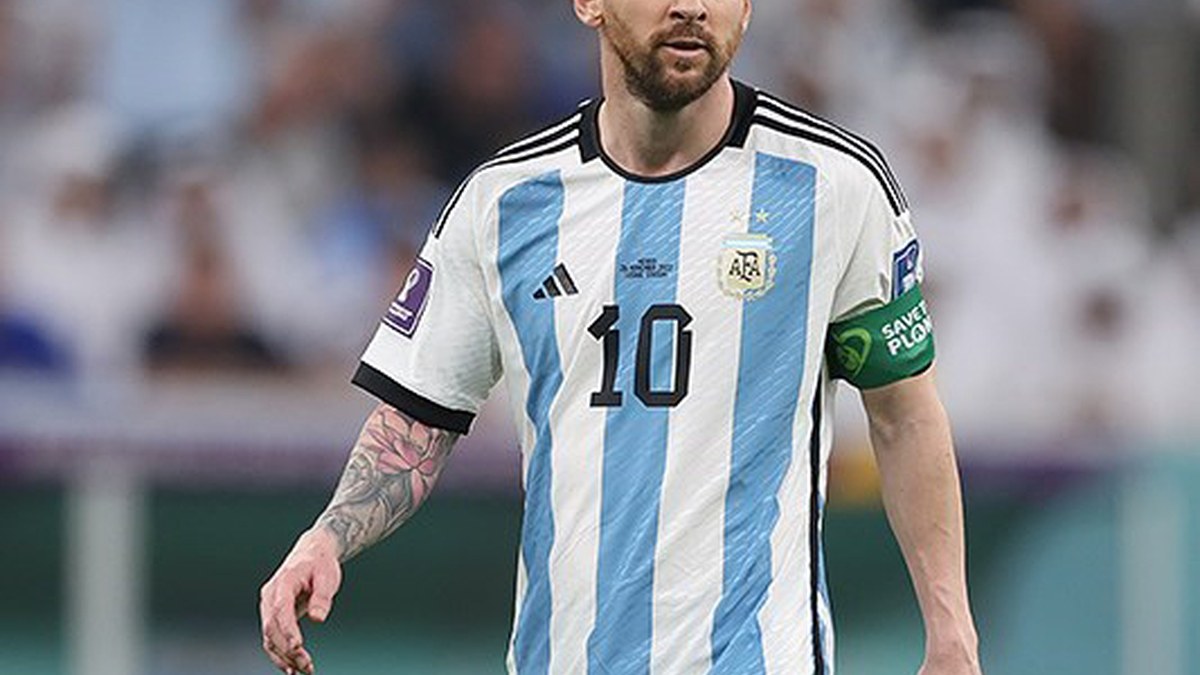
Lionel Messi marked his 39th birthday with a World Cup that is still giving him records, while Cristiano Ronaldo answered in the same language for Portugal. BBC Sport published a fresh reading of their tournament on Wednesday: Messi now sits at the top of the competition’s all-time scoring chart, and Ronaldo has become the first player to score at six different World Cups. Yahoo Sports carried the same account, underlining that this is more than an anniversary story.
Photo credit: Tasnim News Agency / Hossein Zohrevand via Wikimedia Commons / CC BY 4.0. Real Lionel Messi photo, cropped by SokaIQ for editorial publication.
What stands out is no longer only longevity. Football had already accepted that Messi and Ronaldo belonged to an exceptional era. The new part in 2026 is their ability to remain useful at precisely the point when most legends become mainly symbolic. One plays with the economy of a superior football brain; the other still carries an almost stubborn obsession with the box and the competitive reply. Together, they may be turning their final World Cup into one last race of records.
Two veterans refusing a gentle exit The World Cup can be cruel to ageing greats. It accelerates decline, exposes heavy legs and reminds everyone that reputation does not win duels. Messi and Ronaldo are still doing something different: they shrink the match around the things they can still dominate. Messi no longer needs to cover every blade of grass to control the rhythm of an attack. Ronaldo no longer needs to appear everywhere to matter in the area where half a second can decide the night.
Age has therefore become less a wall than a tactical frame. Around them, their national teams must compensate, run, protect and create the right conditions for their influence. In return, they receive something rare: a presence that changes the mood of a match. Opponents know that one lapse of concentration can still be punished by a player who has lived through almost every pressure football can invent.
That is why their story still feels current rather than nostalgic. This is not only a farewell tour. Messi and Ronaldo are not simply being applauded for what they were. They are still producing measurable moments: goals, records and images that move the global conversation.
Messi’s late efficiency has become monumental Messi’s World Cup path tells a story of deep transformation. For years he carried the weight of impossible comparison with Argentina’s ghosts, then gradually built his own international authority. In 2026, BBC Sport notes that he has reached 18 goals in the tournament’s history after another decisive run with Argentina. That number is not just a statistic. It reflects a second international career: calmer, more assured and colder in front of goal.
The most interesting part may be how Messi scores now. He does not rely only on the explosion of his younger years. He chooses zones better, saves energy, reads defensive movement and acts when the match appears to open for a moment. His apparent slowness can even become a trap. Defenders believe they have time, only to discover that the pass, run or shot had already been prepared.
That late efficiency also changes Argentina’s relationship with their captain. The team no longer asks him to solve every phase with an impossible dribble. It asks him to give the final meaning to collective work. That is a major nuance, and it is often what allows great players to extend their peak.
Ronaldo still uses the reply as fuel Ronaldo operates differently, but the logic of sporting survival is just as clear. After a less convincing first Portuguese outing and public criticism, he answered with the gesture he knows best: scoring, then reminding everyone that his relationship with doubt has always been combative. BBC Sport reported his post-match “I’m back” line and quoted Roberto Martínez on the human side of the moment.
The record is powerful: scoring in six different World Cups requires more than a long career. A player must remain selectable, remain dangerous, accept changes in role and outlast several generations of team-mates. Ronaldo is no longer the all-action wide forward of his early years, but he retains a skill few players possess with the same intensity: turning pressure into presence in the box.
His case is fascinating because it mixes greatness and vulnerability. Every match now seems to be judged through a simple question: can he still have the impact of the biggest nights? That question could crush an ordinary player. With Ronaldo, it still feeds a competitive theatre. He knows global attention forgives very little, but he also knows how to use it.
A rivalry that no longer needs a direct meeting The Messi-Ronaldo rivalry was often framed as a direct duel, almost mathematical: goals, trophies, Ballons d’Or, European records and huge Champions League nights. In 2026, it has taken a subtler form. They are no longer living the same club career, no longer playing the same weekly football and no longer need to share a league to answer each other.
The World Cup still gives them a shared stage. When Messi climbs the historical scoring chart, Ronaldo responds with a mark of uniqueness. When Ronaldo reminds everyone of his penalty-box instinct, Messi imposes the idea of quieter control. The two stories feed each other even without a direct confrontation. That is also why the public remains captive: every record by one gives new shape to the other.
Their rivalry changed the language of modern football. It normalised statistical standards that once sounded absurd, then shifted the question towards duration. Today, the comparison is no longer only about who reached the highest level. It is also about how two players have remained relevant for so long in a sport that keeps becoming younger.
What their possible last World Cup says about football It would be risky to declare that this is definitely their last World Cup, because both careers have often outlived predictions. But the feeling is clear: the 2026 tournament looks like the last truly credible global window for both to decide matches at the highest level. That awareness gives every action extra weight.
For young forwards, Messi and Ronaldo are now living reference points rather than ordinary opponents. They show two different routes towards longevity: the intelligence of tempo for one, the obsessive discipline of the decisive touch for the other. Neither model is easy to copy, but both underline a hard truth. Raw talent is not enough to last; reinvention is part of greatness.
The risk for Argentina and Portugal is becoming too dependent on historic magic. The privilege is still having it. In a World Cup where details carry enormous weight, a player who has already written so many chapters can change the temperature of a dressing room. Messi and Ronaldo are no longer chasing discovery. They are chasing one last proof, and that is exactly what makes their long-distance duel so compelling.