International football
Ronaldinho at Ravenna: the comeback putting Serie C on a global stage
Ravenna FC by Cipriani have confirmed Ronaldinho as a registered player, creating a story that mixes football, culture and global attention.
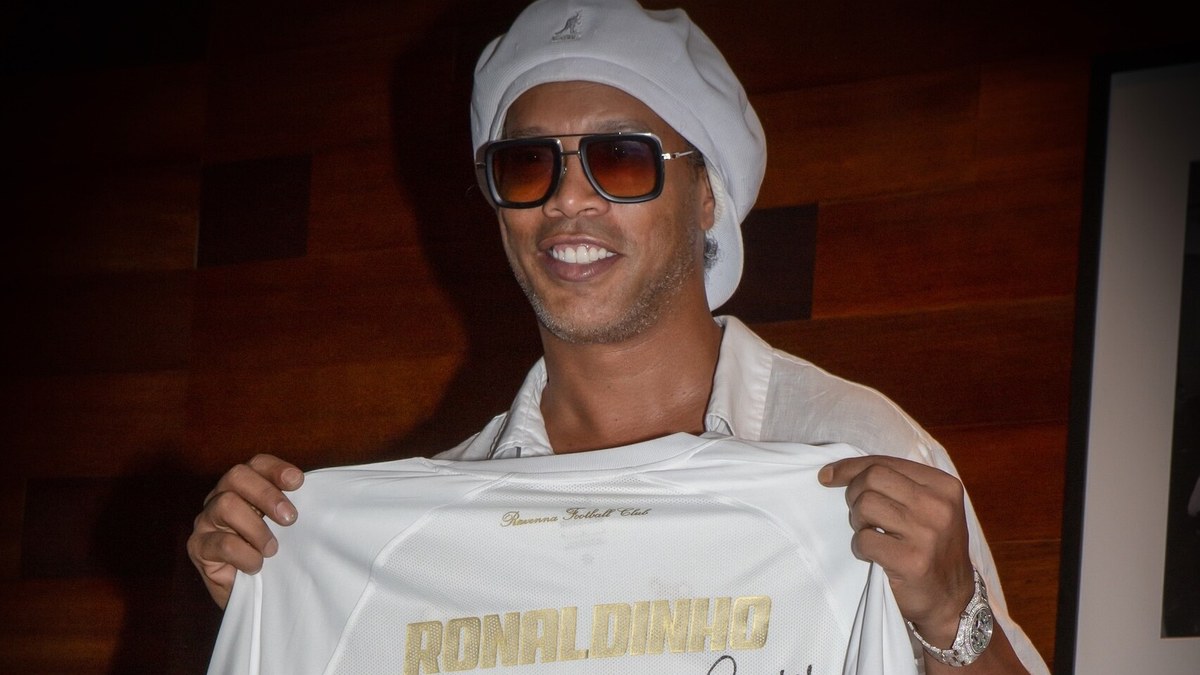
Ronaldinho has officially joined Ravenna FC by Cipriani, and the announcement is far bigger than the folklore of a famous name appearing at a glamorous event. The Italian club said the Brazilian World Cup winner will be registered as a player, with the presentation staged in Miami and the project framed as an international step for an institution founded in 1913. The Guardian then placed the story in its sporting context: Ronaldinho, at 46, is returning through a Serie C club trying to pull global attention towards a new era.
Photo credit: Ravenna FC by Cipriani official website. Real Ronaldinho image from the club announcement, cropped by SokaIQ for editorial publication.
The story is unusual because it sits at the meeting point of football, collective memory and club strategy. Ronaldinho is not an ordinary former player. His name still carries a precise idea of the game: smile, improvisation, touch, visible joy and the ability to turn a stadium into a stage. Seeing him linked with Ravenna is therefore not only an improbable comeback. It also shows how some clubs are trying to exist in an attention economy where history, image and the pitch increasingly overlap.
Ravenna turns a signing into a statement Ravenna FC by Cipriani has not presented Ronaldinho as a simple curiosity. The club speaks about a long-term vision driven by Ignazio Cipriani, a project rooted in the city but designed to travel, and an identity connecting football, culture, creativity and Italian heritage. The Miami announcement matters because it places Ravenna inside an international story before the ball has truly started rolling.
That makes the signing feel like a statement. Ravenna is not only buying past fame; it is trying to build a symbol. A player such as Ronaldinho provides an immediate universal language. Even supporters who do not follow Serie C understand what his name represents. For a club trying to change scale, that instant recognition carries real value.
There still needs to be a clear separation between spectacle and sporting reality. A return at 46 cannot be read like the arrival of a player at his physical peak. Ravenna will have to balance media impact, merchandising, brand identity and Ronaldinho’s practical use inside a demanding season. That balance is exactly what makes the story worth watching.
Ronaldinho remains a global brand of football joy Ronaldinho’s power comes from something very few footballers keep for this long: he represents an emotion that is immediately recognisable. Some players are associated with trophies, others with numbers or leadership. Ronaldinho is still associated with joy. His way of playing marked generations because it looked free, almost mischievous, while still being built on elite technique.
This signing therefore activates a powerful memory. For older supporters, it recalls the player who restored a spectacular colour to attacking football. For younger fans, it offers a chance to see, even briefly, a figure they know mostly through clips, archives and family stories. In a sport obsessed with novelty, Ronaldinho shows that some images do not really age.
Ravenna is clearly leaning into that memory. The club has highlighted a new kit, an international launch and a highly visual presentation of its project. Ronaldinho gives the strategy coherence because he is not only a Ballon d’Or winner. He is one of the rare players whose aura goes beyond honours and touches the popular culture of football directly.
A sporting move with a cultural edge Ronaldinho’s return in Serie C should be understood within a wider movement. Lower-division clubs cannot always compete through television money, squad depth or classic commercial power. They sometimes have to invent different routes: storytelling, strong local identity, cultural collaborations, iconic figures and a matchday experience that feels different.
Ravenna appears to be embracing that direction. The official announcement stresses the city, tradition, contemporary creation and the start of an international chapter. The Miami evening, the new kit and the presence of personalities from outside the pitch suggest the club wants to position itself beyond a strictly sporting frame. That is not necessarily a weakness, as long as the team itself does not become secondary.
The risk is obvious. A signing this spectacular can overshadow the dressing room, distract from daily objectives or create unrealistic expectations. Supporters will want football, not only a campaign. Success will depend on Ravenna’s ability to turn the Ronaldinho effect into lasting energy: ticket demand, local interest, sporting credibility and real progress for the project.
What the pitch can still ask from Ronaldinho The central question is simple: what can Ronaldinho still offer on the pitch at 46? Nobody should expect the player who once accelerated every move as if football had been built around his rhythm. Professional football does not forgive age, especially in duels, repeated sprints and defensive transitions. But certain profiles can still provide useful sequences if the role is defined with care.
Ronaldinho can bring technical calm, creativity in tight spaces, set-piece quality, final-pass imagination and above all a presence that changes the psychology of a match. His minutes will probably need to be selected carefully. The staff must protect the collective balance, avoid letting the team play only for him, and use his influence as a bonus rather than a dependency.
That is where the story can become genuinely footballing. If Ronaldinho merely appears, the operation will remain mostly media-driven. If he manages to deliver a few coherent passages of play, Ravenna will have built something rarer: a bridge between nostalgia and competition, between legend and the current dressing room.
A small Italian stage under a global spotlight Serie C is not used to seeing a name of this size attract international attention. That is precisely why the story carries such narrative force. Ravenna will benefit from an unusual spotlight, but that spotlight also creates responsibility. Outside attention can be warm at first, then unforgiving if the project starts to look superficial.
For Italian football, Ronaldinho’s arrival in a lower division is a reminder that a league system’s attraction is not limited to its biggest fixtures. Historic clubs, mid-sized cities, unusual projects and stories of reinvention all contribute to the richness of the landscape. Ravenna now has a global entry point for telling its own version.
The important part is not to reduce Ronaldinho to a marketing object. His name is too big to be treated like a logo. If the club respects what he represents while building a serious team around him, the experiment could become one of the most watched curiosities of the Italian season. If not, it will remain a brilliant but fragile announcement. For now, the effect is clear: Ravenna has achieved what many clubs chase without ever reaching it, the immediate attention of world football.