FIFA / world football
Steve Clarke leaves Scotland as a sudden resignation opens the next cycle
Steve Clarke has resigned after Scotland's World Cup elimination. The Scottish FA now has to turn regained stability into a more ambitious next project.
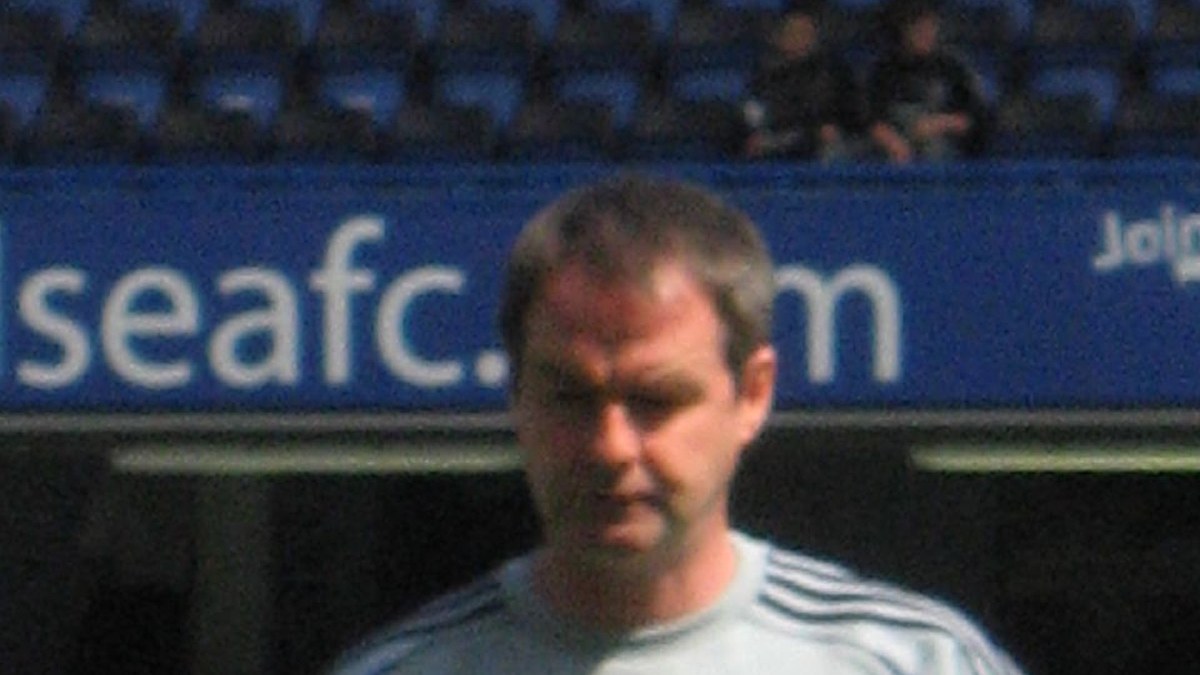
Steve Clarke has resigned as Scotland head coach hours after his side's World Cup elimination, a decision confirmed by BBC Sport and The Guardian overnight. The timing gives the story its force: BBC Sport also published a timeline showing that Clarke had signed a new long-term contract only thirty-one days before stepping down, turning what had been framed as continuity into one of the sharpest managerial reversals of the tournament.
This is not just another coaching change. It closes a rare period in Scottish football, built around stability, renewed major-tournament presence and a complicated relationship between structural progress and tournament frustration. Clarke brought Scotland back into serious international conversations, but the World Cup exposed the limits of a team that could not turn its return to the global stage into lasting momentum.
The Scottish Football Association now has to move carefully. It must choose a successor without erasing what Clarke rebuilt, refresh a disappointed dressing room without selling an empty revolution, and understand why the tournament left such a heavy feeling despite the historical value of Scotland being back in the world's biggest competition. Scotland are not only looking for a new head coach. They are looking for a direction capable of turning regained stability into football that is braver, more flexible and more convincing when pressure arrives.
A resignation that instantly changes Scotland's debate
The timing makes the resignation impossible to treat as routine. A head coach who signs a new deal before a major tournament usually sends a message of continuity. When he then leaves just after elimination, the same contract becomes part of a much harsher story: a project that looked secure on paper but did not survive the judgement of the pitch. BBC Sport confirmed the departure and followed it with a detailed timeline of the rapid shift from new agreement to sudden exit.
For Scotland supporters, the sequence compresses several emotions at once. There is gratitude towards a manager who restored order and returned the national team to major stages. There is also frustration at a World Cup in which the sense of progress did not fully hide the limitations. And there is a colder question: if Clarke, after being given time and a renewed mandate, believes the cycle has ended, then the next build has to begin immediately.
The Guardian placed the resignation directly in the context of elimination, which matters. A World Cup exit is not judged only by where a team finishes; it is judged by the manner of departure. Scotland left the tournament with the feeling that old weaknesses had resurfaced at exactly the moment when the team wanted to prove that its level had changed.
Clarke's legacy is stronger than the final image
After a resignation, it is tempting to reread an entire tenure through the last moment. That would be too simple. Clarke gave Scotland a coherence they had often lacked. His team did not always thrill, but it found a structure, a discipline and a renewed ability to compete in matches where the national side had too often lived on hope rather than control.
His central achievement was the normalisation of international relevance. Scotland no longer approached qualification campaigns as exercises in nostalgia or fear. They approached them as a side capable of building a path, holding a plan and producing enough results to exist again in the major-tournament landscape. That progress does not disappear because the ending was painful.
But the legacy also carries its limits. The team sometimes looked too dependent on emotional force and defensive order, too cautious when it needed to impose rhythm, and too slow to change shape when a match began to escape. At a World Cup, those details become visible quickly. Stability gives a platform; it does not automatically provide creativity, control of difficult spells or the ability to surprise an opponent that has already read your structure.
The next appointment must be a profile, not just a name
The Scottish FA's next decision cannot simply be a popularity contest. The deeper issue is the profile of the project. Does Scotland extend the Clarke line with a continuity coach built around solidity and cohesion? Does it search for a more attacking break, with more risk and a clearer use of technical players? Or does it look for a hybrid figure who can preserve the fighting identity while making the team more adaptable with the ball?
That decision will be watched closely because the Scottish group is not empty. There are high-level players, accumulated experience and a public that has rediscovered the habit of believing. The danger would be to treat the resignation as a simple bump without analysing the tactical and mental reasons behind the tournament disappointment. The opposite danger would be to break everything in reaction, forgetting that Clarke also restored badly needed order.
The successor will therefore have to speak to two timelines. In the short term, he must settle a bruised dressing room, restore clarity around roles and rebuild campaign energy. In the medium term, he must solve the harder problem: moving Scotland from a team capable of returning to major competitions into a team capable of staying alive in them for longer.
A dressing room that needs direction after a shock ending
The human side of the resignation is important. Elimination always leaves marks, but a rapid head-coach departure adds another shock. Players have to process the tournament outcome and then accept that the figure who had shaped their environment for years will not be there to explain the next step. Some will see opportunity. Others will feel the loss of a familiar framework.
That is why the association has to avoid a vacuum. Senior players need to understand what will be kept and what will change. Younger players need to feel that a door is genuinely opening, not merely that a cycle has closed. Supporters will not be won back by slogans alone. They will look for concrete signs: a clear plan, a coherent staff and an honest diagnosis of the tournament's flaws.
Clarke had a particular relationship with Scottish pressure. He understood the history, the scepticism, the fervour and the speed with which public mood can move from hope to anger. His successor will need the same resistance, but not necessarily the same method. Scotland require a coach who can absorb the noise without becoming trapped by caution.
What the resignation says about the next cycle
Clarke's resignation marks the end of one phase: return, repair and regained credibility. The next cycle has to aim at something different. It will no longer be enough to say that Scotland are back in the big room. The country will want to know how the team intends to matter there, how it plans to attack major fixtures, and how it avoids letting the joy of return be followed by a short stay.
The new direction will also inherit an ambivalent recent memory. Clarke leaves with real achievements, not as a forgotten manager. But he also leaves after a tournament that suggested his team had reached a ceiling. The best way to respect his work may not be to copy it. It may be to build on what he leaves behind: a steadier base, higher expectations and a public that no longer wants Scotland to be satisfied by participation.
That is the paradox of Scotland's night. A resignation can look like an admission of failure. It can also become the starting point for sharper ambition. Clarke brought Scotland back into the global conversation; the next head coach has to prove that presence can become more than an emotional return. The page has turned quickly, but it does not begin from zero.
Photo credit: Mark Freeman / Wikimedia Commons / Creative Commons Attribution. Real Steve Clarke photo, imported and cropped by SokaIQ for editorial publication.