FIFA / world football
World Cup last 32: why the knockout round changes everything
The World Cup enters its knockout phase with favourites under pressure, dangerous outsiders and a schedule that removes the safety net.
The World Cup changes gear on Sunday as the knockout phase begins. The group stage has already produced the kind of stories that give a tournament its shape: favourites placed under pressure, ambitious outsiders refusing to shrink, senior players carrying national expectations and coaching staffs trying to turn short preparation into a clear identity. BBC Sport published its guide to every tie in the last thirty-two this morning, while CBS Sports updated the fixture schedule and timing for the next part of the competition. The message is simple: the tournament has entered its second life.
That shift matters because the margin for recovery disappears. Teams can no longer hide behind group arithmetic, goal-difference scenarios or the comfort of another match to repair a bad night. Every team selection, physical decision and tactical adjustment can define a campaign. The biggest names arrive with reputation, but the format also gives space to nations that have built momentum through discipline, energy and emotional freshness.
BBC Sport's opening focus on South Africa against Canada captures that change perfectly. It is not the heaviest fixture by historical weight, but it is the kind of match that can alter how a football nation sees itself. Further along the bracket, the paths of England, Argentina, Portugal, Colombia, Germany and others give this stage serious density. The World Cup is no longer just a long sequence of matches. It is now a run of moments where context can matter almost as much as talent.
The tournament becomes sharper and more nervous
A group stage rewards consistency. A knockout tie rewards precision. That is the essential difference this week. A team that looked slow across several days can become dangerous again if it finds the right balance at the right time. Equally, a side that impressed in its group can suddenly meet an opponent prepared to block space, slow rhythm and drag the match into uncomfortable areas.
BBC Sport framed this World Cup as two competitions in one: the long qualifying tournament inside the tournament, and then the direct elimination phase. That distinction feels accurate. Coaches used the opening stage to test partnerships, protect key players, adjust build-up patterns and manage fatigue. From now on, there is less room for experiment. Staffs have to choose what they truly trust when pressure rises.
The schedule updated by CBS Sports adds another layer. Turnarounds are short, travel matters and medical departments become almost as influential as assistant coaches. In that environment, the best team on paper is not always the most comfortable team. Bench depth, freshness in wide areas, penalty-box defending and clarity late in matches become central measures of whether a side is ready to survive.
Favourites must offer more than reputation
The major nations enter this phase under a different kind of scrutiny. Their task is not only to advance. They need to show that their tournament path is convincing. England, for example, have secured their place in the bracket, but British analysis has still stressed the need for a higher collective level. Individual talent can unlock one night, yet it does not always carry a team through when an opponent is prepared to defend deep and narrow the spaces.
Argentina still carry the symbolic weight of Lionel Messi and the competitive culture of a side used to major occasions. But the management of his minutes and the team's balance around him remain part of the wider story. Experience gives security, not immunity. In a crowded bracket, emotional control can become as important as inspiration.
Portugal and Colombia also arrive in a zone of truth. Their group-stage meeting confirmed that both teams can carry the ball, accelerate and match each other physically. The next question is which side can simplify its football when a tie becomes tight. Knockout football does not reward only beautiful spells. It rewards teams that stay clean when space disappears.
Germany's situation adds another layer to the elite conversation. The Guardian published a fresh analysis of a team caught between past and future, which speaks to a broader issue: history does not automatically solve identity. A major football country can still look uncertain if its structure, pressing cues and attacking roles are not fully aligned. The bracket is where those questions stop being theoretical.
Outsiders give this round its real texture
The strength of the last thirty-two is not only in the famous names. It is also in the teams that have reached this stage without carrying the burden of expectation. South Africa and Canada are the clearest early example. The Guardian's feature on Alphonso Davies returning as Canada approach a defining World Cup moment shows how one player's availability can become part of a national story, especially for a host country trying to turn promise into something more permanent.
Canada's opportunity is layered. Davies brings status, speed and emotional pull, but the team still has to function around him. A returning star can lift a group; he can also change the balance that got the side through the opening stage. That is why Canada's next step is not just about one player. It is about whether the whole structure can absorb the spotlight.
South Africa approach the same match with a different energy. A team outside the heavyweight conversation can sometimes play with rare freedom. That does not mean pressure disappears. It simply changes form. The group must manage excitement, avoid being swallowed by the occasion and stay faithful to the ideas that brought it this far.
Other African and South American sides also give the bracket depth. DR Congo, Algeria, Ivory Coast and other rising forces can use this stage as a platform for credibility. The issue is not only one result. It is international standing, belief and the ability to make a more famous opponent play on less comfortable terms.
Coaches will shape the margins
In knockout football, players usually decide the images, but coaches often create the margins. A higher press, a more conservative block, an adventurous full-back or an extra midfielder can completely change how a tie feels. Staffs can no longer prepare only an attractive first plan. They must prepare the moments when that plan fails.
The teams that go deep are likely to be the ones that can change without panic. A side may begin carefully, read the opponent's passing lanes and then push higher. It may accept a difficult spell before restoring control through possession or transition threat. That flexibility is now essential in international football, where physical and tactical gaps have narrowed.
Management of senior players will be just as important. Some have already carried heavy minutes. Others are returning from minor concerns or selective use. A leader's return can electrify a team, but it can also force a reshuffle. A big name does not fix everything if the side loses compactness, exposes its wide channels or becomes too predictable in the final third.
Why this round can set the tone for the whole tournament
The first knockout round is often a revealer. Teams that advance with authority create a new level of confidence. Teams that survive in difficulty can also grow, provided they understand what nearly went wrong. The danger is winning without learning. At a World Cup, small warning signs can quickly become decisive problems.
This week will therefore tell us plenty about the real hierarchy of the competition. The favourites must prove that they are more than deep squads and familiar shirts. The outsiders must show that their presence here is not just a happy episode. Coaches must clarify their choices. Senior players must own the tense passages. Supporters, meanwhile, get the most concentrated part of the tournament so far.
BBC Sport's guide and the CBS schedule provide the frame. The pitch will provide the verdict. From this point on, every tie carries a simple stake: keep writing the tournament or allow a whole campaign to be reduced to one missed night. That is what makes the last thirty-two so attractive. It offers not only big names, but decisions, swings and stories that can change within minutes.
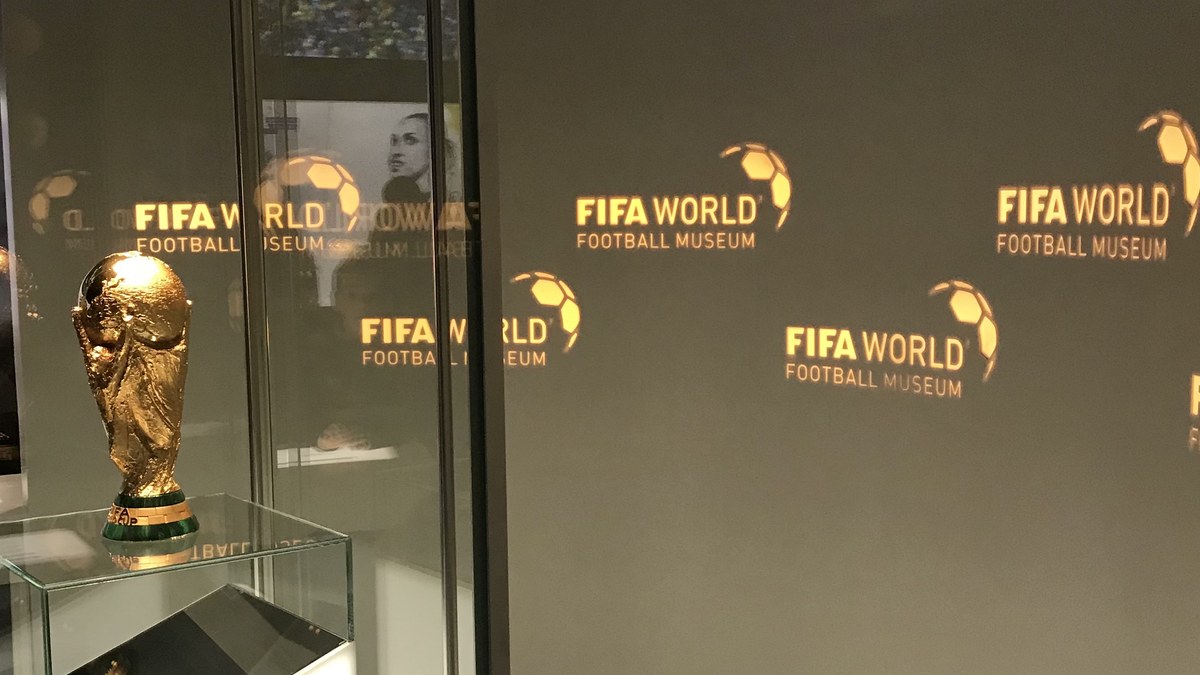
Photo credit: Ank Kumar / Wikimedia Commons / CC BY-SA 4.0. Real FIFA World Cup trophy photo, imported and cropped by SokaIQ for editorial publication.