News
Beccacece and Ecuador: from the brink to a historic World Cup night
Sebastian Beccacece saw Ecuador turn pressure into a historic qualification, with emotion, structure and collective resilience shaping the night.
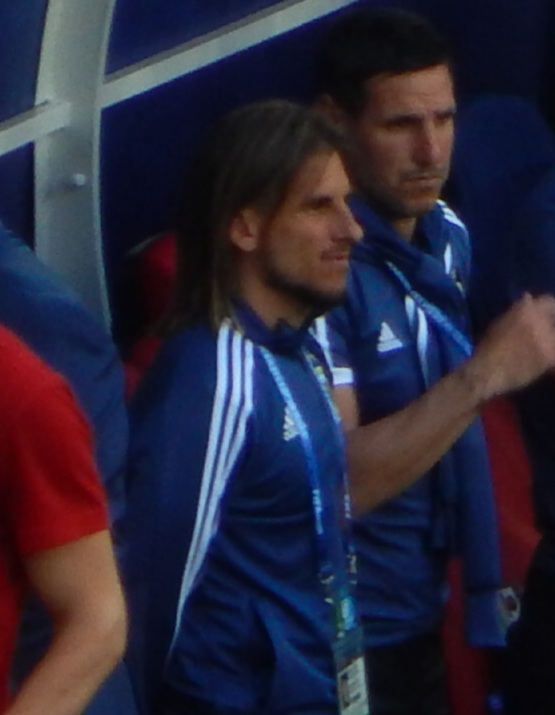
On 26 June 2026, Sebastian Beccacece woke up having lived through one of those nights that can completely change the reading of a coaching tenure. Before Ecuador's final group fixture, the head coach was carrying heavy pressure, loud criticism and the genuine possibility of leaving his role if the team failed to cross the line. A few hours later, BBC Sport and AP News were describing an emotional manager who had moved from the edge of collapse to a qualification that gives Ecuador's World Cup campaign historical weight.
This is not only the story of a relieved coach. It is the story of how a national team can change energy when a fragile plan is finally validated by the result. Ecuador did not move through the group like a calm machine. They lived with doubt, tension around the staff, frustration over attacking rhythm and then a collective answer in the most exposed match. Beccacece therefore becomes the face of a sporting reversal, but also of a wider question: how does a team survive World Cup pressure when everything can turn in one evening?
Pressure that went beyond the pitch
Before the match, Beccacece was not operating from a position of comfort. BBC Sport noted that he had connected his own future to Ecuador's progress, acknowledging that failure would force him to leave a place he said he loved deeply. That kind of statement changes the atmosphere around a squad. It gives brutal clarity to the moment: the team is not only trying to win a match, it is defending a cycle, a method and a relationship with the coach.
The pressure was also external. Major tournaments amplify criticism, especially for national teams talented enough to expect more but not dominant enough to control every match. Ecuador were in exactly that uncomfortable space. Supporters wanted knockout football, the emotional context was heavy, and every staff decision could be read either as weakness or as calm judgment.
That is why the response matters. A qualification achieved under stress does not feel like a formality. It reveals whether a group can remain attached to its structure at the moment when it could easily break apart.
What Beccacece managed to preserve
The first success for the coach was keeping a football idea clear enough to avoid panic. Ecuador did not earn the right to continue by abandoning all structure. They had to absorb difficult spells, but they also kept aggression in duels, a willingness to play forward quickly and a physical presence that can make any opponent uncomfortable.
Beccacece is often associated with intense football, built around pressure, mobility and a high energy demand. In a national-team environment, that ambition has to be simplified without being emptied of meaning. Training time is shorter than at club level, automatic movements are less deep and players arrive with different habits. The staff's merit is that Ecuador retained enough principles not to become only an emotional reaction.
That point matters for what comes next. A team advancing only on adrenaline can drop quickly. A team advancing with reference points can turn momentum into a working base. Beccacece now has to prove the second version is real.
A qualification that speaks to South American depth
For Ecuador, reaching the knockout stage of a World Cup remains a major marker. The country does not have the permanent global exposure of Brazil or Argentina, but it does have an athletic, disciplined generation increasingly familiar with elite demands. That blend gives Ecuador an interesting identity: less glamorous than the continent's giants, but capable of making every match uncomfortable.
The night also underlined the depth of South American football. Behind the two historic powers, several nations are building teams capable of disrupting the expected order. Ecuador belong in that conversation. Their strength lies in intensity, defensive maturity and players who can accelerate without needing long spells of possession.
Beccacece must now channel that energy. The next phase will not forgive long lapses in concentration. But it will also suit a team that can defend hard, run forward and turn one sequence into collective momentum.
The coach's emotion became a symbol
AP News highlighted the image of Beccacece celebrating with his family after the final whistle. That detail says a lot about the emotional charge of the moment. Coaches often speak about plans, organisation and control, but international tournaments remain spaces where personal pressure spills over. When a manager's future is tied to one match, the line between professional and intimate life becomes thin.
That emotion can help the group if it is controlled. It shows the players that the staff are not moving through the tournament at a distance. It can also strengthen the bond inside a dressing room that has just survived a serious test. But it cannot become the only story. Ecuador cannot continue by seeing themselves only as a rescued team. They have to convert relief into standards.
That is probably Beccacece's biggest task in the coming hours: allow the joy to exist, then bring the squad quickly back to detail. Knockout football is often won through modest adjustments rather than grand speeches.
The next challenge is turning reprieve into ambition
The word reprieve would be unfair if it ignored the quality of Ecuador's response, but it describes the starting context accurately. Beccacece was threatened by results and by the noise around his team. He emerges from this sequence with stronger authority, but not permanent protection. At a World Cup, every match rewrites the judgment.
The next stage will show whether this qualification was an emotional peak or the beginning of a genuine step forward. Ecuador have the tools to be more than a group-stage story. They have impact, discipline and a squad young enough to play without an inferiority complex. They still need more attacking consistency and colder management of moments when the opponent takes control.
For Beccacece, the message is clear. He has gained time, but above all he has gained a stage. The world has seen a coach move from the threat of departure to a family celebration, and a team respond when doubt was at its loudest. Now Ecuador must show that emotion can become a durable force, not only the intense memory of one saved night.
Photo credit: Oleg Bkhambri / Wikimedia Commons / CC BY-SA 3.0. Real Sebastián Beccacece photo, imported and cropped by SokaIQ for editorial publication.