World Cup
Bielsa meets De la Fuente as Uruguay-Spain becomes a test of method
Marcelo Bielsa faces Luis de la Fuente in a Uruguay-Spain match shaped by urgency, coaching influence and tactical control.
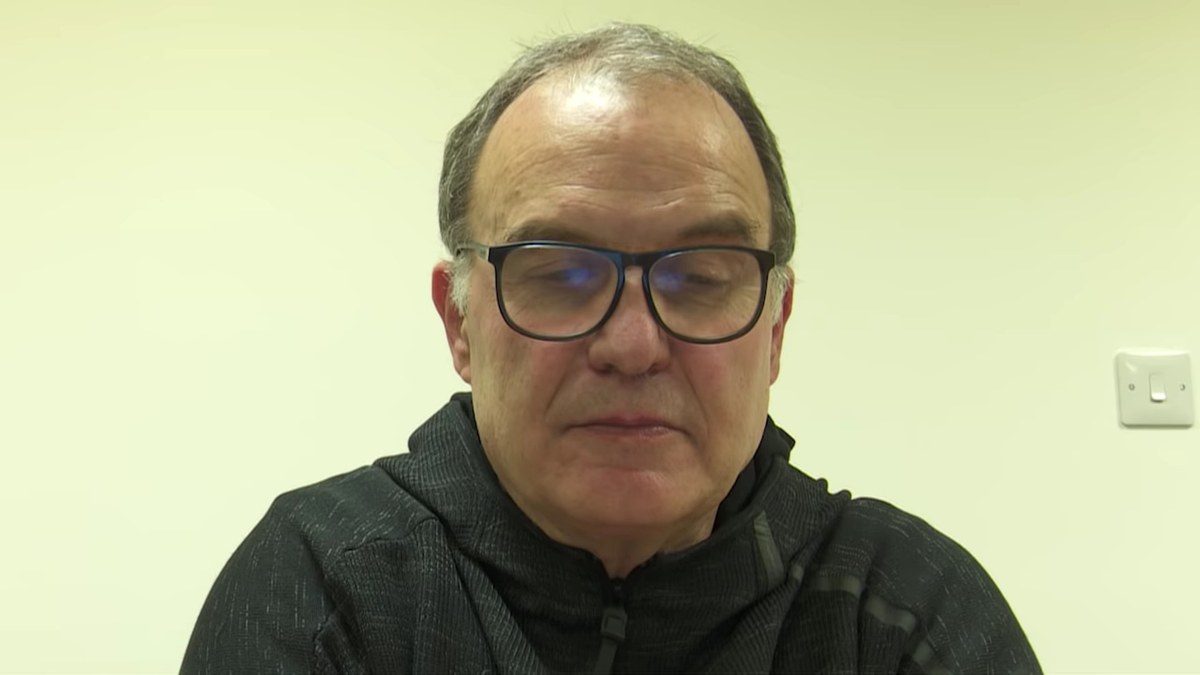
Uruguay against Spain arrives today with a tension that reaches beyond the simple order of a group table. Marcelo Bielsa meets Luis de la Fuente, a Spain coach who has often explained how watching Bielsa’s training sessions at Athletic Bilbao shaped part of his own coaching education. The Guardian places the fixture inside that shared history, while AP reports that De la Fuente publicly spoke of his admiration for Bielsa before the match in Guadalajara. Reuters, through accessible search results, also frames the game as a night Uruguay are treating like a sporting final to protect their tournament future.
Photo credit: Wikimedia Commons / Newell's Old Boys / CC BY 3.0. Real Marcelo Bielsa photo from 2018, cropped by SokaIQ for editorial publication.
The story is strong because it sets two different ways of handling pressure against each other. Spain arrive with control, a confident generation and a coach who has turned early doubt into calm authority. Uruguay carry Bielsa’s intensity, but also the questions that follow his teams when a match becomes tense: how much to press, how much to risk, how much suffering to accept without losing structure.
A coaching relationship gives the fixture its edge The Bielsa-De la Fuente link is not just background colour. AP reports that the Spain coach spent months watching Bielsa’s sessions at Athletic Bilbao during the early stages of his technical path. He described Bielsa as an innovator, said he followed his career closely and kept records of his training work. That recognition gives the match a rare texture: the coach who studied the method now leads one of Europe’s major national teams against the man who helped shape part of his thinking.
That does not mean Spain are a copy of Bielsa. De la Fuente has built something more patient, more institutional and less emotionally extreme. But influence can be visible in smaller places: attention to detail, repeated behaviours, the belief that training prepares decisions before speeches do. Against Bielsa, that memory becomes a test of maturity.
For Bielsa, the weight is different. He is not only meeting an admirer; he is facing an opponent who can understand some of his intentions. Uruguay therefore have to surprise through execution rather than through the broad idea. In a tournament where margins shrink quickly, that distinction matters.
Uruguay must turn urgency into clarity The Guardian describes a difficult moment around Uruguay, with a team needing to answer on the pitch and quiet the noise around it. That is enough to define the challenge. Urgency can energise, but it can also push a team to accelerate too early, break its distances or confuse bravery with disorder. Bielsa demands enormous intensity; the task is to keep that intensity readable through the whole night.
Against Spain, Uruguay cannot live only through duels and running. The press has to be coordinated, otherwise Spain will find the exit passes. Midfielders will have to choose the right moments to jump, defenders will have to protect the space behind them, and forwards will need to accept that work without the ball can matter as much as the attacking run. This is the kind of match where a block can look aggressive for ten minutes, then become exposed if the connections stop following.
Bielsa guarantees ambition. He does not automatically guarantee control. That is where Uruguay’s night will be decided: staying loyal to a pressure identity without giving Spain the open match they can punish.
Spain can impose calm, but cannot fall asleep De la Fuente’s Spain have an obvious strength: they can make opponents run, keep the ball in safe zones and choose the moment to accelerate. The danger in this kind of fixture is believing that technical command is enough. Uruguay enjoy matches that become emotional, physical contacts that alter rhythm, and second balls that turn ordinary sequences into danger.
De la Fuente must protect his side from two extremes. The first would be playing too slowly and allowing Uruguay to build energy in the contest. The second would be answering every pressure wave with an unnecessary risk. Spain have to remain Spain: use the ball to breathe, but keep enough vertical threat to punish space when Bielsa pushes his lines.
The tactical duel will also live in the wide areas. A Bielsa team often tries to create equal numbers or advantages through movement and aggressive marking. Spain will have to move the block, create passing angles behind the first press and avoid receiving with their backs to play in trapped zones.
Lamine Yamal adds a threat Bielsa must manage Reuters highlighted the Lamine Yamal threat in Uruguay’s approach, and that makes sense. Against a player who can change rhythm with a carry, a pause or an inside pass, Uruguay have to decide how to close space without unbalancing an entire flank. Guarding that kind of talent with one player is risky; committing too much cover can open the rest of the pitch.
This is where Bielsa has to show precision. His football accepts duels, but major matches also require invisible protections: a midfielder sliding at the right time, a defender refusing to bite too early, a winger tracking the run instead of staying high. Lamine Yamal can pull attention, but Spain become even more dangerous if that attention frees other creators.
Uruguay do not need to abandon aggression. They need to choose where to place it. Pressing without cover against Spain opens corridors. Waiting too deep invites pressure. The balance sits in clear triggers and a collective discipline that survives fatigue.
A match of method as much as qualification This fixture matters because it mixes memory, urgency and method. De la Fuente learned by watching Bielsa, but now has to resist him. Bielsa inspired a generation of coaches, but now has to show that his Uruguay can stay lucid in a high-pressure match. The players will decide the outcome, of course, yet the two benches give the night unusual depth.
For Spain, the game can confirm the strength of a project that looks more secure with every test. For Uruguay, it can restart a path or deepen the questions. The most revealing part may be less the clash of styles than the way each side handles its weak spells. A team that wants to go far has to survive when it is not dominating.
That is why the match deserves more than a star-led or table-led reading. It brings together two coaching schools, two temperaments and two ways of answering pressure. Bielsa and De la Fuente know each other through the work; today, they judge each other through the details.