FIFA / world football
Bukayo Saka managed before Ghana: why England are choosing caution
Thomas Tuchel has indicated Bukayo Saka is unlikely to start against Ghana as England continue to manage his Achilles issue.
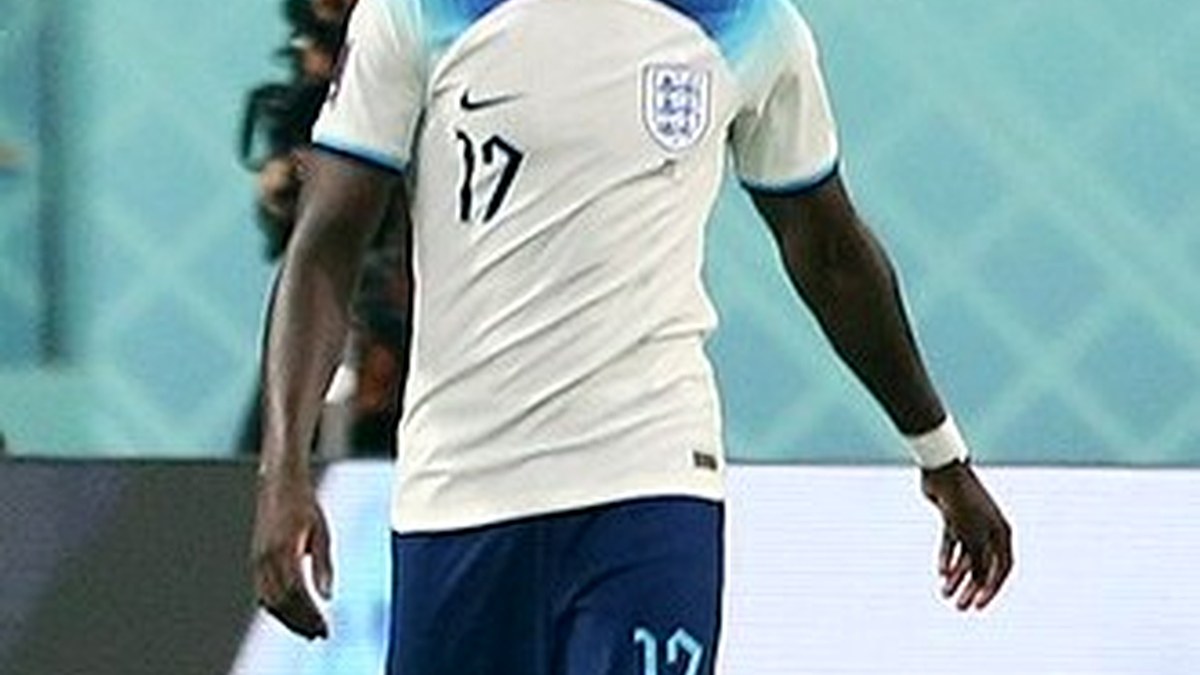
Bukayo Saka remains the most closely watched fitness issue around England before the meeting with Ghana. BBC Sport reported on Friday that Thomas Tuchel has indicated the Arsenal winger is unlikely to be ready to start on Tuesday, with the staff still managing his Achilles problem. Sky Sports carried the same line: England appear to be looking at a gradual return, with the Panama match a more realistic target for a place in the starting side.
Photo credit: Tasnim News Agency / Wikimedia Commons / CC BY 4.0. Real Bukayo Saka photo, cropped by SokaIQ for editorial publication.
The news is not only about one player's condition. It explains how England want to move through the early stage of the World Cup without rushing one of their most valuable attacking pieces. Saka is a winger of speed, balance and final-third quality, but that importance also makes caution more necessary. In a long tournament, losing a few days can be less damaging than forcing a return and weakening the rest of the campaign.
Ghana therefore becomes a management test as much as a sporting test. Tuchel has to keep the team competitive, preserve attacking width and avoid turning Saka's likely absence from the starting lineup into a tactical crisis. For England, the question is direct: how do they keep the right side dangerous without asking the player to carry the full load immediately.
Caution around the Achilles makes sense
An Achilles issue is rarely something to treat casually. Even when a player can train, sprint or take touches, the repeated accelerations matter as much as the pain felt in one session. For a winger such as Saka, explosiveness, sharp changes of direction and running after contact are central to performance.
That is why Tuchel's caution looks logical. England do not only need to know whether Saka can play a few minutes. They need to know whether he can repeat high-intensity actions, absorb a challenge, go again after a foul and come back several days later without a setback. The difference between medical availability and competitive availability is crucial.
The staff can therefore choose a staged return: bench involvement, controlled minutes and then a start when the risk is lower. That kind of plan often frustrates supporters, especially when it concerns such a high-profile player. But it protects the full tournament. A World Cup is not won simply with the best first lineup; it is won with key players still usable when the matches become heavier.
What England lose without Saka from the start
Without Saka starting, England lose part of their attacking security. He provides width, draws double coverage, pins the opposing full-back and opens spaces inside. Even when he is not scoring, his presence changes the behaviour of a defence. An opponent thinks twice before sending a left-back forward because the transition threat can appear quickly behind him.
There is also a rhythm element. Saka can alternate retention, short bursts and inward movement. He is not only a straight-line winger. His game gives the team a way to breathe: slow the move, provoke, then change the speed of the attack. In tight matches, that ability to create a local advantage can be the difference between sterile possession and a clear opening.
Against Ghana, his probable absence at the start can shift the creative burden. Other players will have to attack space, hold width and offer an outlet when England build under pressure. The danger is not just losing a starter. It is making the team easier to read if the right flank does not threaten enough.
The alternatives must be more than a name swap
Tuchel does not need to find a clone of Saka. He needs to build an attacking structure that can cover for him temporarily. That could mean a more direct winger, a midfielder sliding across to help progression, or a full-back given licence to advance earlier. The replacement is not just a name on a team sheet. It is an balance across the side.
If England choose a more vertical profile, they can try to attack the space behind Ghana's defence quickly. If they choose a more interior player, they can prioritise control and short combinations. In either case, the team must avoid funnelling too much play to the other side. A World Cup quickly punishes predictable attacks.
Saka's management could also create a role as a late-game weapon. A fresh winger introduced when opposition legs are heavier can influence the match without having to last the full contest. That scenario would give Tuchel a bench option while reducing the initial load. The question will be whether the state of the match allows that patience.
Ghana can test that area immediately
For Ghana, the news offers a clear cue. If Saka does not start, England must prove that their right side remains dangerous. The opponent may be tempted to push higher, close the inside lane more aggressively or force England to build through a less natural area.
That reading still carries risk. A team that focuses too heavily on the absence of one player can forget the quality still available around him. England have enough profiles to punish a defence that opens up too much. Ghana will therefore need to test the area without losing their own structure. The best strategy is not necessarily to attack Saka's side at all costs, but to check whether England keep the same fluency.
That tactical question makes the match more interesting. The fitness update becomes a match factor, not an excuse. It can influence pressing, build-up choices, wide duels and the way Tuchel uses his bench. The opening minutes should show whether England have prepared a stable solution or are still searching for rhythm.
A decision that reaches beyond Ghana
The most important point is the length of the tournament. If Panama is genuinely the more likely target for Saka to start again, England are signalling that they are thinking beyond one match. That may look conservative, but it fits the logic of protecting core players.
Every group-stage result matters. Yet the calendar forces coaches to rank risk. Pushing a major player too early can cost more than a one-match tactical adjustment. Tuchel has to balance the urgency of the next fixture against the value of having Saka fully available later.
The situation will also challenge the rest of the squad. A major national team cannot depend on one player to function. It has to absorb an absence, keep its identity and give the staff enough comfort not to rush a return. If England manage that against Ghana, caution around Saka will look like control. If they struggle to create, the debate will immediately grow louder.