FIFA / World Football
France: why N'Golo Kante still shapes Deschamps' balance
Olivier Giroud has underlined N'Golo Kante's continuing importance to France. The midfielder remains more than a symbol for Deschamps.
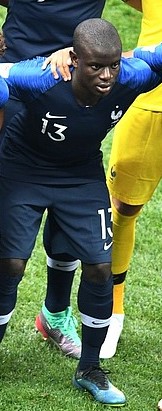
France begin their World Cup campaign with a question that goes beyond one midfield selection: why does N'Golo Kante still matter so much to Didier Deschamps' balance? BBC Sport brought the debate back into focus on Tuesday, with Olivier Giroud explaining why the World Cup winner remains an important part of the French squad. The context is simple enough: France have talent everywhere, but their tournament may still depend on how well they protect transitions, manage difficult spells and give structure to their attacking stars.
Kante is no longer the discovery figure who transformed the Premier League and then France. He has become something different: a reference point. His value is not only about distance covered or the familiar image of the tireless ball-winner. It is about reading space, covering an error before it becomes a chance, and bringing a kind of competitive calm that makes a team feel safer when a match tightens.
In a short tournament, that quality matters enormously. France have enough individual class to dominate spells, accelerate through their forwards and punish almost any defence. But major favourites do not win only through their best moments. They also survive their fragile ones. That is exactly where Kante's profile becomes central again.
France are still looking for their cleanest balance
France's strength has often come from mixing several registers. They can defend deeper, break quickly, press in bursts and then allow their individual quality to create separation. That flexibility is a weapon, but it requires a midfield that makes sense. If the first pressing line loses shape or the full-backs go at the wrong time, the team can become exposed through the centre.
Kante offers an answer because he corrects problems quietly. He blocks passing lanes, delays counters, supports more creative midfielders and gives defenders a layer of security that is not always visible in a highlight package. His presence also allows Deschamps to keep a team capable of changing rhythm without losing its centre of gravity completely.
The debate is therefore not only physical. It would be too easy to ask whether Kante still runs as much as he once did. The better question is tactical: are France more stable when they have a midfielder who reads small imbalances before everyone else? On that point, his experience still carries huge weight. In World Cup matches, the details do not always give warning before they hurt you.
Giroud's view highlights the value of title-winning leaders
Olivier Giroud's perspective matters because it comes from inside a generation that has lived elite international football. Without needing to turn his point into a dramatic declaration, the message underlines an important idea: some players are not selected only for what they produce individually, but for what they make possible around them.
Kante belongs to that category. With him, forwards can sometimes take one more risk, advanced midfielders can step on with more freedom and the back line can accept a slightly bolder position. That does not mean everything rests on him. It means his profile changes the geometry of the side, even when he is not on the ball.
For Deschamps, that sort of figure has particular value. The France coach has always placed importance on players who guarantee a base. In a tournament where the environment can shift quickly, where media pressure rises after the first stumble and where favourites are judged harshly, mental and tactical stability become resources. Kante gives France that feeling of continuity.
His role has changed with time
The current Kante should not be analysed as a frozen copy of the player who conquered Europe. Time changes legs, leagues change habits and responsibility changes the way a footballer plays. But evolution does not necessarily remove value. It can relocate it.
Today, his importance may be found in choosing the right moment. When to jump, when to hold, when to guide an opponent into a less dangerous area, when to slow a transition with a simple pass or a clever interruption: those details structure a team. They do not always make headlines, but they often separate a brilliant side from a truly solid one.
France have enough creative profiles not to ask Kante to become a playmaker. His role is different: clean, balance and connect. In international football, where many teams attack quickly after regaining possession, that connecting work can be extremely valuable. A French attack can sometimes begin with an intervention that simply stopped the opponent from opening the pitch.
Why the timing of the debate matters
The calendar gives this discussion extra force. France are entering the competition with the expectation that naturally follows their status, and every Deschamps decision will be watched. The renewed focus on Kante is not just nostalgic. It speaks to a very current problem. How does a great team keep control when it fields several players who can decide matches in advanced areas?
Recent major tournaments have shown that favourites must accept a degree of pragmatism. They need to entertain, but also close spaces. They need to accelerate, but also break the opponent's rhythm. France do not need to deny their talent to do that. They simply need to frame it. Kante is one of the most natural players to embody that frame.
None of this guarantees dominance. No midfielder can protect a side alone if the distances become too large or collective discipline disappears. But it is a valuable safety net. The danger for France would be to assume that technical superiority is always enough. At a World Cup, opponents often find moments of disorder to attack.
A symbol of France between memory and renewal
Kante also represents a bridge between two versions of France. He recalls the generation that has already won while speaking to a squad still trying to write its own tournament. That blend can be powerful if the hierarchy remains clear. Senior players set the tone, rising players bring the energy and the staff have to hold everything together without creating an artificial contest between past and present.
In that reading, the French midfield becomes the barometer of the tournament. If France control transitions, regain the ball cleanly and allow their attackers to receive in good areas, they will have a very strong base. If they split into two halves, even their best attacking players may spend too much time repairing the team's imbalances.
That is why the Kante debate deserves more than a reflex of nostalgia. It touches the architecture of the side. The World Cup will test France's depth, patience and composure. In that test, a midfielder who makes everyone around him feel more secure can still carry serious weight.