FIFA / World Football
England: Saka, Tuchel and the first real World Cup call
Bukayo Saka says he is ready for England, but Thomas Tuchel must manage physical risk, hierarchy and tournament rhythm.
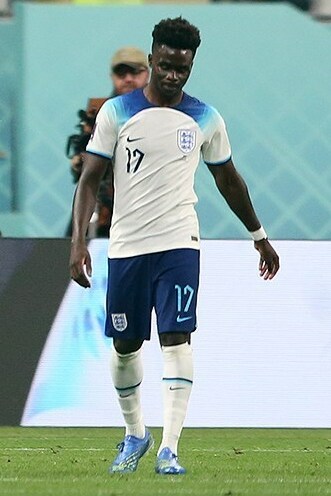
Bukayo Saka has pushed one of England's biggest World Cup questions back to the centre of the week: how far can a national team push a key player when the tournament is beginning, the first major opponent is close and the balance of the side also depends on freshness? BBC Sport reported that the winger considers himself ready for England's opener against Croatia while acknowledging the risk around his condition. The Guardian treated the same issue as a matter of physical management as much as status. Sky Sports, meanwhile, placed it inside Thomas Tuchel's wider selection debate, with several positions still under discussion.
This is bigger than one name. England arrive with an impressive squad, but every option creates a consequence. Saka gives width, inside threat, technical continuity and elite reference points. Protecting him can look sensible; starting him immediately can give the team its natural rhythm. Between those instincts, Tuchel has to choose a line that is neither timid nor reckless.
These decisions often reveal the real level of a national team. Favourites are not judged only by visible talent, but by their ability to manage the first week without burning legs, sending the wrong message to the dressing room or letting one opening fixture shape the whole tournament. For England, Saka is therefore a player, a symbol and a test of method.
Saka changes England's plan even below full throttle
Saka is not just a winger who attacks his flank. He gives England a route up the pitch. When he receives wide, the opposing block has to decide whether to let him isolate the full-back or slide across quickly. When he comes inside, he forces the opposition midfield to protect an area England already like to occupy with creative players. That double threat is why his presence changes a match before he has even won a duel.
The physical question does not remove that influence. It makes it more delicate. A managed Saka can still matter through decision-making, timing and the fear he creates. But if England rely on him too heavily to provide speed, the team can become readable as soon as his intensity dips. That is the line Tuchel has to watch: using a weapon without turning that weapon into a permanent obligation.
Croatia, with enough experience to read those details, will know how to test that zone. They can try to trap Saka near the touchline, deny him short combinations or make him defend through longer spells. The question is not only whether he starts. It is how England build around him so that he does not carry the responsibility for acceleration alone.
Tuchel must balance hierarchy with tournament rhythm
Sky Sports has highlighted the open choices in Tuchel's team. That is understandable: a major tournament demands a clear hierarchy, but also immediate adaptability. The manager has to respect the status of senior players without ignoring the momentum of those pushing hardest. He also has to think about the length of the competition, not only the first line-up.
In that context, Saka is the perfect dilemma. Holding him back from the start could protect his body and keep a powerful weapon for later in the match. Starting him would allow England to establish authority earlier, install familiar relationships and prevent the debate from becoming background noise around the squad. Each choice has logic; neither removes risk.
Tuchel's management will be watched because it will say something about his England. Does he want a team that first imposes its strongest reference points? Does he want a more flexible side, able to keep certain profiles in reserve to alter the rhythm? Either way, he must avoid a classic mistake made by favourites: assuming squad depth solves everything. Depth only helps if roles are clear and accepted.
England's right side is more than an individual debate
Saka's flank is also a collective laboratory. The full-back, the supporting midfielder, the centre-forward and the inside creator all need to understand when to help him, when to leave him space and when to cover behind him. If England find the right distances, Saka can receive in clean positions. If the distances break, he can end up isolated against two opponents, reducing his influence and increasing the physical load.
This is where England have to show maturity. Great teams do not simply ask their best players to solve problems. They create conditions in which those players can choose the right moments. For Saka, that means runs that open the inside lane, quick switches of play and reliable cover when he loses the ball high up the pitch.
Croatia know how to slow games, break momentum and force opponents to think longer than they want. England cannot live only from bursts of enthusiasm. They need a structure stable enough to handle spells without the ball and flexible enough to attack as soon as Saka or another wide player finds an advantage.
The physical risk has to remain a matter of clarity, not panic
The key word in this story is clarity. Saka says he is available, the English media are assessing the risk and Tuchel has to turn that information into a football decision. This is not about dramatizing every warning or ignoring the reality of a player who has carried a heavy load for club and country. In a short tournament, truth often lies in the fine management of minutes, intensity and zones of effort.
England have enough talent to avoid making this a total dependency. That is exactly why the decision matters. If Tuchel can spread responsibility, Saka does not need to be used as the only solution. If England lack fluidity, the temptation will be to ask him for more, earlier and more often. The manager will have to resist that shortcut if the player's body demands caution.
Big players want to play. Big staffs sometimes have to protect that desire without killing it. That is a human balance as much as a tactical one. Saka has earned the right to sit at the heart of England's plans, but tournaments do not always reward teams that spend all their energy on the first night. They reward teams that preserve enough strength so the next matches do not become a physical debt.
A decision that can set England's tone
The opener against Croatia will not define England's whole World Cup, but it can set a tone. An England side calm in its handling of Saka will look like a team that understands both its resources and its limits. An England side dependent on its winger from the first minutes will look more fragile, even if individual quality can cover many things for one night.
Tuchel's real task is to build a match in which Saka matters without everything resting on him. That kind of nuance separates a squad rich on paper from a team genuinely ready for a tournament. England have the names, the options and the public expectation. They now have to show they also have measure.
BBC Sport, The Guardian and Sky Sports have each lit up part of the issue: the player's declared readiness, the physical-management risk and the selection choices around the team. Put together, those elements tell an important England story. Saka can still be one of the team's great engines, but the way Tuchel uses him will say a lot about English maturity at this World Cup.