Premier League
Gary O’Neil to Ipswich: the pragmatic bet behind a Premier League return
Ipswich Town have turned to Gary O’Neil for their Premier League return, mixing survival experience, a European detour and a sensitive transition after Kieran McKenna.
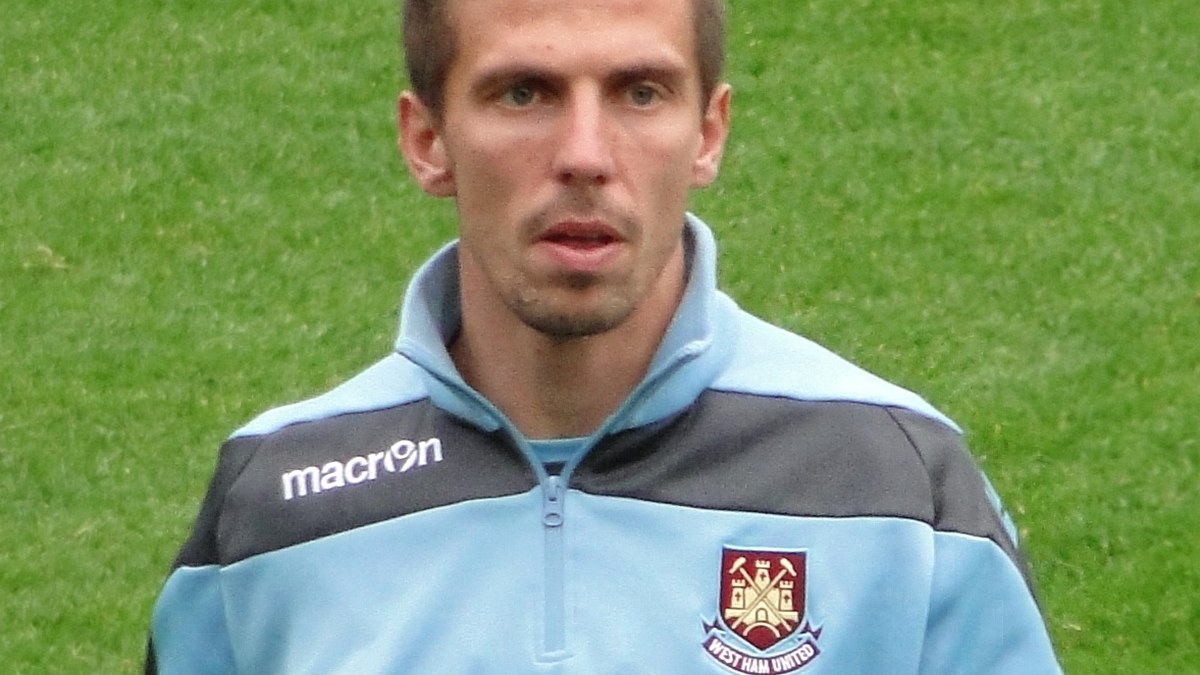
Ipswich Town confirmed on Tuesday that Gary O’Neil has been appointed as the club’s new manager on a three-year contract running to the summer of 2029. The official announcement said the former Bournemouth and Wolverhampton Wanderers manager arrives at Portman Road from Strasbourg, weeks after Kieran McKenna stepped down. BBC Sport and Sky Sports also reported the appointment in the afternoon, framing it as O’Neil’s return to Premier League management and a major decision for a club coming back into the top flight.
Photo credit: Egghead06 / Wikimedia Commons / Creative Commons Attribution. Real Gary O’Neil file photo, taken during a West Ham warm-up in 2012, used as an archive image and cropped by SokaIQ for editorial publication.
This is not just a change of head coach. It sets the shape of Ipswich’s season: an ambitious promoted club, a still-young manager with experience in demanding environments, and a Premier League where every recruitment call, pressing detail and squad-management choice can matter quickly. O’Neil arrives with a reputation built around survival work, adaptation and a recent Ligue 1 spell that broadened his profile.
Ipswich have chosen a working coach, not only a headline name Ipswich’s own announcement makes one point stand out: O’Neil becomes the twentieth manager in the club’s professional history. That gives the appointment an institutional weight, but the decision itself feels like a football choice more than a marketing one. The club have not simply gone for the loudest name available. They have chosen a coach who already understands what a dressing room under pressure looks like.
At Bournemouth and then Wolves, O’Neil worked in situations where balance mattered more than romance. The job was to make the team competitive, correct quickly, protect weak zones and find points when the matchup was not always favourable. That kind of background should speak to Ipswich, who will almost certainly face spells of opponent dominance, tight fixture runs and weeks where emotional control is as important as the starting tactical plan.
The arrival of Tim Jenkins, Neil Critchley and Ed Ames on the staff is another clue. O’Neil is not coming alone; he is bringing a working structure already tested at Strasbourg. For a club moving into a faster, richer and more punishing division, that continuity can matter from the first days of pre-season.
Strasbourg changed the reading of O’Neil’s route The Strasbourg chapter matters because it stops O’Neil being seen only through an English lens. Ipswich said he guided the French club to the Europa Conference League semi-finals, the first time Strasbourg had reached the last four of a European competition, while also overseeing an eighth-place Ligue 1 finish. BBC Sport also pointed to that spell, noting that he had taken charge of the French side in January.
That experience gives his return to England a different texture. Working in France means handling a different dressing-room rhythm, another media environment, varied tactical opponents and a European competition where small details can change a tie. For a forty-three-year-old coach, that kind of detour can accelerate maturity. He had to adapt his methods, communicate in a more international setting and step outside a purely Premier League frame.
Ipswich are therefore not only getting the former Bournemouth or Wolves manager. They are getting a coach with a fresh, broader experience and recent evidence that he can take a group in-season without losing the thread. In a promoted club’s season, the ability to install reference points quickly can be valuable.
McKenna’s exit makes the transition more sensitive Kieran McKenna’s name inevitably sits behind the appointment. Sky Sports noted that he left after guiding Ipswich back to the Premier League. That kind of departure always leaves two traces: genuine gratitude for what has been achieved, and a risk of emotional disruption. Supporters remember the journey, while the new manager must prove quickly that he is not here to erase the recent story but to extend it.
For O’Neil, the challenge is therefore relational as much as tactical. He has to understand what made Ipswich strong under McKenna, then decide what should be kept, adjusted or replaced. Move too quickly and he risks breaking useful habits. Move too slowly and the jump in Premier League level could expose the team. The margin is narrow.
His first public message points towards that careful ambition. Ipswich quoted O’Neil speaking about the honour of the role, the club’s vision and ambition, and the responsibility he feels towards the supporters and the community of Ipswich and Suffolk. Those words do not guarantee success, but they show he understands the emotional weight of the post.
Why the appointment can fit a promoted Premier League season The Premier League does not reward only attractive ideas. It punishes teams that lose their structure, defend second balls poorly, build too slowly or become disorganised after the first difficult spell. In that context, O’Neil brings a useful form of pragmatism. His survival work with Bournemouth and Wolves, highlighted in the Ipswich announcement, is not a minor detail.
A promoted side needs a coach who can build several plans. Some matches will require higher pressure, others a more protected central zone, and others a precise choice of transition moments. The question is not whether Ipswich will always sit deep or always be bold. The question is whether the team can change register without losing its identity.
That is probably where O’Neil’s staff will be watched closely. Pre-season sessions have to turn the appointment into visible habits: distances between the lines, build-up routes, block coordination, full-back roles, box protection and speed of decision. A promoted team that gains time in those details can make its season far more stable.
The real test begins before the first league weekend The announcement solves the manager question, but it immediately opens the most important phase: building the squad and clarifying priorities. O’Neil has to judge what the group can already carry at the higher level, where it lacks duel power, and which profiles can strengthen Ipswich without distorting the team. Promoted clubs often do best when they recruit for a clear plan rather than for a collection of names.
His arrival from Strasbourg also gives the club an interesting window onto the market. Even if Ipswich will mainly operate within an English context, O’Neil and his staff now bring a more European recent view. That can help widen the options. The Premier League attracts players, but it also demands precision: every signing has to solve a real problem on the pitch.
For supporters, the appointment naturally creates a mix of curiosity and expectation. O’Neil does not arrive as a local legend, but as a coach who has to convince through work. That can be a strong starting position. The story is open, the challenge is clear, and Ipswich now have the face of their Premier League return.