World football
Harry Kane at the World Cup: why England already see a different captain
Alan Shearer sees a fresher Harry Kane, better supported by Thomas Tuchel’s structure and already central to England’s World Cup balance.
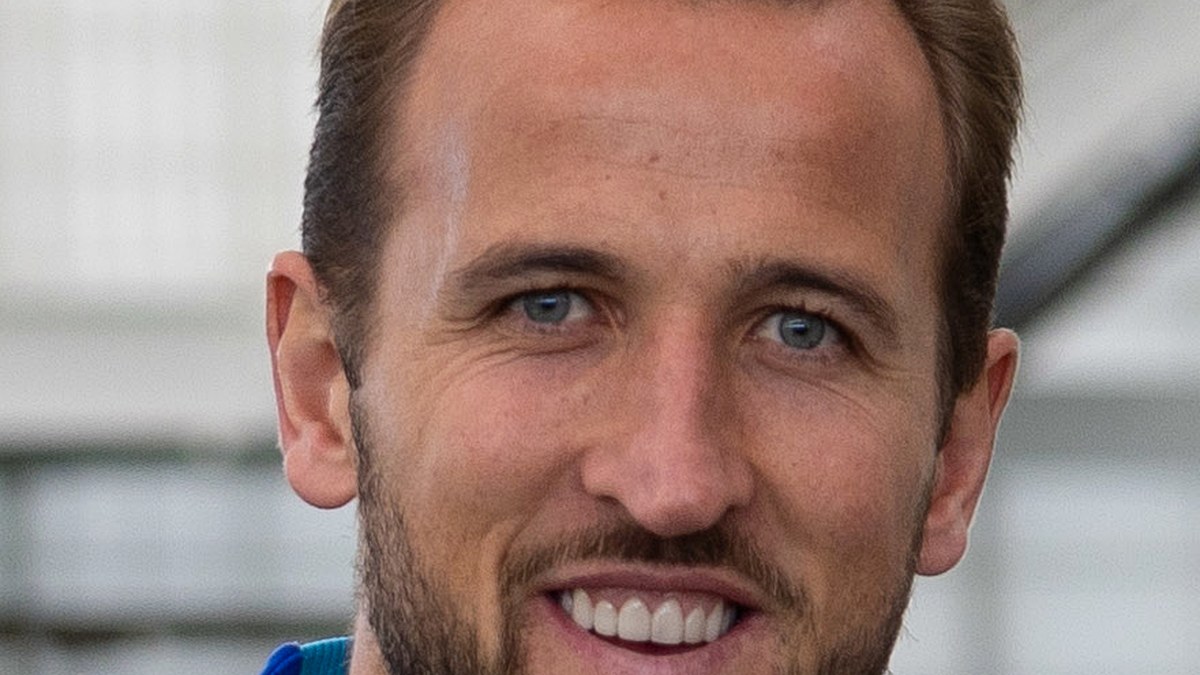
Harry Kane is not carrying this World Cup in the same way he carried the last one. In a fresh BBC Sport analysis published on 20 June, Alan Shearer points to a clear shift: England’s captain has quickly found the thing every elite striker wants at a major tournament, the feeling that his body, role and finishing instinct are moving in the same direction.
Photo credit: Simon Walker / No 10 Downing Street / Wikimedia Commons / Open Government Licence 3.0. Real Harry Kane image, cropped by SokaIQ for editorial publication.
This is about more than a star forward enjoying an early scoring start. Kane left the previous World Cup with questions around rhythm and freshness, and Euro 2024 added another layer of debate about his physical sharpness and England’s use of him. Shearer’s reading matters because it links the goals to the wider structure around him: under Thomas Tuchel, Kane looks less isolated, better supported by runners, and closer to the version Bayern Munich have been able to use so effectively.
For England, that detail can alter the whole tournament mood. A confident Kane does not only change the penalty area. He changes the height of the team, pulls defenders into uncomfortable decisions, opens lanes for Jude Bellingham, Noni Madueke and Anthony Gordon, and gives midfielders a reference point without killing depth. The question is therefore not simply whether Kane scores. It is whether England have rebuilt an environment in which their best finisher can influence matches without slowing the team around him.
A fast start removes an old pressure
The first difference is timing. At a major tournament, a world-class striker never lives the opening days like an ordinary player. Every touch in the box becomes a public reading of his form. Every movement without a shot invites a question. Every comparison with other stars adds pressure that is not always visible from outside.
That is why an early breakthrough can carry outsized value. Shearer stresses the relief that a quick goal brings to a captain and main goalscorer. Kane knows that burden well. He is not only expected to be technically clean or emotionally steady. He is expected to convert England’s good periods into something tangible.
The contrast with recent tournament memories is sharp. When a striker starts slowly, he often begins to force his game. He drops deeper, touches the ball farther from goal, looks for an extra pass, or tries to prove usefulness even without clear chances. When he scores early, he can become more patient. He picks his zones better, contributes without anxiety, and stays calm when the ball finally arrives in the box.
For England, that mental release is as important as the numbers. A team that knows its centre-forward is already moving well can build with less panic. Midfielders do not have to search for artificial solutions. Wide players can attack their duels believing there will be a reliable presence at the end of the move.
Tuchel is using Kane as a balance point, not as a problem
The most interesting change is tactical. Shearer notes that Thomas Tuchel already knows Kane from their time together at Bayern. That continuity gives the England manager a rare advantage: he is not discovering the player only through international football, he also understands the conditions that keep Kane dangerous when he leaves the penalty area.
The issue in previous tournaments was not that Kane dropped deep. That movement is part of his identity. The issue was what happened around him when he did it. If nobody attacks the space he opens, his intelligence can almost become a trap for his own team: he brings another defender into an already crowded zone and leaves the front line without an immediate threat.
In the framework Shearer describes, England appear to have corrected that weakness. When Kane comes toward the ball, runners go beyond him. Those runs are not decorative; they give his movement a purpose. Bellingham can attack the channel, Madueke can stretch a line, Gordon can offer depth. A pass into Kane then becomes a trigger rather than a pause.
That distinction is central. A modern elite striker does not need to be fixed inside the penalty area for the whole match. He needs his movements to create a coherent collective reaction. If Kane drops and England stand still, the attack loses edge. If he drops and three runs open in front of him, his back-to-goal intelligence becomes a progression weapon.
Physical sharpness changes how his game is read
Shearer also highlights the impression of a Kane in better condition. That may sound simple, but it matters hugely for a player whose game depends on fine details: body shape, first step, shooting rhythm, repeated short movements and concentration when one touch is enough.
Kane has never been a striker defined first by explosive speed. His strength is reading, positioning and precision. But even that type of forward needs a high physical base. When the legs are missing, dropping deep becomes slower, defensive recovery costs more, and presence in the box arrives a fraction late.
A fresher Kane therefore makes England more stable. He can help defensively without emptying himself for the next attack. He can come short, connect play, then still get back into dangerous positions. He can absorb contact from centre-backs while keeping enough clarity to finish moves.
That sharpness also changes external perception. When a player of his status looks heavy, every decision is read as a sign of decline. When he looks mobile and sure of himself, similar movements are interpreted as tactical intelligence. The margin is small, but it shapes the story of a tournament.
England must not put everything back on their captain
Kane’s strong start should not hide the opposite risk: assuming his efficiency can solve every problem by itself. A World Cup is rarely won by one player alone, even when that player is one of the best finishers of his generation. England still need the structure around him to stay alive, especially when opponents decide to block the passing lanes into him.
That is where the runs around Kane become a lasting requirement. If defenders close the middle, wide players must punish the sides. If Kane is followed when he drops, midfielders must attack the space behind. If England are ahead, the team must continue to give him useful service rather than retreating so far that he becomes isolated.
Tuchel’s role is to protect that balance. The manager has to use Kane’s confidence without making the plan too dependent on him. Big tournament matches often test exactly that dependency. A team can dominate parts of a game and still be forced to improvise when its main route is closed.
For now, the signal is encouraging. Kane looks less like a centre-forward carrying a tired system and more like a leader returned to a structure that respects his qualities. That is a major difference for England. If it holds, his World Cup will not only be a story of goals. It will also be the story of a team understanding how to let its best striker breathe.
Why this signal already matters for the next stage
England’s schedule now offers opportunity, but also responsibility. After a strong opening statement, the danger is to treat the next matches as automatic confirmation. Kane may have regained a favourable rhythm; he still has to maintain it against teams that will adjust their defensive plan.
Shearer’s analysis is useful because it reminds us that tournaments are built through accumulated sensations. A striker who starts well enters the next match with more freedom. A dressing room that sees its captain sharp gains a layer of security. A manager who sees his principles working can adjust with small details instead of rebuilding in panic.
That is why Kane deserves separate attention. This is not just a reaction to one performance. It is a reading of context. England have spent years trying to find the best way to use a forward who can finish, drop and direct play. If Tuchel has found the right formula, the effect can last far beyond the first week.
The World Cup remains long, unstable and demanding. Kane will still have to answer compact defences, tighter matches and the fatigue that comes with repeated tournament football. But the first impression is strong: England no longer appear forced to choose between their scoring captain and a mobile collective. For now, they can make both work together.