Major players
David Raya, Arsenal and Spain: the goalkeeper turning scars into strength
David Raya’s Guardian interview reveals a Spain goalkeeper shaped by Southport, Arsenal and the pain of a lost European final.
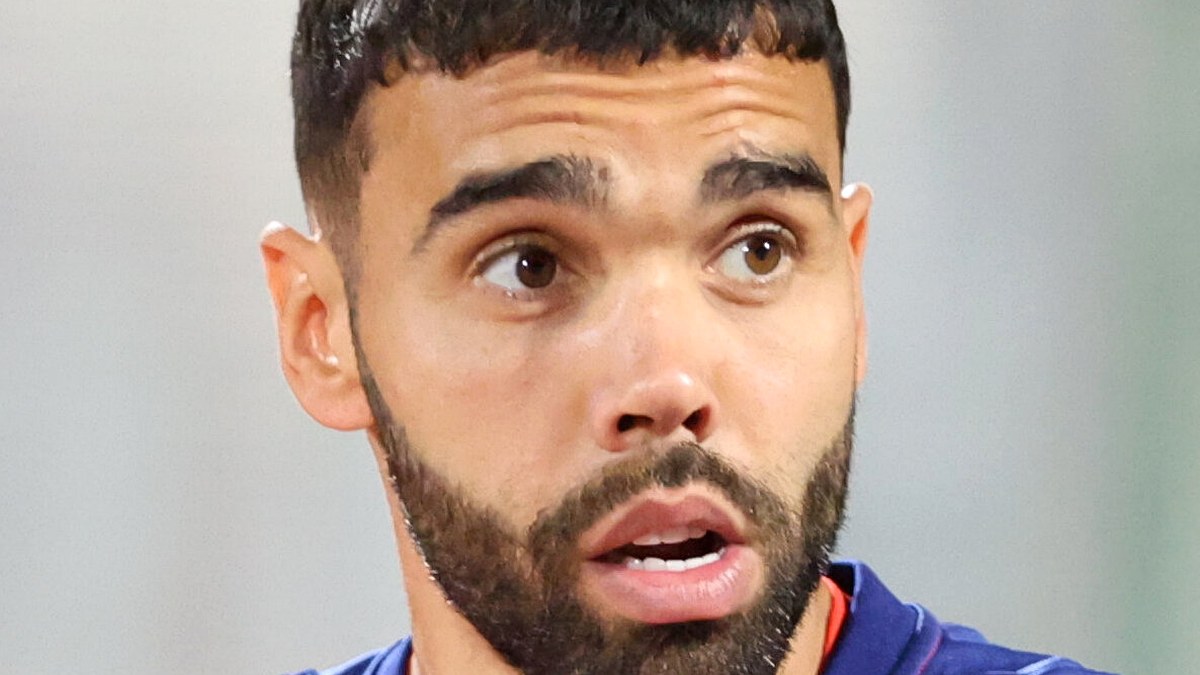
David Raya enters the World Cup conversation with a career that says plenty about modern football: patience, detours, hard learning and the ability to live with the emotional damage of the biggest nights. The Guardian published a long interview with the Spain goalkeeper on 20 June from Chattanooga, where the national team are preparing for the next stage of the tournament and the Arsenal player is reflecting on a season that lifted him high while leaving a European scar.
Photo credit: Biso / Wikimedia Commons / CC BY-SA 4.0. Real David Raya photo, cropped by SokaIQ for editorial publication.
The value of the interview is not only about Arsenal or Spain. It lies in the contrast between the stages of his path. Raya talks about Southport, the English fifth tier, the physical clashes, the need to earn minutes away from academy comfort, and the emotional shock of losing a European final on penalties. Between those two extremes sits a career built by accumulation rather than shortcut.
For anyone following the World Cup, it is a useful lens. Goalkeepers are often reduced to one mistake, one save or one shootout. Raya’s story shows that an international goalkeeper is also the product of years of exposure, doubt and invisible adjustment. It adds depth to Spain’s battle for the position, to Arsenal’s role in his confidence, and to the way a player manages a major defeat without letting it define the whole season.
From Southport to Arsenal, a route that changes the reading of Raya
The Southport chapter gives the interview its strongest texture. Many international players describe a pathway from academy to first team and then to the national side. Raya focuses on a rougher detour. He explains that he needed minutes in a football environment where points truly mattered, where opponents attacked the goalkeeper with a different physical presence, and where every aerial ball could become a credibility test.
That part of the journey matters because it is not just an upward-mobility story. It shows how a goalkeeper learns to lose technical comfort. In a development setting, the game can remain clean, organised and almost educational. In lower-league football, a keeper has to absorb contact, command the box, accept pressure and win the trust of teammates who judge solidity before style.
That school is still visible in today’s Raya. Arsenal need a goalkeeper who can take part in possession, but also hold an area, live with tension, reset after an error and keep the structure together. Spain need something similar on a bigger stage: a modern goalkeeper, but not merely an aesthetic one. The Southport story helps explain why Raya’s career is less about pure talent alone and more about resistance.
The European final as wound and fuel
The Guardian also frames the interview around Arsenal’s lost European final, a moment Raya describes as something that destroyed him inside. That kind of line has to be handled carefully. It is not a confession of weakness; it is the admission of a major sporting shock. A goalkeeper can complete a strong season, lift a domestic trophy, join an ambitious national squad and still carry the pain of a few decisive minutes.
That contradiction is deeply football. Careers do not stack neatly between success and failure. They often move with both at the same time. Raya can be an English champion with Arsenal, operate in an elite environment, and still feel that the continental final remains personal. That does not reduce his status. It makes the moment more human.
For Arsenal, such honesty matters. The club do not only need to celebrate what was won; they also need to understand what still has to be repaired. The European defeat becomes a psychological reference point for the next season, for the dressing room, the staff and the senior players. When a goalkeeper talks about that weight, he is also saying that the group has not simply closed the file. There is still demand, frustration and a desire to return.
Spain and a competition that allows no comfort
The interview gains another layer because it takes place inside the Spain camp. Raya is not only the goalkeeper of a powerful club. He is in a national team where competition is structural, where the style of play gives the position special responsibilities, and where every technical detail becomes visible. Carrying the ball, playing short, controlling depth and staying calm under pressure are not optional for a Spain goalkeeper. They are survival criteria.
In that context, his English background becomes a distinctive advantage. He has learned direct football, duels and chaos, then grown inside an Arsenal side that demands precision, calm and reading of the game. Spain can see a rounded profile: a goalkeeper who can support an ambitious possession structure, but also cope when the match breaks open and the plan becomes less clean.
The competition is still real. No interview, club status or memory from a successful season guarantees a permanent place. A World Cup turns every training session, every selection call and every performance into a signal. Raya knows that. His public calm does not remove the stakes. He has to convert his story into immediate reliability, because a major tournament does not give much time to personal narratives.
Why this story belongs in the World Cup conversation
The World Cup is full of familiar names, expected stars and collective storylines. Raya’s story adds a different angle: the goalkeeper who travelled through the levels before arriving in the international spotlight. It reminds us that major tournaments are not only stages for attacking players. They also depend on specialists whose role becomes central when a match tightens.
A goalkeeper can remain almost invisible for long stretches, then decide a night with a read, a save, a claim or a pass. That solitude is what makes goalkeeper interviews so specific. Raya does not speak like a forward waiting for the next chance. He speaks like a player who understands that each decision can become permanent in public memory.
That is also why his honesty about European pain deserves attention. In an international tournament, the strongest teams are those that turn recent wounds into concentration rather than dead weight. If Raya can turn that experience into fuel, Spain gain more than an in-form goalkeeper. They gain a player who already knows the emotional cost of a very big night.
A fuller picture of the modern goalkeeper
The modern goalkeeper is often described as an outfield player with gloves. It is a useful phrase, but an incomplete one. Raya shows that the position remains mental before anything else. A goalkeeper has to play with his feet, yes. He has to contribute to the possession structure, of course. But above all he has to withstand the fear of error, the waiting, the noise, the isolation and the symbolic violence of a ball crossing the line.
His journey therefore offers a broader lesson. Elite careers are not always linear. They can begin in modest stadiums, pass through periods when nobody can see what comes next, and end up with a place in a World Cup squad that expects to compete deep into the tournament. The difference is made by the ability to absorb each stage without losing the thread.
For Arsenal, for Spain and for observers of the tournament, Raya’s interview is not just a goalkeeper portrait. It is a snapshot of a player at the meeting point of three forces: the memory of a hard apprenticeship, the weight of a final lost, and the opportunity of a major international competition. That mix makes his World Cup worth following, not because it promises a perfect storyline, but because it already shows the real material of important careers: how a player gets back up, adapts and keeps moving.