World football
World Cup 2026: why late goals are already changing the tournament
Late goals are shaping the 2026 World Cup as hydration breaks, deeper benches and fatigue turn endings into tactical battlegrounds.
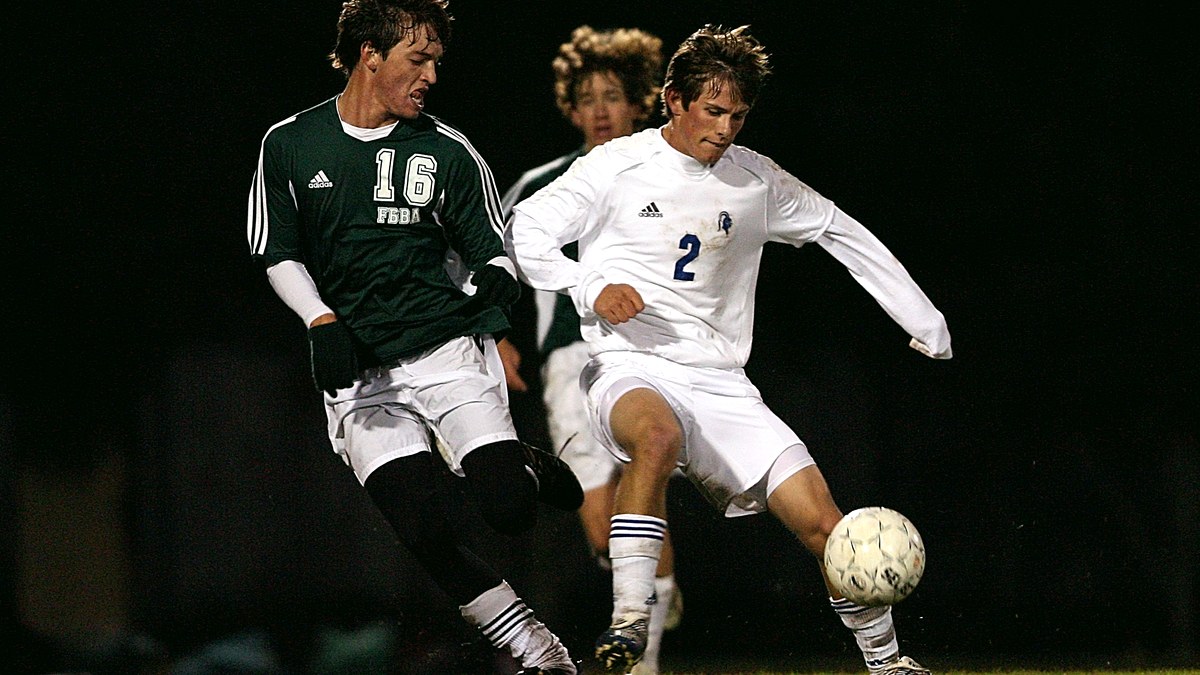
Late goals are becoming one of the defining threads of the 2026 World Cup. BBC Sport published a fresh analysis on 20 June that gives numbers to a feeling already visible across several matches: the final quarter of an hour is carrying a heavy share of the goals, reshaping how games are watched, coached and managed from the bench.
Photo credit: Keith / Pixabay / Wikimedia Commons / CC0 1.0. Real football image, cropped by SokaIQ for editorial publication.
According to the BBC’s snapshot, the tournament had produced 96 goals at the time of publication, with 28 arriving from the 76th minute through to full time. That is 29.2% of the total, more than any other phase of a match. The trend is not just numerical. It says something about the current shape of international football: longer stoppage periods, more in-game coaching, more structured breaks for managers to reorganise, and deeper squads capable of changing the speed of a game from the bench.
The pattern should not be reduced to a single easy answer. A late goal can come from an individual error, a tactical imbalance, a physical drop, an inspired substitute or a team taking more risks because the result is slipping away. But the repetition is strong enough to matter. This World Cup is not being decided only by starting plans. It is also being decided by fatigue management, hydration breaks, substitutions and the ability to keep structure when the game enters its least stable phase.
The final quarter is becoming the danger zone
The most striking part of the BBC analysis is the concentration of goals after the 76th minute. In a tournament full of data, large staffs and detailed match plans, that late window remains the point where control is most likely to crack. Passing can become less clean, distances between units stretch, substitutes run at tired defenders, and the psychology of the match changes as the available time disappears.
That phase is no longer just the end of a game. It is a tactical period in its own right. A team in front has to choose whether to keep the ball, defend deeper or continue pressing. A team behind has to decide when to open the block, add another attacking player or accept the danger of counter-attacks. Coaches prepare those scenarios, but they can never fully control them, because the final quarter combines fatigue, urgency and emotion.
The important detail is that the trend is spread across the tournament rather than tied to one wild match. The BBC notes that twenty nations had already scored in that late window at the time of its analysis. That makes it harder to dismiss the pattern as a one-off. The competition as a whole is producing more open endings, even when the first hour looks tight.
Hydration breaks are also tactical timeouts
Hydration breaks are primarily a player-protection measure in North American summer conditions. Yet they clearly have a football effect too: they give managers a structured moment to speak, adjust, correct and reset. The BBC points out that the tournament’s most productive scoring periods have come after those interruptions, while also making clear that a direct causal link is difficult to prove.
That caution matters. A break does not score a goal. It does not automatically transform a team. But it can give a staff a short communication window in a match where noise, fatigue and distance make instructions hard to deliver. A pressing adjustment, a change of focus down one flank, a second-ball reminder or a defensive reset can be enough to shift the rhythm of a period.
Modern football places huge value on those micro-moments. Coaches no longer wait only for half-time to correct a match. They use every stoppage as a small window of control. The 2026 World Cup, with mandatory breaks and demanding physical conditions, amplifies that logic. Late goals are therefore not only about tired legs. They are also about teams receiving and applying more information during the game.
The bench is more visible than ever
The BBC also highlights the role of substitutes and late adjustments. That is one of the biggest changes in tournament football. Strong national teams are not judged only by their starting line-up. They are judged by their ability to change the match with the players who come on, alter the height of the block, add pace, or protect an advantage without giving away all attacking threat.
A substitute often enters with a clearer mission than a starter. He knows which duel to attack, which space to occupy, and what kind of energy the game needs. The opponent in front of him has already absorbed runs, contact and pressure decisions. That mismatch helps explain part of the late intensity seen in this tournament. The bench is not simply reserve capacity. It is a strategic lever.
This changes the way contenders should be read. A team that dominates for an hour can still lose control if its substitutions fail to stabilise the game. A side that looks limited early can survive, stay close, and then use the final sequences to change the mood. In an expanded World Cup with a wide range of styles, bench depth becomes a real part of the hierarchy.
Fatigue is only part of the explanation
Fatigue is the first explanation that comes to mind, and it clearly matters. Defensive runs become longer late in a match, recovery runs lose sharpness, aerial duels get harder and concentration can dip in the box. But fatigue alone is too simple. Late goals usually emerge from a mix of physical fatigue, mental fatigue and a changing appetite for risk.
When a team feels the result moving away, it accepts spaces it had previously refused. Full-backs push higher, midfielders run beyond the ball, centre-backs defend larger areas. The match becomes less symmetrical. Coaches can ask for more ambition, but that ambition has a cost. It opens channels, transition lanes and second phases.
The emotional element is just as important. In the closing minutes, every touch carries more weight. A loose throw-in, an avoidable foul or a hesitant clearance can create a wave of pressure. The crowd feels it, and the players feel it too. That combination of fatigue, risk and tension is exactly why the final quarter can become so productive.
What the trend means for the rest of the World Cup
If the pattern continues, managers will have to treat endings as a priority plan rather than a natural consequence of what came before. Substitutions will need to be prepared earlier, bench players will need clearer roles, and defensive leaders will have to keep communication sharp when the match fragments.
For anyone watching the tournament, the trend also changes how games should be read. A team that appears in control after an hour is not necessarily safe. A side under pressure can remain alive if it has enough energy and quality to attack the final sequences. The World Cup becomes more unpredictable, not because randomness has taken over, but because the decisive zone is moving toward the moment when plans are hardest to maintain.
Late goals are not new in World Cup history. The BBC notes that the final phase of matches has often been productive in previous tournaments. What feels distinctive in 2026 is the current level of concentration, combined with longer added time, hydration breaks, deeper squads and the physical intensity of the tournament. Matches are still won by talent, organisation and control. Increasingly, they are also won by the ability to stay clear when the final minutes become a second game inside the game.