FIFA / world football
England: Rashford, Guéhi and Tuchel’s World Cup selection dilemmas
Marcus Rashford and Marc Guéhi frame two major choices for Thomas Tuchel: attacking speed, defensive calm and collective balance.
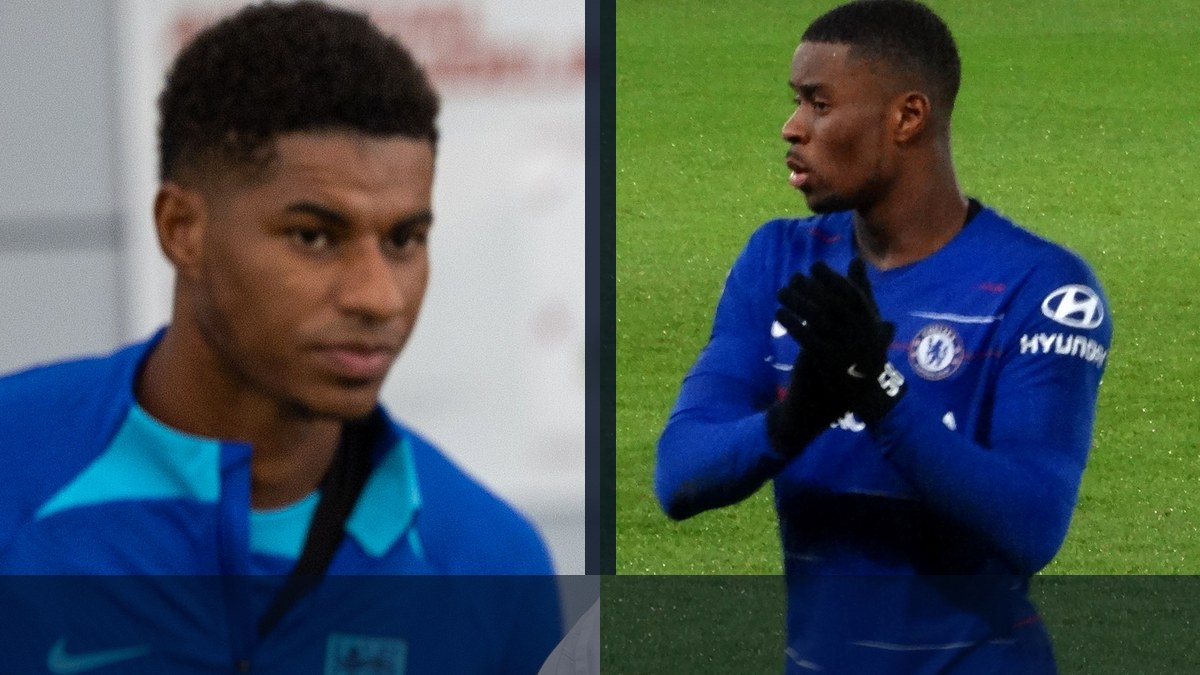
BBC Sport published an analysis on Friday about the decisions facing Thomas Tuchel with England, placing Marcus Rashford and Marc Guéhi among the major selection questions around the squad. This is not a squad announcement or a dressing-room rumour. It is the picture of a team moving through the World Cup with enough talent to open several paths, but also with difficult calls in the areas that carry the most exposure.
Photo credit: Simon Walker / No 10 Downing Street via Wikimedia Commons / CC BY 2.0; @cfcunofficial / Chelsea Debs London via Wikimedia Commons / CC BY-SA 2.0. Real photos of Marcus Rashford and Marc Guéhi, cropped and combined by SokaIQ for editorial publication.
The value of the moment is its sporting clarity. England do not simply need to choose eleven names. They need to choose a way of playing, a way of protecting their balance and a way of keeping enough speed to hurt opponents in transition. Rashford represents the attacking call: depth, direct running and the capacity to change the tempo of a match. Guéhi represents another question, more defensive but just as important: how to stabilise the back line without losing clean distribution and authority in duels.
The Guardian also placed England in a wider debate around midfield control and energy management, focusing on Declan Rice's role in Tuchel's structure. The three issues connect. A more direct attack changes the distances between the lines. A more cautious defence alters the height of the block. A midfield that is tired or stretched makes every individual call heavier. That is why this stage is so interesting: Tuchel has to build a hierarchy without closing England's options too early.
Rashford is a question of speed and confidence
Marcus Rashford remains a player who can shift a match with his first run. Even when his status is not fixed, his profile keeps rare value for a national team: he threatens the space behind the defence, forces the opposing full-back to respect depth and gives the passer an immediate vertical outlet. In international football, that ability can matter as much as possession, especially when games become tighter and more cautious.
The real question for Tuchel is therefore not only whether Rashford deserves a place. It is what kind of match England want to create. If the manager wants a side that can stretch the opponent quickly, punish a high turnover and change rhythm after a slower spell, Rashford becomes a natural option. If he wants more short control, safer combinations and presence between the lines, the competition around him becomes stronger.
Rashford also carries a psychological dimension. A tournament can revive a player who feels useful, but it can also expose an attacker if the minutes are scarce or poorly defined. England need to avoid that grey area. A clear role, even if it is not always a starting role, can be more useful than a vague promise. The best version of Rashford does not require the whole team to play only for him; it requires his use from the start or from the bench to fit a recognisable plan.
Guéhi brings a defensive calm England cannot ignore
Marc Guéhi represents a different kind of dilemma. His profile does not speak as loudly to the immediate spectacle, but it goes to the heart of England's security. In a major tournament, the centre-back pairing is not judged only by duels won. It is judged by how it absorbs weaker moments, organises cover and keeps the first pass clean when pressure rises.
Guéhi has built his reputation on concentration, reading of danger and a certain economy in his defending. Those are valuable qualities for a team trying to control the emotional swings of a match. The risk for Tuchel is to treat the defence as a simple list of names when it depends on the whole block. A centre-back can look more or less exposed depending on the height of the press, the protection from midfield and the discipline in wide areas.
That is why the Guéhi decision cannot be isolated. If he plays in a team pressing high with aggressive full-backs, he will have more space to manage behind him. If he plays in a more compact block, his calm and anticipation become even more visible. Tuchel has to measure compatibility between defenders, not only individual form. The best partnership is not always the one that looks most impressive on paper; it is the one that removes the most panic from dangerous areas.
Tuchel has to connect individual calls to the collective plan
The classic trap in major tournaments is to turn every selection issue into a popularity contest. One forward against another, one defender against another, one debated midfielder against a replacement. Tuchel has to resist that simple reading. His decisions will work only if they form a coherent structure. Rashford can be a major weapon in a vertical plan; Guéhi can be an important base in a team trying to control transitions. But each depends on the overall frame.
England have enough talent to make every solution look possible. That is a strength, but it is also a danger. The more options a squad has, the clearer the manager's message must become. Players accept competition more easily when they understand the criteria: intensity without the ball, complementarity, repeated runs, defensive security, first-pass quality, physical freshness and adaptation to the opponent.
Tuchel is being tested precisely on that ability to turn a rich group into a stable team. His club experience gives him tools, but international football imposes different constraints: less time, more noise and players returning with different habits. The job is to create enough common rules for the individual qualities to appear without pulling the team out of shape.
England's midfield remains the swing point
The Guardian's discussion of Declan Rice is a reminder that the choices in front and behind cannot be separated from midfield. If England fail to control that area, Rashford risks receiving the ball too late or too isolated. If the midfield does not protect the defence, Guéhi or any other centre-back will have to defend too many running situations. The centre of the pitch is the place where all the decisions are revealed.
Rice remains essential because of his range, coverage and ability to stabilise second balls. But the management of his energy, partners and zone of influence can alter England's whole face. A more cautious midfield gives the team a safer base, but it can slow the release. A more ambitious midfield opens forward passes, but it can leave space if the coordination drops.
That is where Tuchel will probably have to make his finest calls. The names attract attention, but the distances will decide a lot. Between the first attacking line, midfield and defence, a few metres can change the reading of a match. A compact England allow defenders to anticipate and forwards to press with purpose. A stretched England create more individual moments, but also more danger.
A team still being shaped inside the tournament
This moment should not be read as a crisis. It looks more like a normal construction phase for an ambitious national team. Major tournaments force coaches to adjust constantly: player form, opposition profiles, the calendar, recovery, possible suspensions and emotional momentum. A team with several options has to learn how to use them at the right time, not choose one permanent truth too early.
Rashford and Guéhi represent two ends of that work. One can provide depth and acceleration. The other can provide calm and security. Between them, Tuchel has to preserve the collective connection. England will not progress only through an addition of talent; they will progress if each choice strengthens the same plan.
The good news for the manager is that these dilemmas exist because the squad has substance. The difficult part is that every decision will be interpreted immediately. That is the price of England at a World Cup. Tuchel's role is to keep the debate inside the football: which spaces to attack, which zones to protect, which runs to repeat and which players to combine. If the answers become clear, the dilemmas can become resources.