FIFA / world football
Messi on the bench against Jordan: what Argentina are really preparing
Lionel Scaloni has confirmed that Lionel Messi will start on the bench against Jordan, a management call that tests Argentina’s depth before the knockouts.
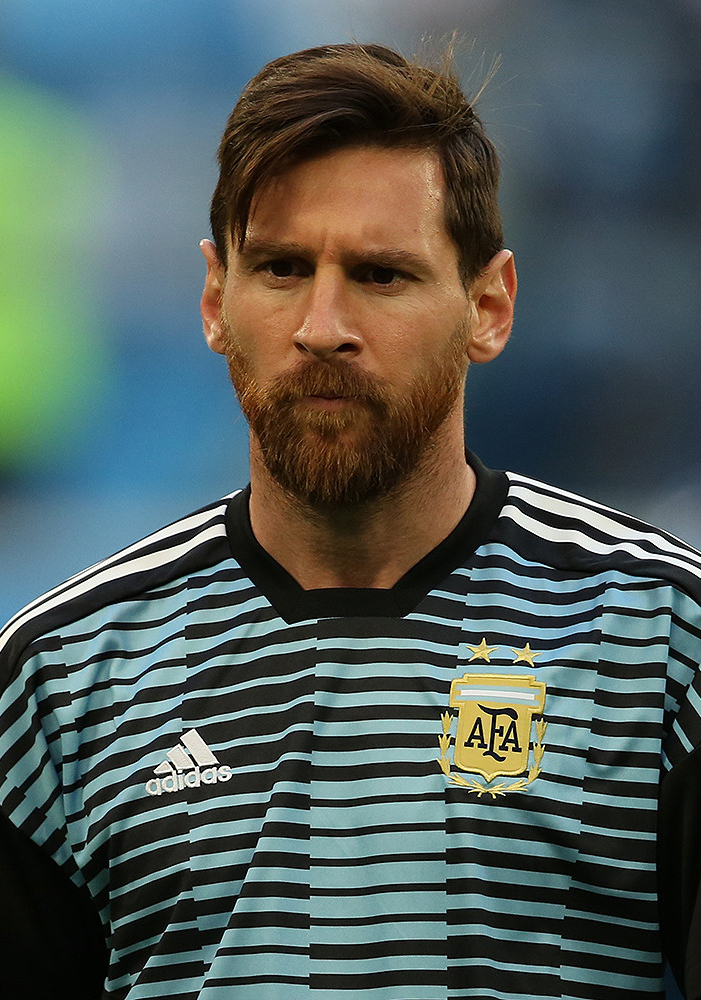
Lionel Messi will start Argentina’s final World Cup group match against Jordan on the bench, Lionel Scaloni has confirmed, according to BBC Sport, with ESPN and Yahoo Sports carrying the same core update. The key detail is the nuance around the decision: this is not being framed as an injury withdrawal, but as controlled tournament management for a team that has already secured qualification and still has its captain at the centre of every major conversation.
Messi reaches this fixture with enormous sporting weight. BBC Sport noted that he leads the Golden Boot race after five goals in his first two appearances at the tournament, a start that has pushed him deeper into World Cup history. ESPN also underlined that Argentina have already won their group before this final assignment, giving Scaloni a rare margin: protect his most influential player while keeping him close enough to match rhythm before the knockout phase.
Management, not an alarm signal
The first reading has to be careful. Whenever Messi is not in the starting team, every detail can become a global warning sign. Scaloni moved quickly to avoid that interpretation. BBC Sport reported that the Argentina coach said the decision was not injury-related and that Messi would most likely appear in the second half. That changes the story completely: Argentina are not hiding a problem, they are choosing a controlled dose of minutes.
That dose makes sense in an expanded tournament where the favourites must think beyond the next whistle. Messi is still decisive, but he does not need to play every available minute to prove his influence. His role is also measured in the way Argentina can breathe without him, manage a match through other channels, and then bring him back at the right moment if the game needs him.
For Scaloni, the balance is delicate. Protect Messi too much and Argentina risk interrupting a powerful rhythm. Use him too heavily and they expose their leader to unnecessary fatigue before the elimination matches. Starting on the bench against Jordan looks like the middle path: keep Messi connected to the match, but avoid asking him for a full workload.
What Argentina can test without Messi from the start
Messi beginning outside the starting team gives Argentina a real tactical window. ESPN suggested that Scaloni could use several new faces, with Emiliano Martínez potentially one of the few regular starters kept in the side. That rotation is not merely administrative. It lets Argentina see how their creative structure works when the game does not naturally run through Messi’s left foot from the opening phase.
For years, Argentina have lived with one obvious truth: Messi simplifies football decisions. He attracts defenders, slows or accelerates the tempo, finds passes others do not see and forces opponents to behave differently. Without him from the start, midfielders and forwards must take more responsibility. Connections between the lines need to be more collective, runs around the box need stronger timing, and the first phase of possession cannot simply look for the captain as a default solution.
That kind of match is valuable for a world champion. Major tournaments are rarely won with one plan. A suspension, fatigue, a closed game state or the need to protect a player can force a side to change shape quickly. If Argentina can control the ball, create chances and dominate territory without Messi starting, they gain another option for the weeks ahead.
Messi remains the emotional centre of Argentina’s tournament
The paradox is clear: even as a substitute, Messi remains the main story. BBC Sport noted that he has taken his men’s World Cup record total to eighteen goals and is currently leading the scoring charts at this tournament. That context explains why a straightforward management call becomes global news. Argentina are not only Messi, but their World Cup story remains inseparable from his presence.
At thirty-nine, Messi is no longer competing only against opponents. He is also competing against fatigue, scheduling and the emotional management of what may be his final major international cycle. Every minute carries a different value. A second-half appearance can be enough to keep rhythm, feel the speed of the match, stay connected to the group and avoid a long break between competitive bursts.
This approach also says something about Argentina’s maturity. Scaloni does not need to turn every fixture into a statement. He can accept a more measured evening, one less built around symbolism and more oriented toward the next round. For a qualified team, that is often the sign of a squad that understands the tournament as a long campaign rather than a sequence of isolated headlines.
Jordan still make this a serious test
Scaloni also made a point of respecting Jordan. BBC Sport quoted him describing Jordan as a good opponent with fast forwards, while saying Argentina’s intention would be to have the ball and dominate through possession. That matters because it stops the match from being reduced to a superstar rest day. Even with Messi on the bench, Argentina still have a job to do.
Jordan can benefit from any drop in concentration. When a major favourite rotates, the risk is that a few automatisms disappear: a midfield distance becomes too wide, a transition is not covered, or possession lacks speed around the final third. Argentina must show that rotation does not reduce attention. The real question will not only be when Messi comes on, but whether the collective keeps its authority before he is needed.
For the players who start, the message is direct. They are not playing a footnote. They may be playing for a role in the hierarchy of the next phase. In a long tournament, a squad player who earns trust in a controlled group match can become a major solution days later.
A choice already aimed at the knockout phase
The Messi decision shows an Argentina staff already thinking about elimination football. ESPN noted that the world champions are set to meet Cape Verde in the next round, a fixture with extra narrative force after the Blue Sharks’ historic debut run. Scaloni cannot treat Jordan as an isolated evening; he has to manage a week, a bracket and a player whose physical status shapes the whole campaign.
That management guarantees nothing. A smart rotation can strengthen the squad, but a flat performance can create avoidable doubts. Argentina need the correct blend of control, rhythm and seriousness. Messi will likely remain the weapon kept ready, not to dramatise the fixture, but to make sure the move toward the next phase happens without a loss of tension.
Scaloni’s call is therefore less dramatic than the headline may suggest. It says that a great team must be able to protect its most influential player without looking lost in his absence. For Argentina, Messi starting on the bench is a test of depth, maturity and collective confidence before the tournament becomes more demanding.
Photo credit: Kirill Venediktov / Wikimedia Commons / CC BY-SA 3.0. Real photo of Lionel Messi with Argentina, imported by SokaIQ for editorial publication.