FIFA
Dembélé lights up France-Norway and reopens the Golden Boot debate
Ousmane Dembélé scored a first-half hat-trick against Norway, underlining the depth and danger of France’s World Cup attack.
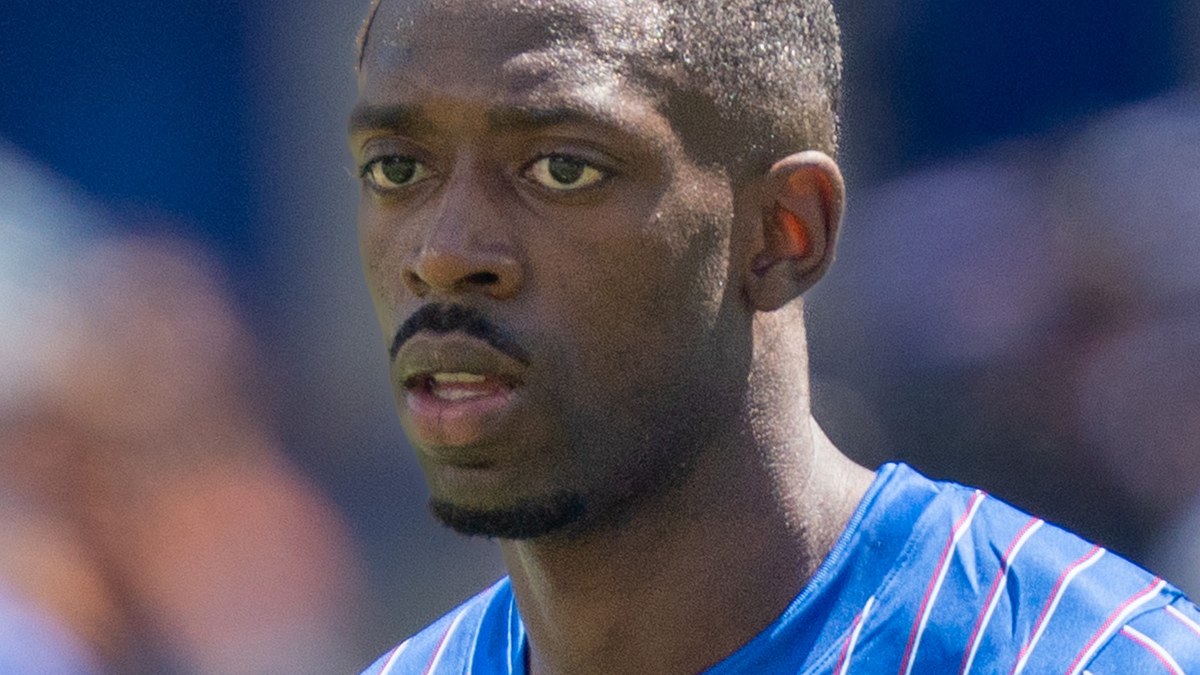
Ousmane Dembélé turned France against Norway into a sharp reminder of what the French attack can become when speed, aggression and technical clarity arrive in the same burst. Sky Sports published its match report on Friday with the France forward's first-half hat-trick at the centre of the story, while BBC Sport highlighted the sequence as a moment of magic. The Guardian's live coverage also placed that acceleration inside a night in which France finished top of the group and Norway were forced to absorb repeated defensive pressure.
This is not only an individual-performance story. It says something about a France team that can change shape without depending on one headline name. In a tournament already framed by Kylian Mbappé, Lionel Messi, Erling Haaland, Harry Kane and other stars in the Golden Boot conversation, Dembélé has reminded everyone that the French threat can come from a wide lane, an inside run, a high regain or a transition that is not closed quickly enough. The important point is not simply that he scored three times. It is how quickly he made Norway unstable before the game had settled into its normal rhythm.
A night that changes the tone around Dembélé
Dembélé often enters major football conversations with a strange double label. Everyone recognises the talent, the dribbling, the two-footed threat and the ability to unbalance a defender over a few metres. But major tournaments reward more than the ability to create danger. They reward players who turn that danger into decisive moments, in the right place and at the right time.
On Friday, that conversion was the difference. Dembélé did not merely animate France's flank. He gave domination a concrete finish. Every run forced Norway to retreat, every touch pulled across defensive cover, and every finish strengthened the idea that France can punish a loose shape very quickly. In a group stage, that kind of signal matters because future opponents remember it. Preparing for France is no longer just about closing the centre or watching Mbappé. It is also about what happens if Dembélé receives free between the line and the touchline.
The performance also matters psychologically for the player. A forward can feel confident after a good action. He can change his internal status after a night that leaves a mark on a tournament. Team-mates look for him more often, defenders hesitate for a fraction of a second, and the coaching staff gain another reason to keep the attacking plan ambitious. Dembélé did not just add goals to his World Cup. He added certainty to France.
France showed the depth of their attack
France are often judged through their most visible individuals. That is natural: the squad contains players who attract cameras before kick-off. But the real danger of a tournament heavyweight lies in the number of answers it can produce. When a team has only one path to goal, opponents can build a clear plan. When it multiplies its sources of threat, every adjustment opens another problem.
Dembélé's night underlines that depth. France can run in behind, combine quickly in tight areas, press high to trigger transition or move the ball towards a winger who can beat a defender in isolation. That variety makes knockout matches more difficult for opponents. It is not enough to neutralise one centre of gravity. They have to defend several speeds and several finishing zones.
Dembélé is especially valuable in that structure because he breaks normal defensive reads. He can stay wide then move inside, draw out a full-back then release the ball quickly into a gap, or accelerate before the opposition block has recovered its shape. Norway's rotated line-up was not the toughest test France will face in the tournament. But the actions that hurt in this kind of game often reappear later, when the margins become much smaller.
The Golden Boot race has another French layer
Sky Sports had already framed the Golden Boot race as one of the tournament's most compelling running stories, with several elite names fighting from a distance. Dembélé's performance adds another French layer to that chase. It guarantees nothing, because a tournament can change quickly: rotation, a tighter opponent, a small physical issue, a locked game or simply a colder finishing night. But it changes the immediate perception.
A player who scores several times in one half of a World Cup match inevitably attracts attention. The next defenders study his runs with greater caution. The media widen the debate. Supporters start to imagine both an internal and external race between France's forwards and the other stars of the tournament. For Dembélé, the task is to turn this night into momentum rather than leave it as an isolated peak.
France have had tournaments in which one attacker seemed to carry most of the attacking story. This time the picture can be more shared. Mbappé remains a major reference point, but Dembélé has reminded everyone that France have other finishers capable of breaking a match open. That distribution can protect the team as well. The more attention is spread, the more space appears for each individual.
What Norway reveal despite the setback
The game also says something about Norway. The decision to rotate and manage the group shaped the match, as British reports noted. When a team changes heavily against an opponent of France's level, it accepts a degree of vulnerability. That does not reduce the quality of Dembélé's finishing, but it helps explain why France were able to find runs and gaps so quickly.
For Norway, the priority is not to let one difficult night define the whole tournament. A group stage can contain a rough game, especially when qualification scenarios and physical management influence selection. What matters next is the ability to restore a stronger structure, protect the wide areas better and bring key players back into a clearer environment.
For France, the opposite danger is overreaction. One dominant attacking display does not solve every detail of a tournament. Knockout matches bring a different tension, a different patience and opponents who will have studied France's circuits carefully. But this kind of night gives a squad a powerful emotional base. It reminds the group that its attacking ceiling remains very high.
A message sent before knockout football
France leave the night with more than a clean group-stage finish. They leave with a message: their attack can strike early, quickly and through different faces. Dembélé has given the staff another tactical and media weapon. Future opponents will have to choose between closing the middle, reducing Mbappé's space, protecting the far side and stopping Dembélé from receiving on the run. No plan covers everything without opening a weakness somewhere else.
That is exactly what makes a team dangerous in a long tournament. Great sides do not simply survive. They develop, match by match, new reasons to be feared. On Friday, Dembélé added his. The next step will decide whether this night becomes the start of a run or only a personal high point. For now, it puts the France winger back at the centre of the debate: not as a luxury complement, but as a major threat capable of changing a match before the opponent has found its balance.
Photo credit: Bryan Berlin / Wikimedia Commons / CC BY-SA 4.0. Real Ousmane Dembélé photo from France duty at the 2026 World Cup, imported and cropped by SokaIQ for editorial publication.