FIFA / world football
Mexico move on with Ochoa, Mora and a controlled Group A statement
Mexico finished Group A with authority, blending Guillermo Ochoa’s historic experience with Gilberto Mora’s emerging promise.
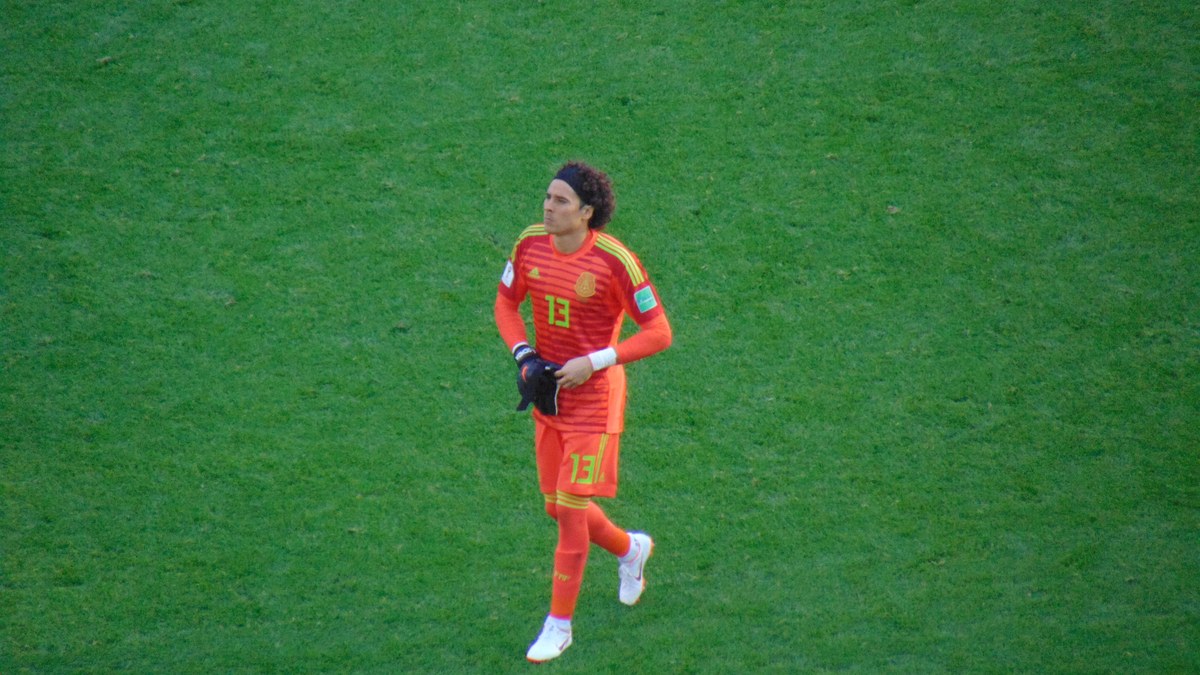
Mexico left the group stage with a rare feeling: that of a host nation not crushed by the weight of the tournament, but using it to accelerate. The Guardian described a Mexican side maintaining a perfect Group A run and sending Czechia out of the competition. Sky Sports added two details that gave the night extra texture: Guillermo Ochoa appeared at a sixth World Cup, while Gilberto Mora moved into the story as one of the tournament’s striking young faces.
Photo credit: Weroarnau, via Wikimedia Commons, CC BY-SA 4.0. Real Guillermo Ochoa image, cropped by SokaIQ for editorial publication.
This was not just another win for a local favourite. It was a structural signal. Mexico move forward with a defence that can absorb difficult spells, a crowd that turns every strong passage into noise and an attack capable of waiting for the right moment without losing clarity. In an expanded World Cup where host nations carry emotional responsibility as well as sporting ambition, that consistency matters.
Czechia leave with a sharper frustration. Their tournament closed against a Mexican side that handled details, rhythm and stadium energy better. The difference was about maturity as much as talent. Mexico did not simply win a group match. The country reminded everyone that its World Cup identity often lives in the tension between public expectation and the ability to remain functional.
Ochoa remains the anchor of a Mexican generation Guillermo Ochoa gives Mexico a continuity that is almost unique. Sky Sports underlined his place among the rare players to appear at six World Cups. That kind of marker should not be treated as decorative trivia. For a national team that experiences every tournament with enormous intensity, the presence of such an identifiable goalkeeper creates a shared language across several generations.
Ochoa has become more than a matchday player. He is sporting memory. Mexican supporters connect his name with nights of pressure, saves that extend hope and the eternal debate over whether Mexico can turn strong tournament identity into a deeper global run. In this match, his importance therefore goes beyond the team sheet. It tells the story of a side moving forward with players who can recognise tournament traps before they become crises.
That dimension helps explain Mexico’s calm. The host nation has every reason to be carried away: the noise, the expectation, the temptation to turn every action into a judgment. Ochoa helps provide a centre of gravity. Even when attention turns to young attackers or emerging profiles, his presence reminds everyone that major tournaments often reward teams that know how to breathe.
Mora brings promise, not only symbolism Gilberto Mora gives the story its other side. Sky Sports framed him as one of the youngest starters in the modern tournament, and The Guardian placed his role inside the wider picture of a Mexico side that accelerated after containing Czechia. Again, the point goes beyond age. A very young player in a host nation is not only a sporting bet; he is a promise exposed to the eyes of a country.
Managing that promise will be one of Mexico’s key tasks from here. Mora should not be turned into a character before he is allowed simply to play. But his presence gives the team a different energy. It says the national side is not leaning only on familiar experience. It can open space for players able to change tempo, attack gaps and carry part of the future into the present.
The mix between Ochoa and Mora makes the night stronger. On one side stands a goalkeeper linked to several World Cup cycles. On the other is a player discovering the tournament while the whole country watches. Between them, Mexico are building the kind of storyline major competitions love: memory, renewal, responsibility and collective momentum.
Czechia’s exit shows how hard the group became Czechia did not leave the tournament unnoticed, but they left with the sense of having met a more complete opponent at the decisive moments. The Guardian stressed how the match tilted once Mexico found more precision and speed. The gap was not necessarily a technical chasm. It was the ability to act at the right time.
For Czechia, the frustration comes from resisting without truly taking control. In major tournaments, staying organised is not always enough. Teams also have to turn stable spells into concrete threat. Mexico converted their emotional and territorial advantage better. Czechia ended up chasing the story of the match.
That elimination is also a reminder of the expanded format’s cruelty. More teams do not automatically mean more margin. Groups may create calculations, but they still punish sides that cannot find a performance peak at the right moment. Against a host nation gathering speed, Czechia needed near-perfect precision. They did not find it.
Mexico leave the group with a credible base The most important thing for Mexico may be the quality of their base. Three group wins, confirmed across the British reports, give a clear picture: this team can carry its status. The next stage will demand something different. Knockout football changes the density of mistakes, the value of transitions and the pressure placed on leaders.
Mexico must preserve what is working without becoming hypnotised by a perfect start. Recent tournament history shows that the group stage can create useful confidence, but also dangerous comfort. A team that has won everything in the first phase must keep playing as if it still has something to prove.
In that context, the Ochoa-Mora storyline may become useful. Experience protects against euphoria; youth prevents routine. If Mexico can keep those two forces in balance, their tournament can become deeper than an expected qualification story.
A host nation starting to control its story The strength of this night lies in control of the narrative. Mexico did not simply reach the next phase. They did it by giving the public clear reference points: a historic goalkeeper, a young player representing the future, a team that keeps its intensity and a group campaign completed without an obvious fracture. For a host nation, that is exactly the kind of start that turns pressure into advantage.
Nothing is settled yet. Tournaments often begin for real when the margin disappears. But Mexico have placed the bar where they wanted it: high enough to send a message, solid enough not to look like a one-night surge. The next round will show whether this base can withstand a colder, more clinical or more experienced opponent.
For now, the signal is clear. Mexico move forward with the weight of a country behind them, but also with a team that seems willing to carry that weight. In a World Cup where stories change quickly, that already counts as an important win.