FIFA / world football
South Africa cross a historic line with Maseko at the centre
Bafana Bafana reach the World Cup knockouts for the first time, with Thapelo Maseko giving South Africa’s breakthrough a clear face.
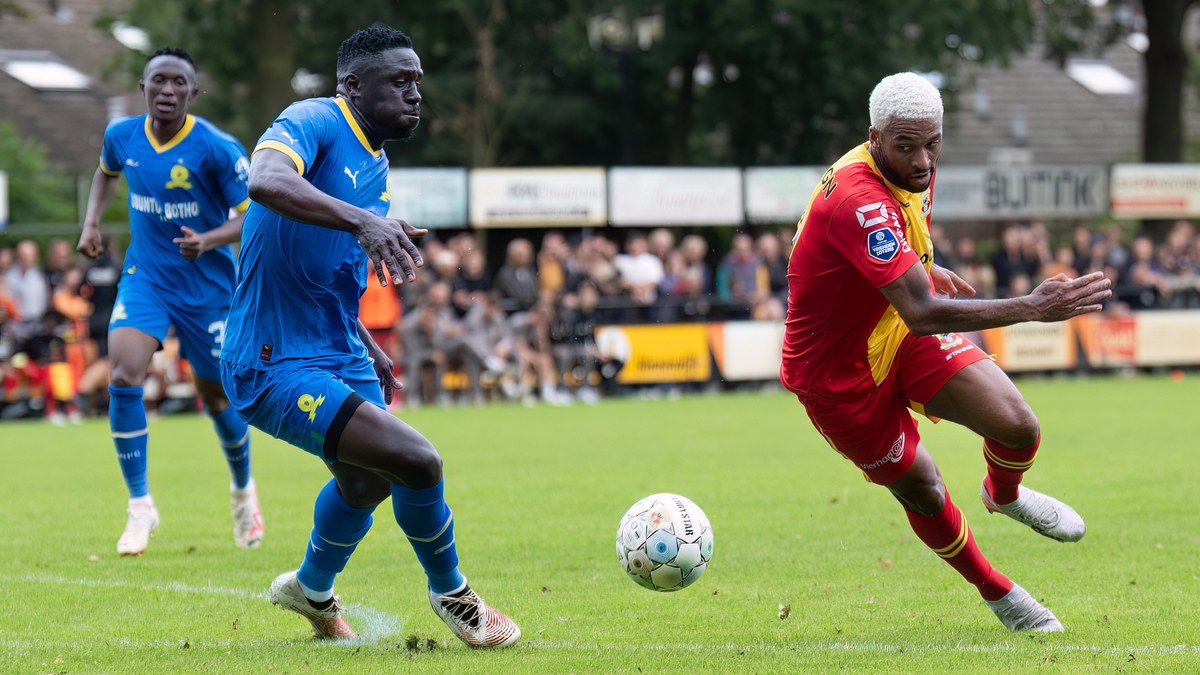
South Africa turned a group-stage night into a national reference point. The Guardian described Bafana Bafana as reaching the knockout stage of a World Cup for the first time, with Thapelo Maseko at the heart of the decisive passage against South Korea. Sky Sports followed the same Group A thread in its live coverage, placing South Africa’s result among the major shifts of the evening. BBC Sport also flagged the South African move into the next round.
Photo credit: Carlo Bruil Fotografie, via Wikimedia Commons, CC BY 2.0. Real image associated with Thapelo Maseko and Mamelodi Sundowns, cropped by SokaIQ for editorial publication.
This kind of qualification is not just a single celebration. It says something about a team that held its tournament together when the margin became narrow. In an expanded World Cup, where group tables can create nervous scenarios until the final passages of play, South Africa found a simple and powerful answer: stay compact, live with the tension, and strike when the match finally offered a door.
The historical weight matters too. Bafana Bafana have often carried a strong identity, but not always a continuous World Cup presence. Reaching knockout football gives this group a new status. The story is no longer only about African progress or one good night of competition. It is about a collective capable of turning a group campaign into a threshold crossed.
Maseko gives South Africa’s breakthrough a face Thapelo Maseko gives this shift a human shape. The Guardian placed him at the centre of the match, and that matters. Major tournaments need players who can become reference points in a handful of actions, not because they explain everything, but because they make visible what the collective has built. Maseko represents the energy, movement and courage South Africa needed to change its group-stage fate.
His importance is not only about the decisive moment. It is also about how a young player can change the perception of a team. Before nights like this, the language is often about caution, calculations and resistance. Afterwards, it turns toward speed, personality and future. That translation is important for Bafana Bafana. Maseko is not simply the man of a moment; he becomes a sign that a generation can carry the South African shirt with more direct ambition.
Balance is still necessary. A historic qualification should not turn one player into an instant myth. The harder challenge starts now: repeat the work, absorb the attention and remain useful in a context where opponents will have more time to prepare details. But the first step has been taken. Maseko gave South Africa a clear point of reference at the heaviest moment.
Bafana Bafana won through emotional control The most striking part of this run is South Africa’s emotional control. Teams playing for a historic place can tighten up. They can rush, lose shape or search too quickly for the liberating action. South Africa instead seemed to accept the nature of the match. The pressure did not disappear, but it did not break the collective plan.
That quality matters because group matches do not reward technical passages alone. They reward teams capable of surviving their own weaker spells. Against South Korea, the task was not only to find a breakthrough; it was to remain in the mental state where the decisive passage could still arrive. That is often the difference between a brave team and a team ready for the next round.
Bafana Bafana also read the moments clearly. When a match becomes tight, every duel, every exit pass and every transition carries greater value. South Africa gave the impression of accepting that weight without losing its collective language. That is a useful base before knockout football, where emotion becomes even denser.
A major step for African football South Africa’s qualification belongs inside a wider African football conversation. The expanded tournament opens more doors, but it does not automatically grant credibility. Credibility is built through performances, discipline and the ability to impose an identity against teams shaped by different football schools. South Africa have added a strong line to that picture.
It would be too simple to turn the night into a continental slogan. Every African national team has its own history, constraints and cycles. But Bafana Bafana remind everyone that progress can take several forms. It can come from a more mature block, from a player who accelerates at the right moment, from better pressure management or from a club culture that feeds the national side. Maseko, shaped in a South African environment used to continental demands, symbolises an interesting bridge between local football, the African stage and the global showcase.
That progress also matters for imagination. When a national team crosses a new line, it gives the next generation more than a memory: it gives them a reference. Young South African players can now look at this campaign as a possible threshold, not as an exception.
The next round will demand another version Knockout football changes the sport. Spaces become smaller, risk management becomes harsher and opponents tailor their plans with greater precision. South Africa cannot simply replay the emotion of qualification. They will need a colder version of themselves: the same intensity, less euphoria; the same courage, more control in transition.
The first task will be protecting the structure. A team that has just lived a historic moment can sometimes try to extend the momentum through longer runs or more open choices. Bafana Bafana must avoid that trap. The group’s strength was to remain readable. It will have to stay readable when the level of opposition rises.
The second task will be managing Maseko. Opponents now know which player can break a line or alter the rhythm. That does not mean South Africa should hide him. It means they must create enough movement around him for the attention he attracts to open solutions elsewhere as well.
A qualification that deserves to be treated as a turning point South Africa have not merely earned the right to play one more match. They have shifted the conversation around their national team. The vocabulary changes: threshold crossed, maturity, decisive player and possible next step. That is exactly what major tournaments produce when a team turns expectation into a sporting fact.
Nothing guarantees what comes next. The knockout stage can be cruel, and the World Cup does not give teams long to breathe. But this campaign has already left a mark. For Bafana Bafana, it says the group can carry historical pressure without collapsing. For Maseko, it opens a wider stage. For South African football, it gives one simple and powerful sentence: the ceiling has just moved higher.