Football business
The 2029 Club World Cup enters a new power struggle
FIFA’s joint venture with European Football Clubs puts the 2029 Club World Cup at the centre of a wider debate over expansion, calendar pressure and European influence.
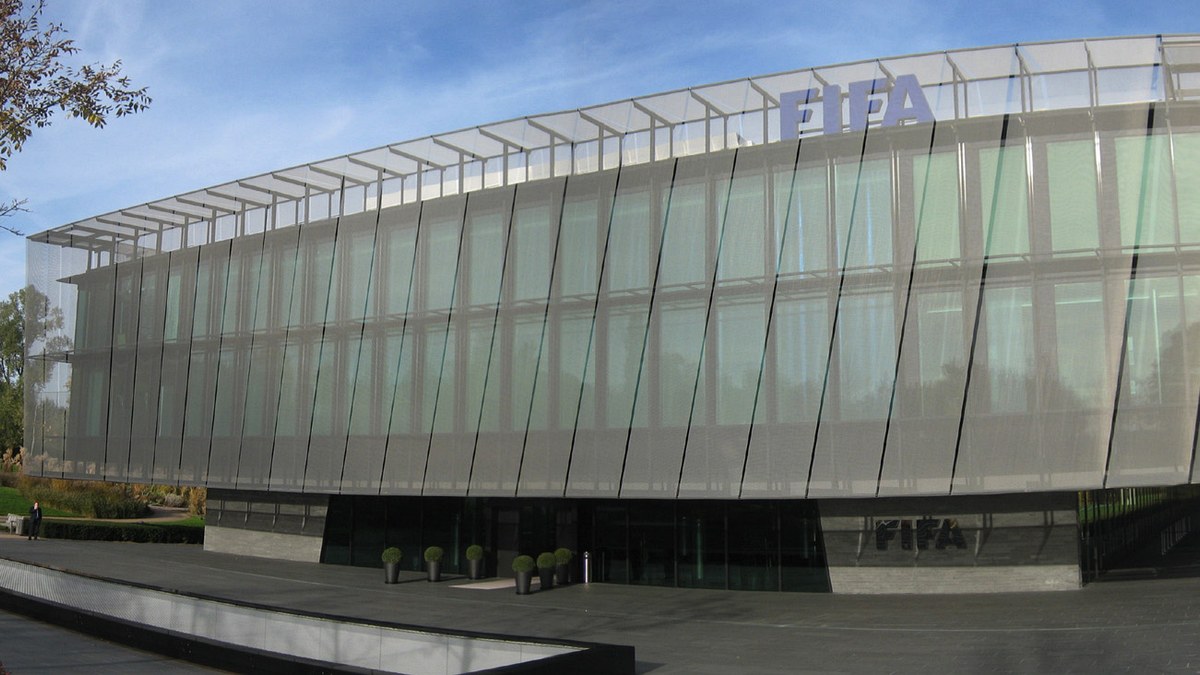
The Club World Cup has entered a new political phase. The Guardian reported on 25 June that FIFA had agreed to create a joint venture with European Football Clubs, the group representing European clubs, to operate the competition. The same report said the next edition in 2029 is now likely to move from a thirty-two-club format to a forty-eight-team field, with more possible places for Premier League clubs.
Photo credit: MCaviglia / digimen.ch, via Wikimedia Commons, CC BY-SA 3.0. Real photo of the FIFA headquarters in Zurich, cropped by SokaIQ for editorial publication.
The important point is not only the number of teams. It is a power shift around a tournament that already touches calendars, revenue, player fatigue and the balance between continents. When FIFA moves its global club product closer to Europe’s most influential clubs, it sends a clear signal: the Club World Cup is no longer a calendar experiment, but a commercial and sporting platform designed to matter.
The subject still needs careful language. The expansion reported by The Guardian is not treated here as a final regulation already published by FIFA. It should be read as a strong political direction around 2029, shaped by governance logic and by the appetite of major leagues. That nuance matters because the club competition still depends on negotiations between confederations, broadcasters, player representatives, domestic leagues and qualified clubs.
A joint venture changes the reading of the tournament A joint venture around the Club World Cup changes the nature of the project. In a traditional model, FIFA organises, clubs participate, broadcasters buy rights and revenues are distributed through a central framework. A joint venture with European Football Clubs introduces something closer to a shared product with the actors who provide a large part of the competition’s commercial pull.
That detail matters because major European clubs have long wanted more weight in decisions that affect their players, their calendars and their international exposure. The Club World Cup can offer them new revenue, but it can also add new pressure. By bringing them more directly into the operating structure, FIFA reduces the risk of open confrontation and turns potential tension into organised negotiation.
For supporters, the result could be visible in the shape of the field, the marketing strategy, the match distribution and the hierarchy of headline fixtures. A tournament driven by joint-venture logic rarely exists only to fill dates. It aims to create nights that appeal to broadcasters, sponsors and international markets. That is where the idea of a forty-eight-club field starts to make sporting and commercial sense.
Why a 2029 expansion is sensitive An expanded format can sound simple: more clubs, more matches, more stories. In reality, every extra place creates a question. Who receives it? Under which ranking? With what balance between Europe, South America, Africa, Asia, Concacaf and Oceania? And how does the tournament avoid becoming an extension of European power rather than a genuinely global stage?
The Premier League sits at the centre of that tension. The Guardian highlights that more English clubs could be involved if the 2029 edition grows. Commercially, the logic is easy to understand: English clubs bring huge global audiences, powerful sponsors and major media attention. Sportingly, the idea is more delicate, because the Club World Cup has to justify its name through credible worldwide representation.
The other sensitive point is the calendar. Elite players already move through domestic seasons, continental cups, international qualifiers and national-team tournaments. A heavier club competition creates another layer of strain. Clubs may see a financial opportunity, while coaches and players may see a physical risk. The tournament’s success will therefore depend on whether it can create value without looking as if it is crushing the football ecosystem it needs.
European clubs gain a stronger seat at the table European Football Clubs becomes a central actor in this sequence. The name matters, but the role matters more. Major clubs no longer want only to be invited into international competitions; they want a hand in the architecture. The joint venture reported by The Guardian gives them a more direct place in how the Club World Cup can be sold, developed and adjusted.
That evolution follows a wider trend in modern football. International institutions keep regulatory legitimacy, but the richest clubs hold the players, the brands, the social audiences and much of the attraction power. Once a tournament tries to become a premium global property, it has to work with those clubs rather than treat them as simple participants.
The risk is obvious. If the conversation focuses too heavily on the most profitable European clubs, other confederations may feel that their presence is being used mainly as global decoration. The Club World Cup will succeed only if FIFA can sell a major product without reducing competitive diversity to a marketing promise. African, Asian, South American and North American clubs need to exist as more than occasional opponents for European giants.
What it means for leagues and players For domestic leagues, Club World Cup expansion raises a question of sporting sovereignty. Leagues build their value through rhythm, local rivalries and the readability of seasons. A major global tournament in the calendar can become a showcase, but it can also create disruption if clubs return with tired players, shortened preparation windows or injuries.
For players, the debate is even more direct. International club competitions add prestige, but prestige does not replace recovery. The deepest squads will be better equipped, which could widen the gap between rich clubs and everyone else. Coaches will have to balance global ambition against physical management, especially if the tournament becomes longer and more demanding.
There is also a reputational dimension. A club that wins or performs strongly in this tournament can build its brand in markets where its domestic league is less visible. A poor campaign, however, can expose weaknesses in front of a worldwide audience. That is why major clubs will watch the rules, prize money, travel demands and opponent quality closely. An expanded Club World Cup would not be just a competition; it would be an organisational test.
The real question: global showcase or closed premium product FIFA now has to solve a contradiction. It wants the Club World Cup to be a global showcase, but the strongest economic engines sit mostly in a small number of leagues and brands. If the 2029 expansion really opens the door to forty-eight clubs, the test will be proving that growth serves world football rather than simply gathering the biggest audiences.
The best version of the tournament would mix European prestige, South American force, African progress, Asian ambition and North American identity. The least convincing version would feel like an enlarged European competition with a few invitations attached. The difference will be made by qualification criteria, place distribution, calendar protection and the way the story is built.
The Guardian report mainly shows that the battle has started long before 2029 kicks off. It is being fought through offices, contracts, alliances and power balances. The Club World Cup can become a major appointment in modern football. To do that, it must prove that it adds a useful competition, not just another layer of matches to an already crowded calendar.