FIFA / world football
Brobbey and Gakpo wake the Netherlands up at the World Cup
The Netherlands made a major Group F statement against Sweden, with Brian Brobbey and Cody Gakpo giving Ronald Koeman a sharper attacking formula.
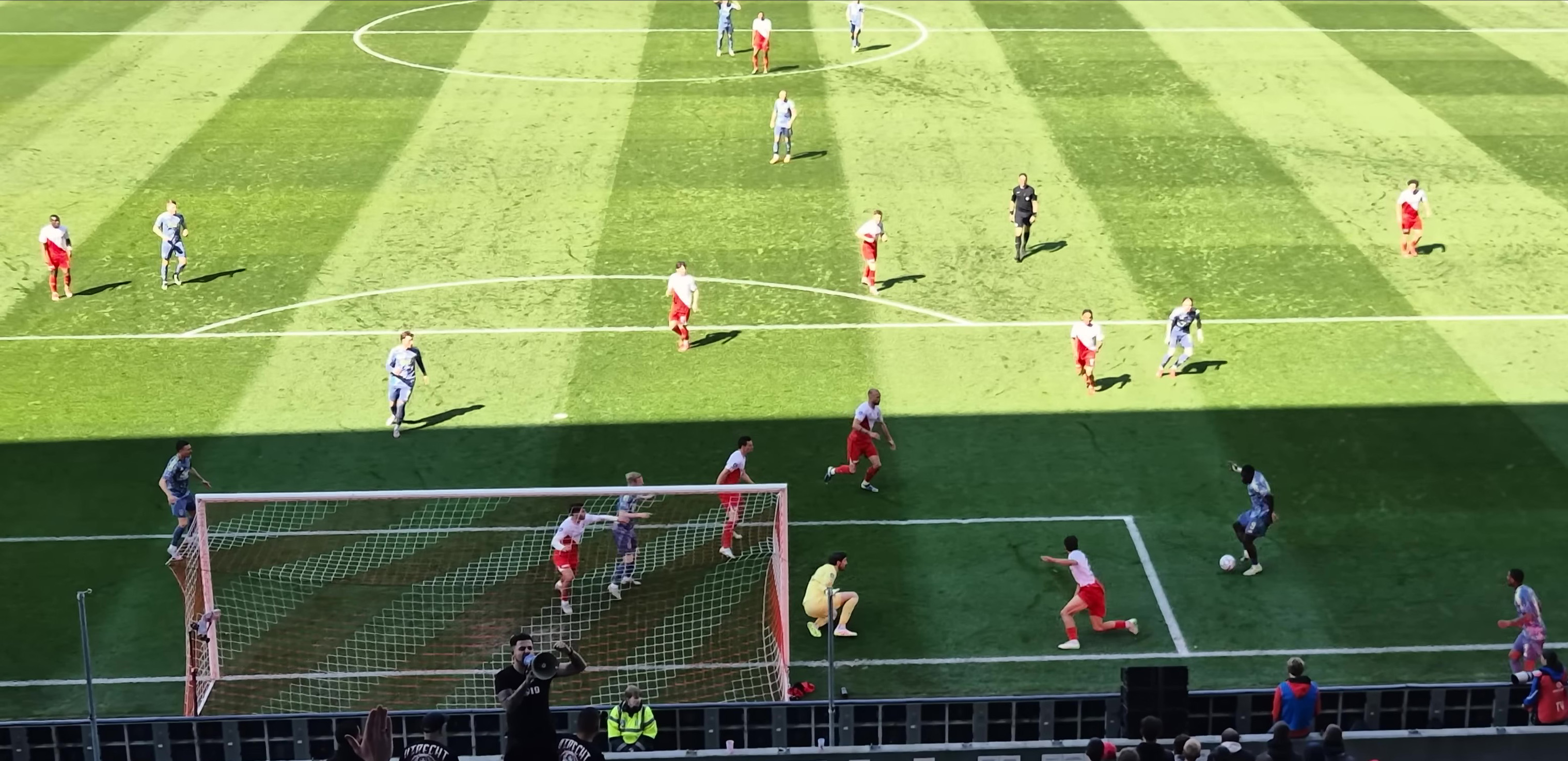
The Netherlands needed a match that meant more than the basic arithmetic of the group. They found it against Sweden, with Brian Brobbey and Cody Gakpo giving Ronald Koeman a clear answer about the attacking identity of his side. The Guardian and Sky Sports both highlighted the influence of the pair in a dominant Dutch win built on power, width, speed and precision in the final third.
The most important part was not only the result. It was the manner of the performance. Sweden arrived with a reputation for physical threat, led by forwards capable of making any defence uncomfortable. The Netherlands turned that frame back on them. Brobbey gave the attack a central reference point, Gakpo punished space from the left, and the Dutch collective played with an aggression that has not always been present in debates around Koeman.
That changes the tone around Group F. It shows the Netherlands are not only a possession side or a collection of familiar names. When their attack has a reliable central target and the wide players arrive with timing and conviction, they become very hard to contain. Sweden leave the game with heavier questions about balance, protection of wide areas and the ability to stay calm when an opponent raises the tempo.
Brobbey supplies the fixed point the Dutch needed
Brian Brobbey's selection gave the Netherlands something simple and valuable: a centre-forward able to occupy defenders, play with his back to goal and attack the box without waiting for the game to arrive at his feet. The Guardian underlined his power and the way he quickly justified Koeman's decision to put him at the heart of the attack.
For a Dutch side often judged by its circulation, that kind of presence changes a lot. A fixed point lets midfielders play higher, gives wide players better receiving conditions and forces defenders to solve several problems at once. Brobbey is not there only to finish moves. He pushes the opposing line back, creates second-ball pressure and opens angles for runners arriving at pace.
That profile matters especially in a tournament. Matches are not always won through elegant plans or long passages of control. Sometimes a team needs a striker who embraces contact, turns a cross into real danger and gives confidence to the rest of the structure. Against Sweden, Brobbey played exactly that role. He made the Dutch game more direct without making it chaotic.
Gakpo again looks like a player for the biggest nights
Cody Gakpo added the second layer. His influence was not limited to decisive actions. He gave the Netherlands a constant threat from the left, a clean final touch and the timing to attack dangerous zones at the right moment. Sky Sports also placed him at the centre of the Dutch victory alongside Brobbey.
Gakpo is valuable because he connects several registers. He can hold width, move inside, combine, shoot or create for a teammate. In a national team that sometimes searches for the balance between control and verticality, that kind of forward becomes an accelerator. He gives Koeman an option shaped not only by the system, but by the reading of space.
The performance also strengthens Gakpo's place in the attacking hierarchy. At a World Cup, serious teams need players who turn superiority into something concrete. The Netherlands have long produced elegant attacking talent. This match was a reminder that Gakpo, when served in the right rhythm, brings an efficiency that can carry a campaign beyond potential.
Sweden lost the key zones too quickly
Sweden were not beaten only by two individuals. They lost the structural duels of the match. The wide areas were exposed, the central defence had to handle too many different runs, and the midfield did not slow the Dutch transitions enough. The Guardian described a team unsettled by the pace and collective strength of the Netherlands.
That is a serious point for Graham Potter. His team still have forwards who can hurt opponents, but tournaments are unforgiving when the same spaces keep appearing. When the first pressure is bypassed and wide defenders are drawn too high, the room behind them becomes an invitation. The Netherlands exploited those moments with cold precision.
Sweden therefore need a clear tactical correction. They can remain dangerous through their attackers, but they cannot leave so much grass for opponents to attack. The next match becomes as much a mental task as a technical one: regain stability, protect crossing zones and prevent frustration from turning a setback into a collective collapse.
Koeman gets breathing room in the argument
Ronald Koeman knows every Netherlands manager works under inspection. The history of the Oranje creates expectations of style, control and results. When the team hesitates, criticism comes quickly. This win gives him breathing room, not because it answers every question, but because it shows a believable attacking solution.
Brobbey's role is central to that reading. If the striker proves he can sustain this level, Koeman has a base from which to vary the plan. He can use a more direct structure against physical blocks, release Gakpo into preferred spaces and ask midfielders to run beyond the ball knowing it can be secured higher up the pitch.
That renewed margin should not be mistaken for certainty. One group game, even a convincing one, does not guarantee the next step. But it plants a strong idea: the Netherlands have a formula that can damage opponents, and it depends as much on complementarity as on individual names.
A real signal for the rest of the group
The coming days will show whether this performance was an isolated peak or the start of a stronger rhythm. The Netherlands now have a clear argument to offer the tournament: an attack able to combine central power with wide incision. In a competition where momentum can turn quickly, that signal matters.
For Sweden, the urgency is different. They need correction without panic, because the squad still has enough quality to answer. But the footage from this match will be useful to future opponents: press the build-up, attack the flanks, make the defence run towards its own goal and isolate centre-backs in difficult duels.
World Cups often move through successive revelations. This one was Dutch. Brobbey can provide the platform, Gakpo can cut the game open, and Koeman can build around an attack that feels less predictable. That is precisely the sort of night that can turn a watched team into a much more serious contender.