Evergreen football guides
Fifty years of Panenka: why one penalty changed football’s language
Antonín Panenka’s anniversary shows how one soft, risky kick became a universal idea in football culture.
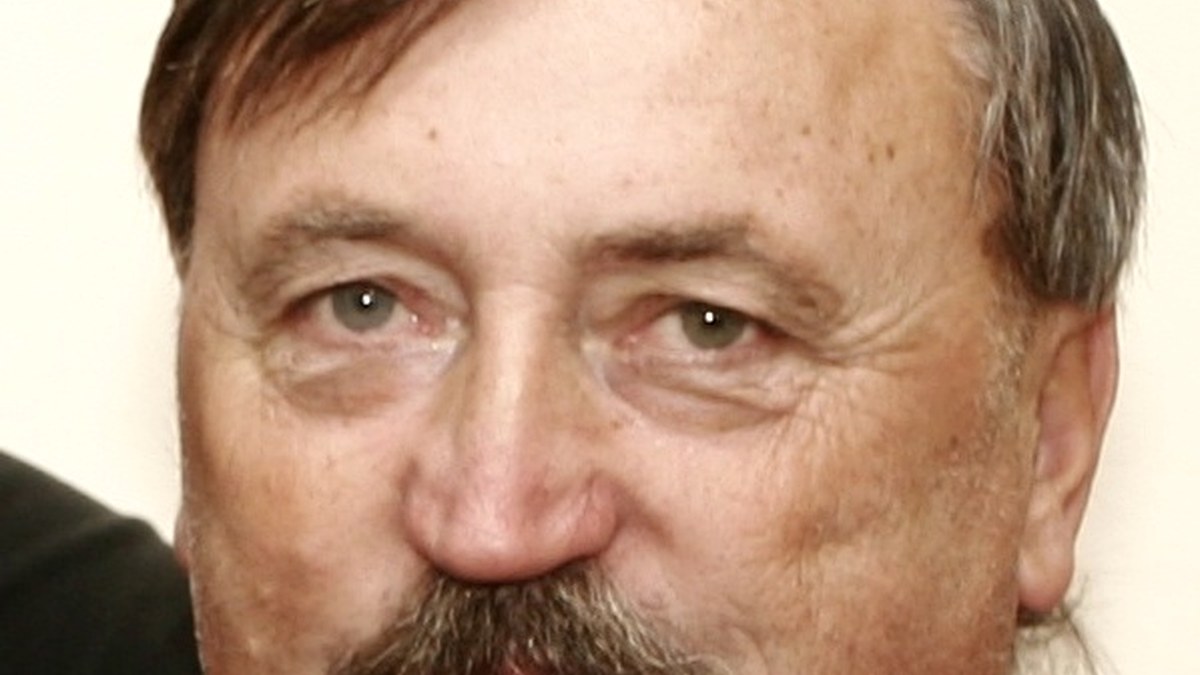
Fifty years after the kick that gave its name to a way of taking penalties, Antonín Panenka remains one of football’s most unusual historical figures. The Guardian published an anniversary interview on 20 June in which the former Czechoslovakia international reflected on the penalty that changed his life. UEFA also keeps the moment in its official European Championship archive, which shows that the action is not just an old final clip. It has become part of football’s shared vocabulary.
Photo credit: Jiricekpavlicek / Wikimedia Commons / Public Domain. Real Antonín Panenka photo, cropped by SokaIQ for editorial publication.
The power of the story lies in its apparent simplicity. A player walks forward, slows his body, lifts the ball gently through the middle and turns an extreme pressure situation into something almost playful. Since then, any similar attempt is immediately described with his name. Few footballers have left such a precise mark on the language of the sport. This is not only a famous goal. It is a technical gesture that has survived generations, tactical systems and the increasing speed of the modern game.
That durability is why the anniversary matters. Some historic actions age like archive material. Panenka’s kick continues to live because it remains usable, risky and instantly understood. Children can imitate it in training, stars can try it on a major night, goalkeepers can fear it, and supporters know exactly what it means: nerve, imagination, psychological reading and the willingness to look foolish if the decision fails.
A football gesture that became a universal language
Football has names that travel beyond biographies. A roulette can evoke Zidane, a turn can recall Cruyff, and certain free-kicks still bring Juninho into the conversation. Panenka belongs to that rare family of players whose name becomes a silent verb. His penalty is not only attached to one period of the game. It describes an intention recognised everywhere, from local pitches to the final stages of major tournaments.
The universality comes from the contrast. A penalty is usually a brutal duel between power, precision and reflex. Many takers search for the corner, speed, a safe side or the familiar wrong-footing of the goalkeeper. Panenka shifted the problem towards the goalkeeper’s patience. His kick depends on the belief that the other player will move, that pressure will force an early decision, and that softness can defeat force. It is a tactical idea compressed into a fraction of a second.
That is why the gesture still fascinates. It does not rely on unreachable physical gifts. It does not ask a player to run faster, jump higher or strike harder. It demands emotional control that almost looks provocative. In a sport where power often attracts the spotlight, Panenka reminds football that imagination can become a weapon when it is used at exactly the right moment.
Why the anniversary still speaks to modern football
Football in 2026 is surrounded by data, video clips, specialist coaches and goalkeepers who study penalty habits in detail. Spot-kicks are analysed before matches, during training sessions and sometimes on staff tablets. In that environment, Panenka’s gesture might seem to belong to a more innocent age. The opposite is true: it remains modern because it attacks the logic of preparation itself.
The more a goalkeeper believes he knows the taker, the more tempted he can be to anticipate. The more a team prepares scenarios, the more dangerous the player who breaks the scenario becomes. The Panenka survives because it is not simply a trick. It uses over-reading, the urgency to choose, the weight of the occasion and the mental noise of a big moment.
The Guardian was right to frame the anniversary around the man as well as the action. The line about the penalty changing his life captures what football can do to a career. One kick can turn a respected player into a figure of popular culture. A decision lasting only seconds can become a reference used by generations who never watched the original match.
A risk that offers no hiding place
The beauty of the Panenka also comes from its danger. When it succeeds, the taker looks impossibly calm. When it fails, it can appear arrogant, naive or irresponsible. That contrast explains why coaches rarely enjoy it unless the ball ends where it should. The same act can be celebrated as genius or condemned as poor judgement.
That makes it different from a powerful penalty saved by a goalkeeper. In that case, the taker can point to the opponent’s quality or a small execution detail. A failed Panenka exposes the intention more clearly. It shows that the player chose to win through psychological control, and that choice becomes visible to everyone. Football sometimes forgives technical error; it is less forgiving when visible audacity turns against the player who tried it.
Panenka himself remains linked to that boundary. His legacy is not only a symbol of flair. It is a lesson about the price of boldness. The kick matters because it could have cost him so much. If it were easy, it would not carry his name with the same force.
Why modern takers keep returning to the myth
Every major football generation rediscovers the gesture. Forwards, midfielders and even defenders have tried to use it in important moments. Some have succeeded with spectacular calm. Others have seen their attempts become warnings about what not to do. That alternation keeps the myth alive. A Panenka is never neutral. It always says something about the taker’s character.
In the current game, where players are often guided by strict team protocols, it offers a rare form of freedom. It says that a footballer can still surprise an entire stadium with one individual decision. It reminds us that technique is not only the perfect execution of a collective plan. It can also come from personal intuition, a reading of the opponent and a willingness to accept risk.
That is why the anniversary does not feel like simple nostalgia. It speaks to today’s players, goalkeepers, analysts and supporters. The Panenka is both a memory and a live option. It exists in the archive, but it can return tomorrow night.
The legacy of a name that escaped its era
Very few football gestures travel through half a century without losing their meaning. Panenka’s has kept its clarity because it lives in one image: the goalkeeper gone, the ball floating, the stadium held in suspense, and then the emotional turn. The image does not need a long explanation. It is understood immediately.
Perhaps that is the greatest tribute to Panenka. His name is no longer only the name of a former player. It has become a way of thinking about a duel, an invitation to believe that courage can take a gentle form. In a game that is often fast, intense and heavily calculated, that idea still has unusual force.
Fifty years on, the story is therefore not just celebrating a penalty. It is celebrating the possibility that a tiny gesture can change the language of the game. Panenka gave football a word, an image and a temptation. That is why this anniversary deserves more than a nostalgic glance: it reminds us that sport’s great inventions sometimes happen in the second when one player refuses to strike the ball like everyone else.