FIFA / world football
The Trionda ball is putting World Cup goalkeepers under pressure
The official Trionda ball has become a real football story, with flight behaviour, turbulence and goalkeeper adaptation now part of the World Cup conversation.
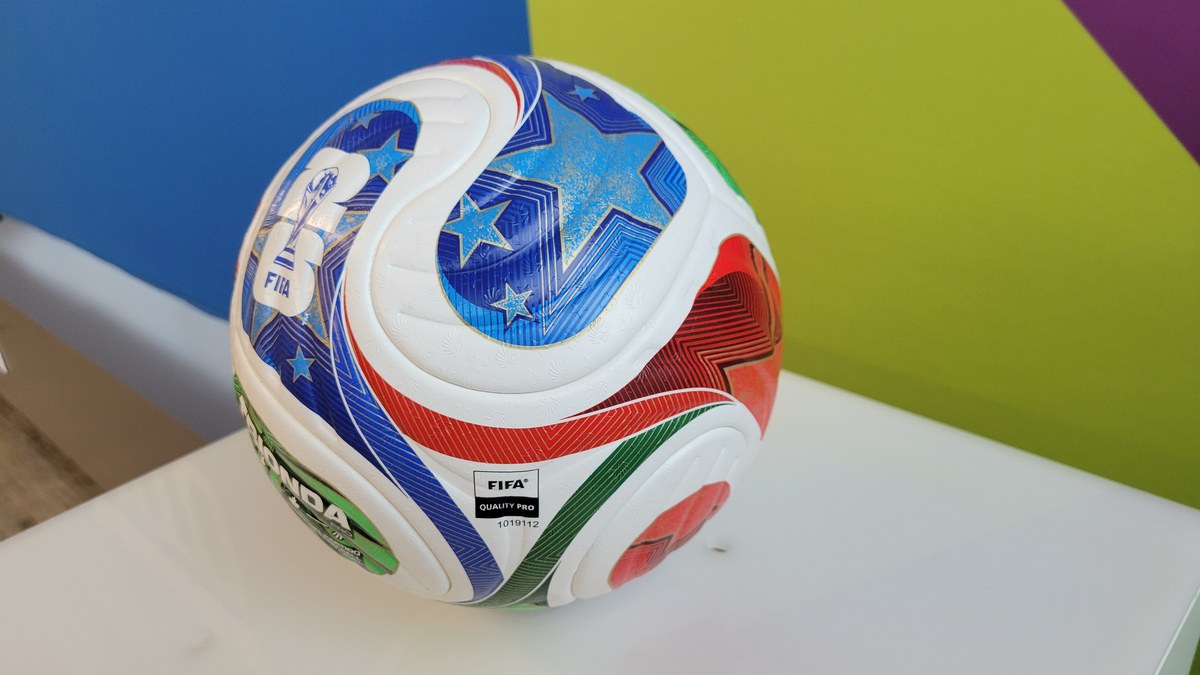
The Trionda ball is no longer just a marketing object for the World Cup. It has become a genuine football story about performance, perception and responsibility for goalkeepers. The Guardian published a detailed piece on 25 June about the official ball’s behaviour, drawing on comments from Joe Hart, the difficulties faced by some goalkeepers and scientific context around a turbulence point that can change the flight at a particular speed.
Photo credit: Aukkk, via Wikimedia Commons, CC BY-SA 4.0. Real photo of the Adidas Trionda World Cup ball, cropped by SokaIQ for editorial publication.
The debate matters because it goes beyond the usual complaint about a new tournament ball. At every major competition, goalkeepers say the official model moves too much, floats too much or reacts differently under pressure. But Trionda has pulled those conversations into a tournament where long shots, driven crosses and set pieces can change the mood of a stadium in seconds. When a ball becomes harder to read in a specific speed range, it is no longer only a matter of preference. It becomes a tactical detail.
The subject still needs caution. A ball does not explain every mistake, late reaction or missed claim. Elite goalkeepers train precisely to absorb uncertainty. But The Guardian’s report underlines that equipment can change the safety margin. The way a ball slows, dips or keeps its lift influences the body shape, starting position and last-second decision of the player facing it.
An official ball at the centre of the game Trionda was designed to carry the identity of a World Cup staged across several territories. Its place in the tournament is visible before a match even starts: colours, symbols, promotion and presence around the stadiums. Yet the first serious sporting conversation is not about how it looks. It is about how it flies.
In modern football, the official ball is never neutral. Teams use it in preparation, goalkeepers repeat catches, shooters test dipping strikes and analysts watch how it behaves on different surfaces. A model that appears to accelerate, hold up or move late can encourage more long-range shots, more driven crosses and more balls placed into the uncertain zone between goalkeeper and defence.
That is where Trionda becomes a performance issue. If goalkeepers read certain movements less comfortably, attackers and attacking midfielders will naturally look for those spaces. Coaches can ask for more firm shots, set-piece routines or free-kicks aimed at awkward rebounds. A detail of equipment can therefore influence the way teams attack.
The crisis point worrying goalkeepers The Guardian describes a crisis point at a certain speed: a phase where the air around the ball can behave differently and make the flight harder to judge. For a goalkeeper, that is not an abstract concept. He has to decide early whether to hold, parry, adjust or stay set. If the ball changes line late, the window for correction becomes tiny.
Joe Hart, the former England goalkeeper turned analyst, has spoken about how some modern balls complicate the job. That kind of view matters because it comes from a position where technique is often decided by invisible details. Supporters see a hand arriving too late. The goalkeeper may feel that the first read was correct, only for the ball to lose or gain a fraction of movement at the worst moment.
Luca Zidane has been mentioned in the wider discussion about goalkeepers put under pressure. The point should not be simplified. Every action depends on the striker, the wall, the bounce, body shape, visibility and match context. But when several moments feed the same feeling, the conversation becomes legitimate. The ball is part of the scene, even if it is never the only actor.
A possible edge for shooters For attacking players, that uncertainty can become an invitation. If the ball floats more in a certain speed range, the best strike is not always the most powerful one. It may be the shot that is firm enough to beat the goalkeeper’s first read, controlled enough to avoid a clean catch and unstable enough to produce a second ball.
Set pieces are especially relevant. From a corner, a ball that dips late can create a hesitant claim. From a free-kick, a shot that does not follow the expected line forces the goalkeeper to react instead of anticipate. From distance, a defender can block the starting view and leave only the final section of flight for the goalkeeper to read. Trionda can therefore matter in moments where football is already full of ambiguity.
That does not mean the tournament will become a run of strange goals. Goalkeepers adapt quickly, video analysts identify patterns and training sessions correct handling habits. But in a short competition, even a few days of adaptation can create differences. A team that understands the ball quickly can exploit an advantage before everyone else adjusts.
Why goalkeepers cannot ignore the debate Goalkeeping is built on repetition. Angles, foot power, hand position, lateral movement and aerial claims are trained again and again. A change of ball forces those automatisms to be recalibrated. Even if the difference looks small, it can alter the height of a catch, the direction of a parry or the choice between holding and pushing away.
The debate around Trionda also reminds us that goalkeepers operate in a permanently unfair zone. When an attacker misses, another chance may come. When a goalkeeper misreads a flight, the image stays. New balls amplify that pressure because they give the public a simple explanation, sometimes too simple, but not necessarily false. The equipment should be discussed without becoming a universal excuse.
Staffs should treat the subject practically. More work on long-range shots, more driven crosses, more balls under stadium lighting and more drills with blocked sightlines. Trionda does not only demand suspicion; it demands precise preparation.
A small object that can shape the tournament Major competitions are usually told through players, coaches and stadiums. Sometimes the ball enters the memory too. Trionda already has that possibility, not because it is magical or defective, but because it has created a real conversation between science, feel and performance.
If goalkeepers adapt, the debate may fade quickly. If the flights continue to surprise, every floating shot will become a small trial of the ball. Either way, the subject is worth tracking because it touches the centre of the game: the relationship between the shooter’s technique, the goalkeeper’s reading and the uncertainty that makes football so brutal.
The World Cup moves forward with favourites, surprises and human stories. Trionda adds a quieter but essential layer. It reminds everyone that a tournament is also played with one repeated object, used thousands of times, where the smallest variation can turn a technical decision into a collective turning point.