FIFA / world football
Pochettino gives the United States a real World Cup belief
Before the Turkey test, Mauricio Pochettino’s United States no longer look only like a host under pressure: they are beginning to look like a team with direction.
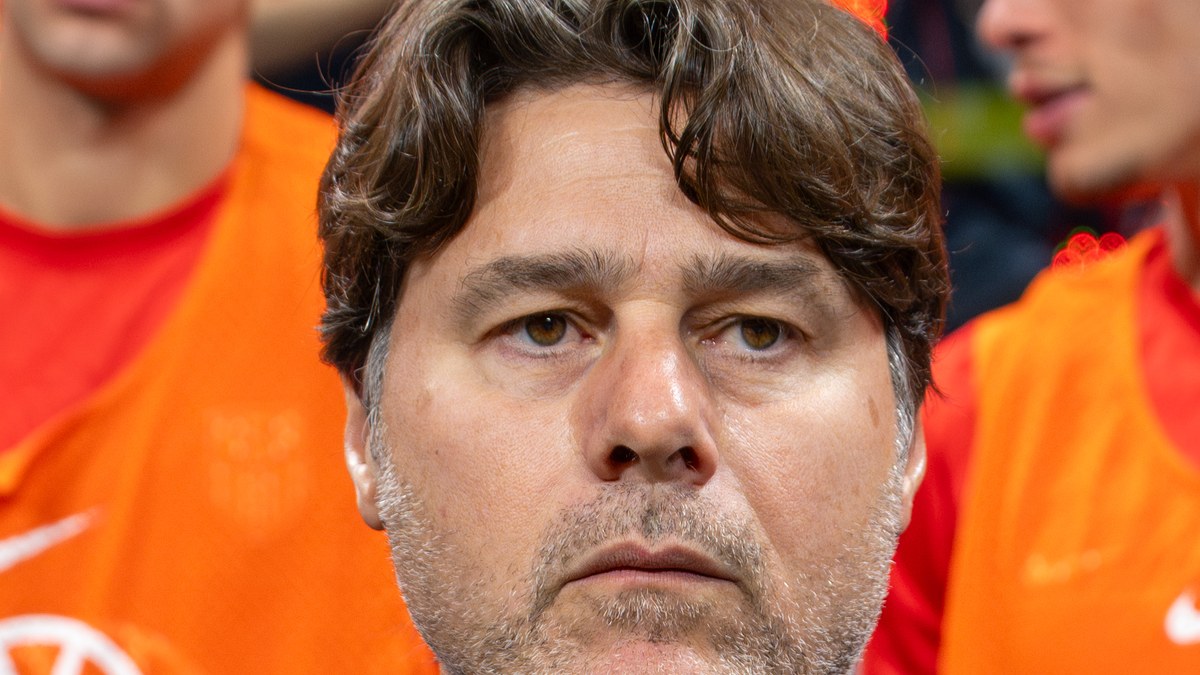
Mauricio Pochettino has not merely brought calm around the United States. Before an important meeting with Turkey, the American team looks less like a host nation carrying pressure and more like a side beginning to believe it can shape its own World Cup. BBC Sport published a detailed feature on 25 June about that shift in mood, while The Guardian placed the Argentine’s work in the context of a rebuild that grew out of Gold Cup frustration and a difficult learning curve.
Photo credit: Bryan Berlin, via Wikimedia Commons, CC BY-SA 4.0. Real photo of Mauricio Pochettino with the USMNT in March 2026, cropped by SokaIQ for editorial publication.
The point is not to turn the United States into an automatic favourite. A World Cup is not won because a country hosts well, communicates well or attracts fresh attention. The more interesting change is deeper: Pochettino has given shape to a group that had often moved between promise, identity debates and missed chances. In a home tournament, that clarity can become as valuable as individual talent.
The Turkey match therefore arrives as a test of maturity. The United States are no longer playing only to survive their group or ride a wave of national enthusiasm. They have to show they can manage expectation, meet the intensity of a well-organised European opponent and keep emotional discipline when the noise around them rises. That is exactly the kind of setting in which the influence of a coach like Pochettino becomes visible.
Pochettino has moved the American conversation For years, the US men’s team has been judged through two repeated questions: does the country finally have a generation strong enough, and can it turn potential into a major result? Those questions have not disappeared, but Pochettino has moved the conversation. It is no longer only about available names, young talent or comparisons with traditional powers. It is now about how to become an adult team in an environment where this level of pressure is still new.
The Guardian underlines a key moment: the difficult period after the Gold Cup and the coach’s realisation that the American football landscape is more complex than it can appear from outside. The game is growing quickly in the United States, but it still shares attention with other sports, other supporter cultures and an enormous national geography. For a coach arriving from Europe, understanding that context is not a side issue. It is part of the job.
Pochettino appears to have accepted that specificity rather than using it as an excuse. His team cannot simply copy a European or South American model. It has to build its own relationship with the crowd, the stadiums, the media pressure and the idea of a home tournament. That is where his management matters: he is not only selling a style, he is trying to install a collective belief strong enough to survive turbulence.
A host nation learning to carry the noise Being a host nation can become a dangerous gift. Travel is more familiar, the crowd can push, and the logistics can feel easier. But every match also takes on symbolic weight. A bad half becomes a national argument. A selection call becomes a football-political debate. A tactical hesitation can be read as a sign of fragility.
Pochettino’s United States have to learn how to turn that noise into energy without being swallowed by it. That is one of the main stakes against Turkey. The opponent is not only a sporting obstacle; it offers a measure of resistance. Against a team capable of punishing turnovers, fighting duels and breaking rhythm, the host has to prove that its new optimism rests on more than public momentum.
BBC Sport highlights the feeling that both team and supporters are starting to believe more strongly. That belief has value, especially in a tournament where emotion can tilt tight matches. But it has to travel with structure. Pochettino knows the danger of open phases and uncontrolled enthusiasm. His task is to keep the surge without losing the frame.
Turkey as a credibility test Turkey are a useful opponent for measuring the United States. They can let a team have the ball, press in bursts, accept transition moments and raise the physical level. For an American side still being examined through its potential, this type of match says plenty. Possession phases must be cleaner, build-up patterns less nervous and pressure moments better managed.
The game also tests the depth of the squad. In a long World Cup, a team does not live only through its best players. It advances with substitutes, adjustments and the ability to absorb fatigue, suspension or a shift in form. Pochettino built much of his reputation on intensity, player development and clear roles. The United States now need those principles to hold against serious opposition.
There is also a psychological layer. A host nation often wants to win quickly in order to release the stadium and the dressing room. But the best version of the United States may need to learn not to chase immediate validation. Controlling a match, accepting difficult spells, staying patient and striking at the right time: that is the language of teams that last in tournaments.
Why the method matters more than the slogan The risk around a home World Cup is confusing communication with progress. The United States have an obvious story: a huge country, enormous stadiums, an ambitious generation and a famous coach. But a story does not defend crosses, protect transitions or win second balls. Pochettino therefore has to turn the narrative into concrete habits.
That is why the details matter. The distance between the lines, the reaction after losing possession, the use of wide areas, the management of difficult spells and leadership inside the team will matter more than slogans. A team that believes without discipline becomes vulnerable. A disciplined team without belief can lack daring. The balance Pochettino is chasing sits exactly between those dangers.
American supporters can be drawn to this team because it promises something larger than previous cycles. They will also have to accept that a rise in level can include imperfect matches. A tournament is rarely built in a straight line. The real question is not whether the United States look attractive before Turkey; it is whether they can remain coherent when the match becomes hard.
A match that can change perception If the United States respond, the outside view will shift. They will no longer be only the energetic host, the improving side or the team lifted by its public. They will become a team capable of carrying visible ambition against an opponent that forces them to play properly. That change in perception can matter later in the tournament, because major knockout paths are also shaped by the confidence opponents give you or deny you.
Pochettino has not solved every question. No national-team coach does that before the matches that truly decide a campaign. But he has already given the United States something major competitions demand: direction. BBC Sport and The Guardian tell that transformation in different ways, through new belief, painful lessons and the management of a very particular home context.
Turkey will show whether that direction is beginning to become competitive strength. For American football, the stakes go beyond one evening. The task is to prove that a host country can be more than a spectacular setting. It can become a team with an idea, controlled tension and a genuine ability to make its tournament grow from within.