FIFA / world football
Ugarte stretchered off as Uruguay and Manchester United wait on diagnosis
Manuel Ugarte left Uruguay’s World Cup match on a stretcher, leaving Manchester United and the national team waiting for medical clarity.
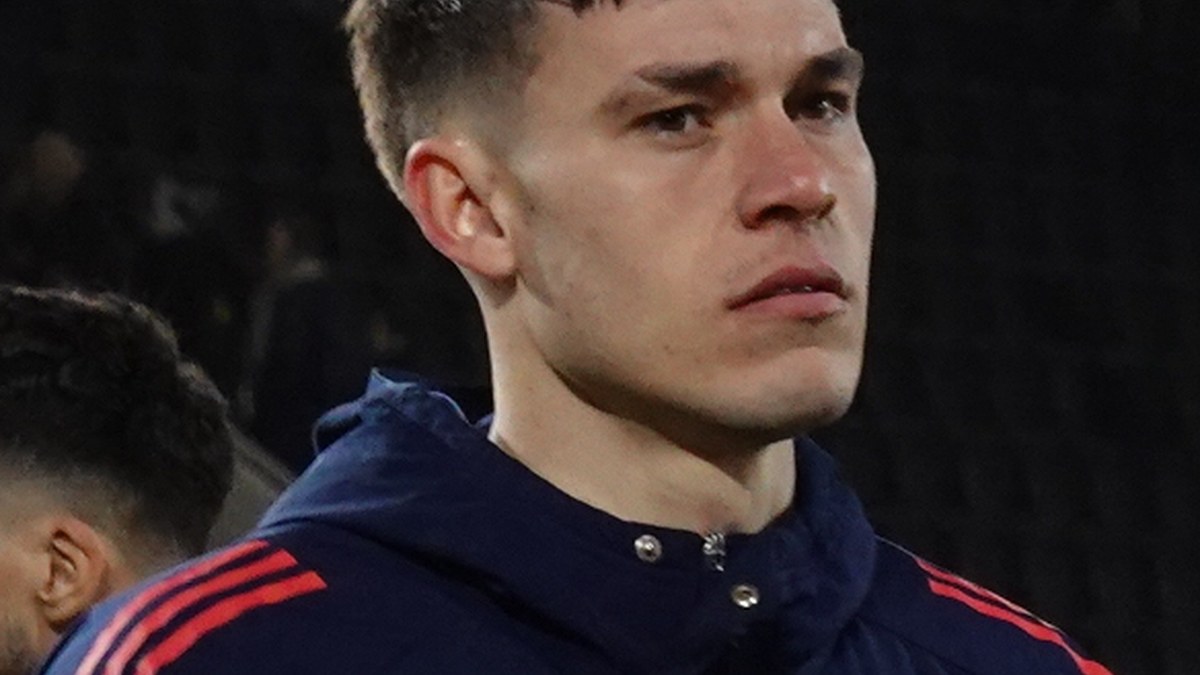
Manuel Ugarte left the pitch on a stretcher with Uruguay, and Manchester United are now waiting for a clear medical update. BBC Sport reported on Saturday that the Uruguay midfielder was injured while trying to intervene during the World Cup match against Spain, before leaving the field visibly distressed. The Independent and USA Today also reported the same central facts: Ugarte had to be carried off, the exact severity was not yet publicly established, and attention has moved to Uruguay's medical staff and then to Manchester.
The story needs caution. A stretchered exit naturally creates concern, especially when it involves a national-team midfielder who also plays in the Premier League. But that image alone does not confirm a layoff length, surgery, ligament damage or transfer-market consequence. The verified facts are simpler and serious enough: Ugarte left a major match injured, his condition requires assessment, and two sporting environments are directly affected.
For Uruguay, the timing is cruel because he belongs to the physical and defensive core of the midfield. For Manchester United, the issue touches a sensitive department, the area where the club needs balance, pressing cover and cleaner first passes under pressure. In both cases, this is not only a medical update. It forces coaches, executives and analysts to recalculate plans that assumed the availability of a mobile, aggressive ball-winner who can carry a heavy workload.
A blow that reaches beyond the match scene
A World Cup injury never stays inside the boundary of the national team. The tournament supplies the image: the player down, the medical staff, the stretcher, the team-mates watching. Behind that image sit calendar consequences, club consequences, selection consequences and human management. Ugarte is not a peripheral player. He plays a position where invisible work matters as much as visible actions.
His job is often to reduce danger before it becomes obvious. He has to sense an opposition transition, cut a passing lane, cover a full-back, close the space in front of the centre-backs and then show again as a short option. That type of midfielder cannot be fully explained by easy statistics. When he is missing, distances change, defenders step out earlier, advanced midfielders have to run more, and a team can lose a layer of security before the crowd immediately understands why.
That is why the caution around Manchester United, as reported by BBC Sport, makes sense. The club cannot work from fear or isolated images. It needs the medical return, the affected area, the extent of the damage and the connection to its wider planning. The summer window, pre-season and midfield construction are already complex files. Uncertainty around Ugarte adds a meaningful variable.
Uruguay lose a pressure and balance piece
For Uruguay, Ugarte is more than a Manchester United name. He is one of the profiles that allow a Marcelo Bielsa team to live with intensity. Pressing football requires players who can repeat efforts, defend forward and accept large spaces behind them when the block jumps. In that system, the defensive midfielder becomes both an insurance piece and a trigger.
When Ugarte is available, Uruguay can defend higher with at least one central safeguard. He can also recover balls that immediately turn a defensive phase into attack. This kind of player gives a team positive edge: opponents know the first pass will be contested, second balls will be attacked and central duels will never be comfortable.
His exit therefore raises a collective-balance question. Even if Uruguay's tournament has already moved into a difficult place, the issue is not only one match or one night. The national team has to protect the player, manage the squad and avoid turning emotion into diagnosis. International football moves quickly, but a player's health should not be compressed by elimination frustration or media urgency.
Manchester United face a sensitive unknown
Manchester United will read the situation differently. The club knows the value of a midfielder who covers ground, but it also knows the cost of physical uncertainty when a season is being planned. Ugarte belongs to a department where recruitment decisions, sales, internal hierarchy and tactical preparation overlap. A serious injury, if confirmed, would inevitably change how the next weeks are approached.
It is important not to invent what has not been established. None of the reliable sources checked at this hour gives a confirmed recovery timeline or a definitive medical conclusion. That is exactly what makes the situation delicate. United must wait, but the club cannot ignore the possibility of a layoff. The staff can prepare several scenarios: quick return, medium absence, or a longer spell out if examinations bring bad news.
On the pitch, the possible impact is clear. A midfielder like Ugarte allows a side to press without fully exposing the defence. He protects transitions, adds bite to duels and can free more creative players by carrying part of the defensive load. If that piece is absent, the team either needs a similar profile or must change collective behaviour. That can influence selection choices, pressing instructions and even the height of the defensive block.
The diagnosis must lead the story
World Cup injuries often produce conclusions too quickly. A strong image becomes a certainty, an emotional reaction becomes a timetable, and a dressing-room rumour almost becomes information. Ugarte's case calls for the opposite: slow down, separate facts from assumptions and wait for examinations. Reliable sources say he went off injured, Manchester United are waiting for news, and the severity still needed clarification. That is already enough to understand why the file matters.
This caution does not block sporting analysis. It makes the analysis more accurate. Ugarte is a player whose influence lives in the structure. If his absence extends, Uruguay will have to rethink some of their midfield aggression and Manchester United will have to reassess options. If the news is better than feared, the priority becomes return management, because rushing back after a major scare can create a second risk.
Supporters, clubs and media all benefit from keeping the file medical before it becomes strategic. The World Cup amplifies every moment, but a player is not just a storyline. Ugarte first needs the normal sequence: examinations, diagnosis, recovery and then sporting decision. Everything else depends on that chain.
An alert that can shape the summer
Even without a final diagnosis, the injury already belongs to the summer calendar. European clubs are planning squads, internationals are coming out of a demanding tournament, and coaching staffs are trying to prevent accumulated fatigue from becoming a chain of absences. Ugarte sits at the centre of those pressures: important for his national team, monitored by his club, and playing a role that requires repeated high-intensity effort.
The next step depends on the medical results. If the problem proves limited, the story remains a serious but contained alert. If the absence extends, Uruguay and Manchester United will have to draw heavier conclusions. Either way, the episode is a reminder of a simple tournament truth: matches do not only decide who advances. They can also change, in seconds, the physical and sporting trajectory of a major player.
Photo credit: Atmedia25 / Wikimedia Commons / CC BY 4.0. Real Manuel Ugarte photo from January 2025, imported and cropped by SokaIQ for editorial publication.