News
Why VAR feels calmer at the World Cup than in the Premier League
VAR has not disappeared from the World Cup, but the debate around it feels less heated than in England. The difference is about protocol, trust, communication and tournament context.
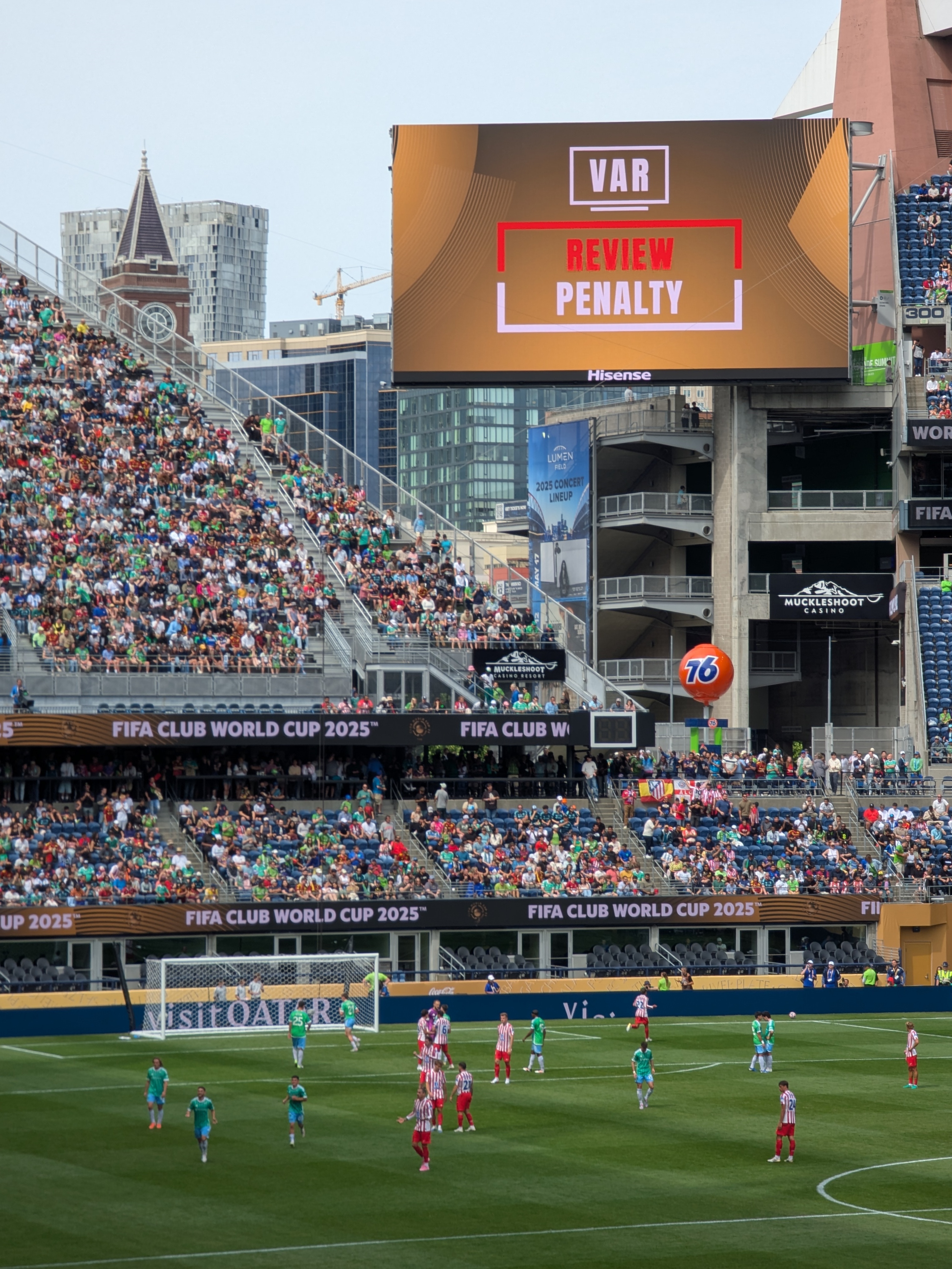
The World Cup has pushed VAR back into the football conversation today, Monday 22 June, but not in the usual way. In the Premier League, video review debates often become loud, partisan and exhausting. At this tournament, the technology has still intervened, sometimes more often than many viewers might expect, yet the overall mood has felt calmer. BBC Sport highlighted that contrast today: the World Cup can feel less consumed by VAR even when the rate of intervention compares strongly with what English football has recently experienced.
That difference matters because VAR is no longer just a technical tool. It affects stadium emotion, broadcast rhythm, managerial behaviour and the way players process uncertainty after decisive moments. A video check can delay celebration, revive a phase of play that seemed finished, or turn a settled crowd into a nervous one. In a global tournament, with teams from different refereeing cultures and audiences watching from every time zone, the perception of the process becomes almost as important as the decision itself.
Why VAR feels quieter at the World Cup
The first difference is context. The Premier League lives inside a weekly cycle of decisions, complaints, comparisons and press conferences. Every incident is measured against last weekend, last month and the grievances of rival clubs. Supporters remember patterns, managers know which moments will dominate post-match questioning, and broadcasters build long discussions around marginal calls. VAR is therefore judged not as one isolated decision, but as part of a running domestic argument.
The World Cup resets that emotional ledger. Teams arrive from different confederations. Supporters do not all share the same league habits. Referees are expected to apply an international standard rather than a domestic tone. That does not remove controversy, but it changes the level of inherited suspicion. A decision can still anger a team, yet it is less likely to be folded immediately into a long-running club-versus-officials narrative.
Expectation also plays a part. In a tournament that brings together contrasting tactical styles and refereeing traditions, many viewers accept that video review is supposed to help create a common standard. The technology is seen as a tool for harmonisation, not simply as an interruption. In England, by contrast, the debate often starts from a different question: why did a similar action seem to receive a different threshold in another Premier League match?
The rulebook is narrower than the debate
The official IFAB protocol is clear about the purpose of VAR. It is designed to help with clear and obvious errors or serious missed incidents in specific areas: goal or no goal, penalty or no penalty, direct red-card offences and mistaken identity. The final decision remains with the referee. The video assistant can recommend a review, but the system is not supposed to re-referee every physical duel or every grey-area contact.
That distinction is crucial. A decision can be debatable without being clearly wrong. A slow-motion replay can create the illusion of certainty while stripping away speed, balance and live context. A freeze-frame can sharpen one detail while hiding the movement that made the action difficult to judge in real time. VAR works best when everyone understands that it is not a search engine for perfection; it is a safety net for major errors.
The difficulty is that football culture rarely lives comfortably with grey areas. Supporters want consistency, but they also want flow. Managers want accuracy, but not when the same accuracy overturns a moment that benefits their team. Broadcasters want clarity, but the images they show can make marginal situations look simpler than they are. VAR sits in the middle of those demands and often receives the blame for tensions that already existed.
Why England’s top flight is more vulnerable to noise
The Premier League is uniquely exposed. It has huge global reach, intense tactical tempo and a media environment that dissects every weekend in extraordinary detail. A video review on Saturday can become a panel debate on Sunday, a press-conference theme on Monday and a reference point before the next round of fixtures. The same technology therefore carries much more narrative weight than it might in a tournament setting.
The style of the league adds another pressure point. Fast transitions, crowded penalty areas and physical defending create many actions where the boundary between normal contact and punishable foul is thin. The more a competition produces high-speed collisions and crowded goalmouth incidents, the more VAR is forced to balance technical precision with the rhythm of the match. That balance is extremely hard to sell when every club has its own archive of frustration.
Trust is the deeper issue. When trust is low, even a correct intervention is received with suspicion. When trust is stronger, a difficult call may still be disliked but can be absorbed more quickly. That is why the argument cannot be solved only by adding cameras, changing lines or publishing more clips. The Premier League’s challenge is also educational and cultural: explain the threshold, apply it visibly, and avoid leaving supporters with the sense that the process is hidden.
How players and coaches adapt
For players, VAR changes behaviour in subtle ways. Defenders know that small pulls, late contacts or off-ball reactions can be revisited. Attackers know that a tight run, a delayed fall or a collision after the ball has gone may regain importance once the phase is checked. Goalkeepers and captains have to control emotions while waiting for the outcome. A team can celebrate, reset, then be forced to restart emotionally from a completely different place.
Coaches now prepare for that emotional turbulence. The best sides do not only train set pieces and pressing triggers; they also manage the mental pause after a long review. A decision can drain momentum, provoke anger or create a dangerous burst of excitement. At a World Cup, where every match carries heavy consequence, that discipline matters. A team that reacts cleanly after a review may protect its structure better than one that remains trapped in protest.
There is a tactical dimension too. Teams that defend with clearer body shape, manage lines more intelligently and avoid desperate recovery challenges reduce the number of moments they leave to interpretation. VAR has not removed risk from football, but it has punished certain kinds of careless risk more visibly. Coaches who understand that can treat video review not as an external nuisance, but as another condition of modern tournament play.
What the World Cup can teach club football
The lesson from this World Cup period is not that VAR has become popular. It probably never will. The technology enters the story at moments of maximum emotion, so total acceptance is unrealistic. The better question is whether supporters, players and coaches can understand why an intervention happened and why another similar-looking moment did not reach the same threshold.
International football shows that perception can change when the process feels consistent and the tournament authority is broadly accepted. The Premier League does not necessarily have a different technology problem; it has a trust, communication and accumulation problem. Every new decision lands on top of a heavy archive. Every unclear explanation adds weight to the next argument.
If VAR is to become less noisy, football has to keep the focus narrow: intervene on the major errors, explain the threshold, protect the referee’s final authority and resist the temptation to turn every incident into a forensic trial. The World Cup is offering a timely reminder today. Video review works best when it stays in service of the match. When it becomes bigger than the football, even the correct calls struggle to feel satisfying.
Image credit: original photo by SounderBruce / Wikimedia Commons / CC BY-SA 4.0, imported and hosted by SokaIQ.