World Cup
Austria-Algeria turns Group J into a test of the new World Cup format
The final Group J match exposes a paradox of the expanded World Cup: finishing higher does not always mean landing the clearest route.
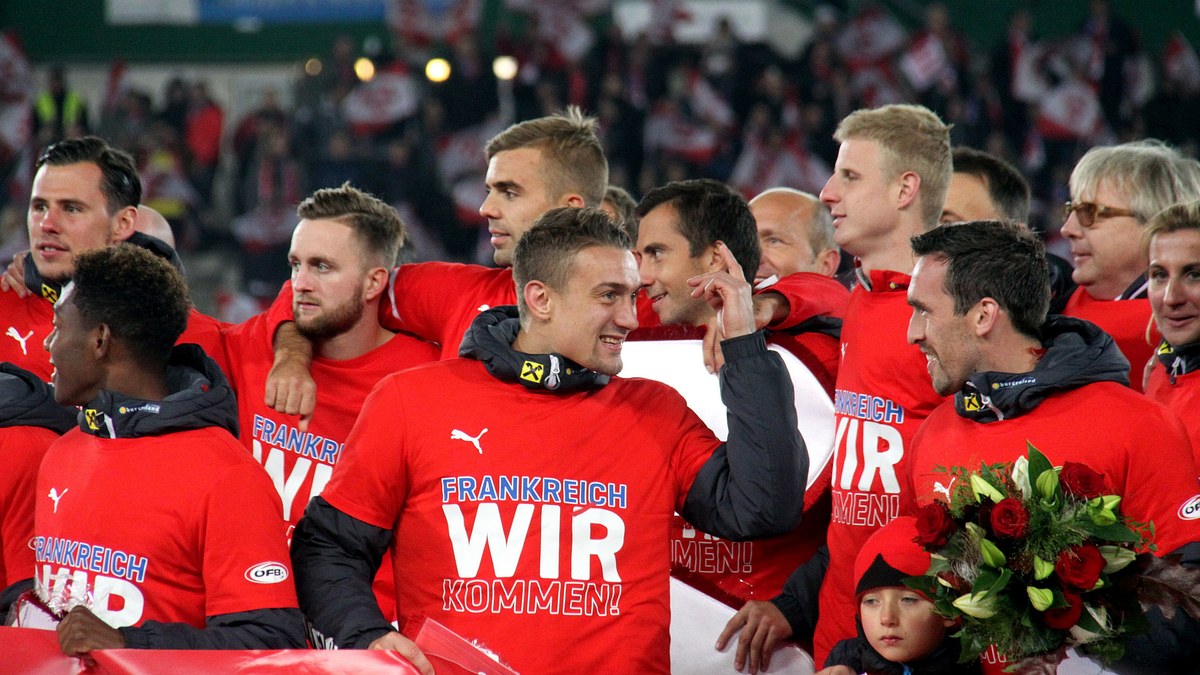
Austria and Algeria go into their final Group J match with a situation that the expanded World Cup makes almost inevitable: the sporting calculation is no longer only about finishing as high as possible. Sky Sports reported on Wednesday that Austria, currently ahead of Algeria in the group on overall goal difference, could look at third place with less fear than usual. The Guardian also underlined the key tournament rule: the top two in each group qualify, but the eight best third-placed teams also enter the knockout bracket.
Photo credit: Steindy / Wikimedia Commons / CC BY-SA 3.0. Real Austria national-team photo, cropped by SokaIQ for editorial publication.
The point is not to accuse a team of betraying competition. It is to show a structural flaw. When the bracket, possible routes and third-place rankings become visible before a group’s final kick-off, a national team can be pushed into a strange dilemma: winning gives the official reward, but not necessarily the most comfortable road. In a forty-eight-team tournament, this kind of tension becomes part of the landscape.
Group J exposes the format’s own calculations Sky Sports explains that Argentina are already guaranteed first place in Group J, while Austria and Algeria are locked into the fight behind them. The basic principle sounds simple: finishing second guarantees a place in the next round. But the second layer of the regulation changes the reading. A third-placed team can also go through if it ranks among the strongest third-placed sides across the tournament.
That mechanism turns the final match into a problem of sporting architecture. In a standard group, second place would almost always be the obvious target. Here, it may expose a team to a very heavy opponent, while a qualified third-place finish can open another branch of the bracket. The difference is not moral; it is mathematical. The regulation creates a map, and teams read that map.
Austria therefore have to manage more than Algeria. They have to manage the whole bracket, the other groups, the timing of the schedule and the outside perception of their choices. A win or a draw does not only describe the team’s form. It also describes the route ahead, the possible energy cost and the risk of running directly into one of the strongest favourites in the tournament.
Why third place can look less punitive The paradox comes from the gap between certainty and opponent profile. According to Sky Sports, second place in Group J leads toward the winner of Group H, with Spain cited as the most likely scenario at the time of publication. The qualified third-placed team from the group could land elsewhere in the bracket, with the United States projected as one possible route in the same analysis.
No knockout path is easy. The United States at home remain a serious opponent, and a theoretically softer branch guarantees nothing. But technical staffs do not prepare tournaments with slogans; they look at profiles, styles, travel, rhythm and margins. If a team believes one route gives it a slightly better chance to remain competitive, it cannot completely ignore that information.
This is where the format creates discomfort. Football asks teams to play to win, but the tournament sometimes displays a map where immediate victory is not the only rational interest. Austria and Algeria do not control the whole competition. They control only their match, and that match arrives with consequences that go beyond the usual three points.
Algeria are looking into the same strategic mirror The story is not only about Austria. Sky Sports notes that Algeria could also have reason to prefer staying third depending on the bracket and the ranking of third-placed teams. That symmetry makes the situation even more sensitive. When two teams know that a different position can produce a different route, the match becomes psychological as much as tactical.
That does not mean players will step on to the pitch trying to lose. The dressing room, national pride, tournament momentum and responsibility to supporters are far too strong. A coach cannot simply ask his team to drop intensity without risking the trust and rhythm of the group. But management choices can become more complicated: pressing level, protection of key players, caution in duels and reaction to an intermediate result.
In a tournament of this size, available energy can matter almost as much as the raw position in the group. If a team is already thinking about the next opponent, it may be tempted to avoid suspensions, injuries or a wild chase for a place that does not guarantee a clearer path. The danger is obvious: calculating too early can break competitive rhythm and install a defensive mindset before the next round has even begun.
The real debate is scheduling and fairness The Group J situation raises a wider question for FIFA and tournament organisers. Once a competition includes best third-placed teams and some groups play after others, information is not distributed equally. Teams playing later know more scenarios. They can adjust behaviour with a precision that earlier groups did not have.
This problem is not new in international football, but the expanded World Cup exposes it more sharply. More groups mean more branches, more combinations and more moving thresholds. The spectacle gains volume, but it also gains grey areas. Broadcasters and supporters love permutations; coaches have to live with the consequences.
The answer is not necessarily to blame teams. It is to recognise that actors respond to what the format encourages. If a competition creates an odd incentive, it cannot be surprised when technical staffs notice it. Group J therefore becomes a case study: not only an Austria-Algeria match, but a demonstration of what the new global format puts in play.
What Austria must protect above all For Austria, the central task remains continuity of performance. A team that has worked to reach this position cannot turn its final group match into a public exercise in calculation. It has to keep its identity, intensity and competitive credibility. Even if the third-place route looks less frightening on paper, it has value only if the team keeps enough confidence to use it.
The Austrian staff must therefore walk a fine line. They need to know the permutations without letting them swallow the match. They need to protect the group without draining its aggression. They need to respect the tournament without being naive about the bracket. That is exactly why this story matters: it shows how modern football increasingly mixes the pitch with logistics, calendar data and tournament psychology.
Algeria face the same kind of tension, with an even thinner margin. The ideal result may not exist in pure form; it will depend on the third-place table, confirmed opponents and the physical state of both squads at the final whistle. What is certain is that this match has become more than a group finale. It has become a test of the new world format.