World Cup
Croatia breathe again as Modrić reaches 200 caps and Budimir delivers
Croatia revived their World Cup campaign against Panama on a night shaped by Luka Modrić’s milestone and Ante Budimir’s decisive impact.
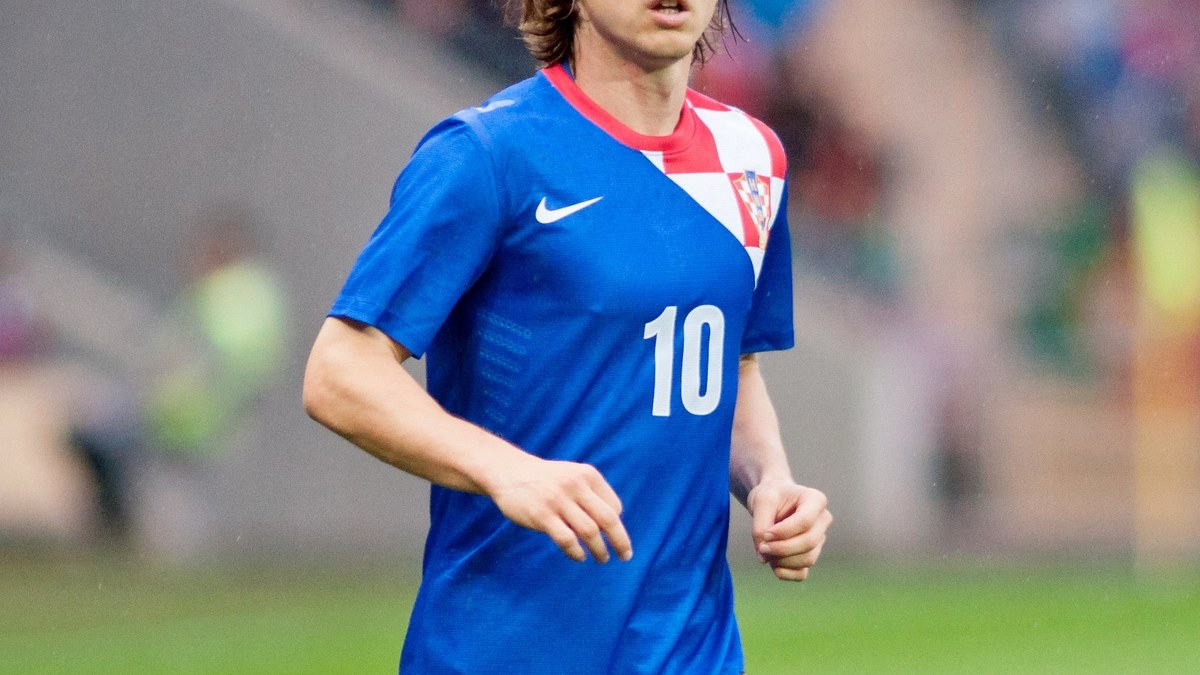
Croatia have found breathing space at the World Cup, but the strongest image of the night was not only Ante Budimir’s decisive intervention. It was Luka Modrić, celebrated by his squad after reaching 200 senior caps and placed once again at the centre of a story Croatia know by heart: survive, suffer, and remain dangerous when many observers are already writing the cycle’s ending. The Guardian reported that Croatia’s players wore shirts marking Modrić’s milestone, while France 24 confirmed the sporting importance of the win over Panama.
Photo credit: Fanny Schertzer / Wikimedia Commons / CC BY-SA 3.0. Real Luka Modrić photo, cropped by SokaIQ for editorial publication.
The match arrived with pressure attached. Croatia needed a response after a frustrating start to the tournament, and Panama defended with enough energy to make the night uncomfortable. In this kind of game, major teams are not always judged by chance volume or fluent dominance. They are often judged by their ability to keep their patience, hold a structure and find a decisive action when the margin becomes narrow.
Budimir gives Croatia the release they needed Ante Budimir gave Croatia what they needed most: a break in a tight match. The striker did more than deliver an important goal; he changed the emotional temperature around a team that risked seeing doubt grow with every passing minute. In a short tournament, that kind of sequence carries weight. One action can change the dressing room, the table reading and the confidence around an ageing group.
Budimir’s value also makes sense through his profile. Croatia have midfielders who can control tempo, but they sometimes need a more direct reference point to occupy defenders, attack the box and offer a simple solution when the game becomes too lateral. Against a team that defends deep or breaks rhythm, that type of forward gives the attack a physical presence. He forces the back line to look at more than the ball.
The win does not solve everything. It does not instantly make Croatia a fluid, spectacular side again. But it puts the group back into competition mode. After a difficult opening phase, the key was to regain control of the sporting story: not just age, fatigue or the end of a cycle, but a team still capable of finding answers.
Modrić reaches 200 caps with quiet authority Luka Modrić’s 200th cap gives the night a different weight. The number places him in an extremely rare circle in men’s international football. The Guardian highlighted how his team-mates marked the moment with dedicated shirts, and how Zlatko Dalić underlined his humility. The scene fits the player: celebrated by everyone, but rarely interested in making the celebration the centre of his football.
Modrić is no longer only the technical metronome described for the last decade and a half. He has become a living memory of modern Croatia. He carries the major campaigns, the extra periods, the pressure nights and the games in which his team refused to leave quietly. Even as his physical influence changes with age, his emotional influence remains enormous.
For his team-mates, his presence is a reference point. It reminds them that Croatia have often been better in adversity than in comfort. It also helps younger players understand the level of demand around the national team. The question is not only how many minutes Modrić can still play at the highest level; it is how Croatia build the transition around him without losing their identity.
A team caught between legacy and renewal Croatia’s challenge is clear. The core that carried the country so high on the world stage has reached a phase where every tournament can feel like a final dance. But reducing this team to nostalgia would be a mistake. Croatia still have rare collective intelligence, a culture of long matches and the ability to remain disciplined even when the game is not flowing their way.
The Panama match also showed that legacy is not enough. To keep going, Croatia need more speed around their senior figures, better occupation of the box and less dependence on tempo control alone. Budimir provided a solution, but the next step will require more variety. Stronger opponents will not always allow the same time to settle into possession.
That renewal cannot be brutal. Croatia do not have the endless player pool of football’s largest nations. They have to extend the usefulness of their leaders while gradually giving more responsibility to players who can run, press and attack space. It is a delicate balance, and it is also what makes this team worth watching.
Panama forced Croatia to win the hard way Panama leave this sequence with understandable frustration, but their role in the match should not be reduced to background. They made Croatia work, search and stay concentrated. For a team simply trying to relaunch its campaign, this was not the most comfortable scenario. World Cup matches often place a favourite on paper against a side playing with emotional survival in mind; the tension comes from that difference in expectation.
Croatia had to accept a less fluid match. They had to manage duels, flat spells and periods where possession did not create enough danger. That ability to win without immediate beauty has been part of their recent identity. It can look fragile, but it also feeds the resistance that has taken them deep before.
For Panama, elimination brings regret. For Croatia, the night is a useful warning: experience can rescue a situation, but it needs to be accompanied by real improvement in the football. The next test will show whether this win was only a release or the start of a better rhythm.
A win that puts Croatia back inside their tournament The most important point is simple: Croatia are still inside their tournament. Budimir supplied the action, Modrić supplied the symbol, and the group recovered a measure of emotional control. In a World Cup, this type of match can become a threshold. It is not celebrated as a demonstration, but it is recognised as a necessary step toward survival.
The next stage will demand sharper decisions in the final third, more speed in transitions and a better connection between generations. But Croatia have shown they can still respond under pressure. As long as Modrić can give direction and players like Budimir provide practical solutions, this team cannot be treated as a story that belongs only to the past.
Tournament football is often cruel with teams that are growing older. It asks them to stay clear-minded when the body reacts more slowly and to remain ambitious when the outside story announces the end. Croatia have just reminded everyone that they understand that terrain better than most.