World football
Cristiano Ronaldo scores at a sixth World Cup and resets Portugal’s tournament
Cristiano Ronaldo becomes the first player to score in six different World Cups, a record that answers criticism and gives Portugal fresh momentum.
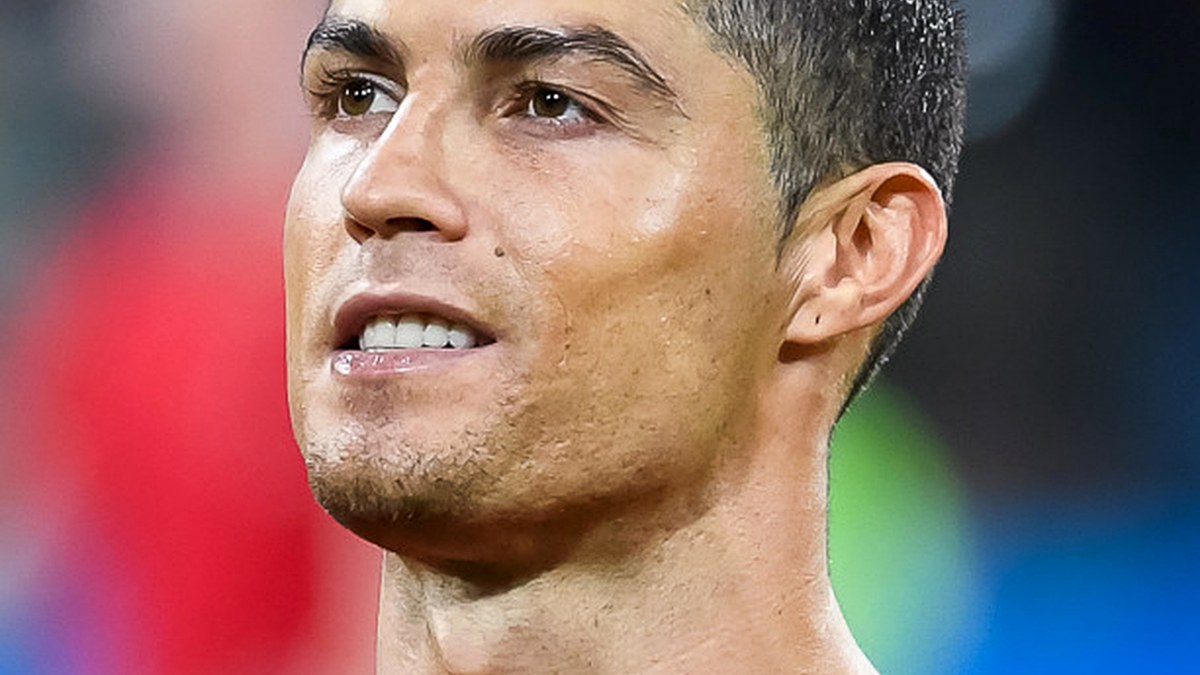
Cristiano Ronaldo has restarted his tournament by becoming the first player to score in six different World Cups. BBC Sport confirmed on Tuesday that the Portugal captain opened his account against Uzbekistan before adding a second goal on a night that also eased pressure on Roberto Martínez and gave Portugal a cleaner direction in Group K. Sky Sports and The Guardian also underlined the historical weight of the moment, framing it as a response to criticism, a personal record and a collective reset.
Photo credit: Анна Нэсси / Soccer.ru / Wikimedia Commons / CC BY-SA 3.0. Real Cristiano Ronaldo image from Portugal duty at the 2018 World Cup, cropped by SokaIQ for editorial publication.
The story is bigger than the return of a goalscorer. Ronaldo had entered the competition under pressure, with questions about his influence, age, status and Portugal’s ability to play around him without becoming static. In one half, he shifted the debate. The record does not guarantee anything for the rest of the tournament, but it explains why his presence still shapes Portugal’s football imagination: when the stage becomes heavy, Ronaldo can still turn a match into a global event.
A record built under real pressure The power of the moment comes from the context. Before this performance, Ronaldo was not being treated only as a legend on a farewell tour. He was being assessed as a starter, a focal point and a symbol of a Portugal side sometimes pulled between loyalty to the past and the need for collective speed. The Guardian noted that the display ended a barren spell in major tournaments, and that is exactly what gives the record its edge.
International football gives monuments very little room to fade quietly. The greater the player, the more every quiet spell becomes a subject. Ronaldo knows that mechanism better than anyone. Every run, shot and gesture of frustration is read as evidence about the end of his cycle. By scoring at a sixth World Cup, he produced a simple answer: he is not only present for history already written; he is still adding to it.
The record also works because it crosses generations. It links his first years at the top, his rise with Portugal, his long run of elite duels and his current role as a veteran captain. World Cups move on, squads change and coaches change, but his name still appears among the scorers. That is rare, and that is why the moment immediately moved beyond the match itself.
Portugal needed a clearer collective performance The night mattered for the team as well. After a criticised start to the tournament, Portugal needed more than slow possession and another argument about their most famous player. BBC Sport described a sharper side, pushed by a fast start, more active wide areas and a rhythm that gave Ronaldo the service he needed. This was not just nostalgia; it was a cleaner structure.
Martínez needed a signal of control. Portugal have enough talent to dominate matches without depending on one player, but Ronaldo’s management remains central. When he scores early, the entire team breathes more easily. Midfielders take more risks, full-backs advance with more belief and the forwards around him find more space. The media pressure does not disappear, but the tone changes.
This performance does not solve every tactical question. A struggling opponent can create a sense of fluency that may not survive against a stronger defensive block. But it gives Portugal a firmer base: the captain has responded, the creators have found rhythm and the substitutes know the tournament is no longer trapped inside a purely generational debate.
Ronaldo remains both symbol and tactical challenge The Ronaldo paradox is still there. He draws attention, pins defenders, threatens inside the box and sets an emotional standard for his team-mates. But he also forces Portugal to solve specific balances: who presses around him, who runs beyond, who covers when he stays high, and who turns possession into faster chances? The Uzbekistan match gives partial answers, not a permanent solution.
Martínez has to avoid two traps. The first would be to assume the record removes every debate. The second would be to treat Ronaldo as a problem when he has just proved his value again in the decisive zone. The better route is more demanding: use him as a finisher and leader without asking the entire team to slow down around him.
That is where Portugal can become dangerous. If Ronaldo receives the ball in the right areas rather than having to manufacture every attack, his output can remain high. If the players around him keep the freedom to run, combine and attack space, Portugal can join memory with modernity. The record is therefore a tactical starting point as much as a historical image.
Another page in the age of giants The moment also lands in a World Cup already shaped by major names. Lionel Messi, Kylian Mbappé, Erling Haaland, Harry Kane and other stars are driving daily conversation, rankings and global attention. Ronaldo did not need anyone else to remind him of the stakes. His record puts him back in that circle where every decisive action carries legacy weight.
It would still be too narrow to frame this only as a response to Messi or to the record race. Ronaldo is playing first for Portugal, and his visible obsession remains the same: to keep his team competitive in a tournament that can turn quickly. But modern football lives on comparison, and scoring at a sixth World Cup gives his career a kind of longevity that very few players can approach.
That longevity may be his strongest argument now. The qualities have changed: less constant explosiveness, more penalty-box presence, more management of effort and more focus on short decisive moments. But the instinct remains recognisable. Ronaldo no longer needs to dominate every passage of play to change how a night is remembered.
What the record means for the next stage For Portugal, the real question starts now. A strong performance against an overwhelmed opponent does not guarantee a successful knockout run. The next matches will demand more defensive control, patience, clarity and probably fewer spaces. Ronaldo will still have spells where he touches the ball rarely, and Portugal will need to keep playing without anxiety.
But World Cups are also built on emotional shifts. This one can matter. The captain has scored, the dressing room has received proof, and Portuguese supporters have a new image to carry into the rest of the tournament. The record does not make Portugal favourites by itself. It simply makes their story more dangerous because it now carries the energy of a player refusing to leave quietly.
Ronaldo has spent his career turning doubt into fuel. On Tuesday, he did it on the widest possible stage. Six different World Cups, the same name on the scorers’ list, and a Portugal side moving forward with a little less noise around it. From here, the football will speak louder than the legend. But the legend has again found a way to stay in the conversation.