World football
Didier Deschamps leaves France camp after family bereavement as squad must keep its frame
Didier Deschamps will miss France v Norway after the death of his mother. The absence asks France to protect calm, respect and continuity.
Didier Deschamps will temporarily leave France’s World Cup camp after the death of his mother, an absence confirmed by the French Football Federation and reported on Tuesday night by BBC Sport, ESPN and USA Today. The France head coach is returning home to be with his family and will not be on the bench for the final group game against Norway. In a World Cup usually told through results, rotations and tactical debates, the news is first of all a human reminder: even at the centre of a global tournament, private life can suddenly become the only priority.
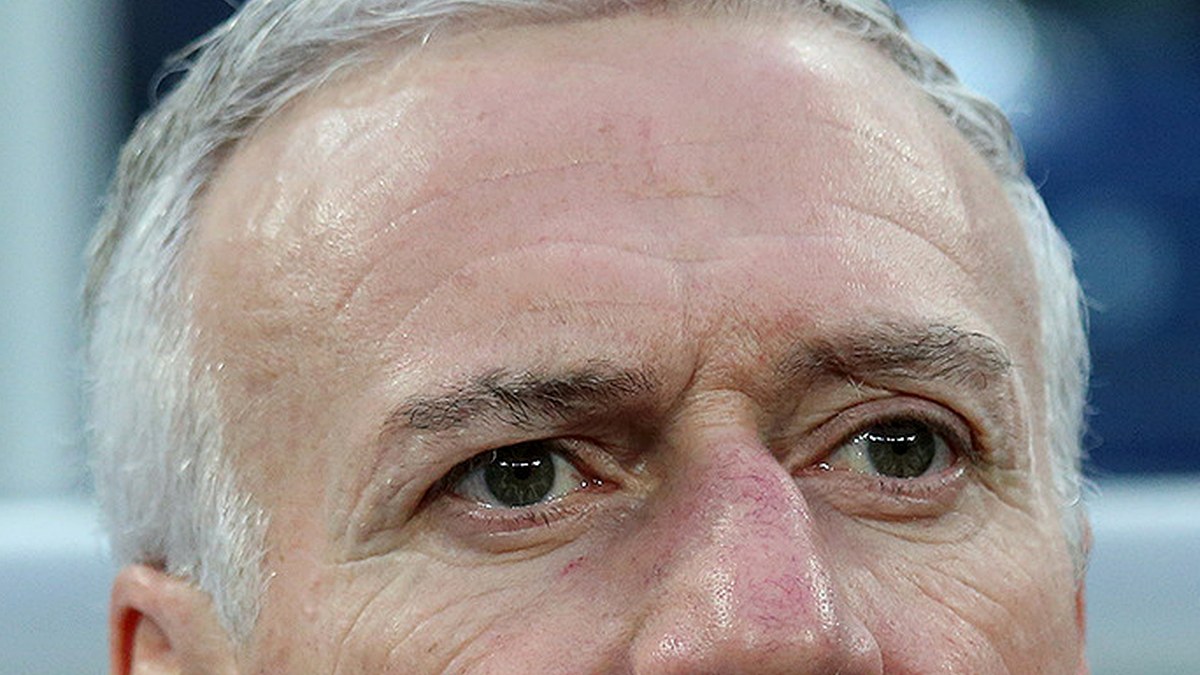
Photo credit: Кирилл Венедиктов / Soccer.ru / Wikimedia Commons / CC BY-SA 3.0. Real Didier Deschamps image from France duty at the 2018 World Cup, cropped by SokaIQ for editorial publication.
The federation confirmed the situation with restraint. International coverage has naturally focused on the immediate football consequence: France must complete the group stage without their manager on the touchline. But the story should not be reduced to an operational footnote. Deschamps occupies a very specific place inside this team. He is the keeper of continuity, the manager of major tournament pressure and often the person who absorbs public noise so his dressing room can stay protected. His absence therefore changes the emotional frame of an important week, without inviting speculation about private matters.
A personal moment inside a tournament environment The first editorial responsibility is restraint. This is not a dressing-room twist or a manufactured tactical crisis. It is a family bereavement, confirmed by the national federation, and the understandable decision of a man leaving his squad temporarily to return to his family. Football has urgent rhythms, but it does not cancel personal priorities.
That restraint does not prevent a football reading. A World Cup compresses everything: travel, meetings, recovery, selection choices, media duties and training minutes. When the head coach is absent, even briefly, the group has to reorganise without losing the line already drawn. Assistants know the plan and players know the principles, but the central figure on the bench will not be there to calm, correct or reset the team during the game.
France have enough experience to handle such a passage with dignity. Several senior players have already lived through long tournaments, contradictory pressures and moments when the outside environment weighs heavier than the tactical sheet. The immediate task is therefore less about reinventing the team and more about preserving emotional stability around it.
What Deschamps’ absence changes around the bench Deschamps is not only a technician who selects a starting team. For years, he has represented a particular way of managing international competitions: collective framework first, controlled messaging, protection of the dressing room and pragmatic decisions under pressure. Even when his choices are debated, his presence gives the national team a familiar rhythm. Players know who decides, who arbitrates and who carries responsibility.
Against Norway, that structure must function without his visible presence. That does not mean France are directionless. An international staff always works with shared routines, prepared scenarios and clear delegation. Training plans, video work and tactical instructions do not disappear because the head coach is not physically on the touchline. But the emotional energy of a bench can shift when a squad understands it is playing through a difficult personal moment for its manager.
That dimension can create two opposite effects. It can tighten the dressing room around a simple message: stay professional, respect the situation and perform with seriousness. It can also add emotional weight to an already important fixture. Strong teams are often recognised by their ability to keep the same clarity when the context becomes less normal.
France must keep the group-stage task clean The temptation in this type of situation is to turn every selection decision into a hidden signal. That should be avoided. The final group game still has its own football parameters: freshness management, balance between starters and substitutes, rhythm for certain players, protection of bodies and the need not to break momentum. Deschamps’ absence does not change all those variables; it places them inside a more sensitive climate.
The French staff need to protect one basic idea: the match is still a World Cup match. Even if qualification or group position reduces part of the urgency, the team cannot afford a distracted night. Automatisms are also built in games where the stakes appear less dramatic. Substitutes can earn minutes, starters can keep rhythm and the squad can show that its functioning is bigger than any one visible presence.
That reading matters because it respects both the football and the person. Deschamps does not need his absence to be inflated into a symbol. He needs his team to do its work with the maturity he has demanded for years. That may be the most appropriate sporting response in a moment that remains, above all, a family matter.
The dressing room has a larger role this week In a national team, senior players are never only media spokesmen. They become essential when the calendar becomes complicated. The captain, line leaders, experienced players and influential substitutes all have to maintain communication levels. That applies in the dressing room, at the hotel, on the training pitch and during difficult phases of the match.
France have a squad used to external attention. Elite players understand that tournaments are not won only through peaks of talent. They are also won through clean weeks, controlled emotions and the ability not to feed the noise. The Norway game becomes a test of collective discipline: continue the mission, do not overplay the event, do not slip into looseness.
The way players speak after the match will also matter. The expected tone is clear: respect, discretion, solidarity and concentration. In major tournaments, one careless sentence can create an impression of drift. A sober message can instead strengthen the image of a group that understands the gravity of the moment while still behaving professionally.
Why the episode matters beyond one game World Cups rarely give teams a perfectly straight path. There are injuries, suspensions, heat issues, long nights, criticism and sometimes heavy personal events. The teams that go far are not the ones that avoid every shock. They are the ones that absorb shocks without losing their structure.
For France, Deschamps’ temporary absence becomes a revealing moment. It does not say the squad is fragile. It does not say everything will automatically be controlled either. It asks a maturity question: are the principles installed by the manager strong enough to hold when he is not physically there? That is a question every staff wants answered before knockout football sharpens the margins.
The most accurate conclusion is therefore measured. France continue their tournament, the federation has confirmed the manager’s absence, international sources have verified the framework and the staff must guide the next step with respect and calm. Football will quickly resume its rhythm, as it always does. This time, it will do so around a team that has to move forward while keeping an obvious thought for its coach and his family.