World football
Ivan Toney, Tuchel and England: the bench role that could still shape Panama
Ivan Toney has clarified his relationship with Thomas Tuchel and is waiting for his England chance before Panama. His story is about bench management, attacking depth and tournament readiness.
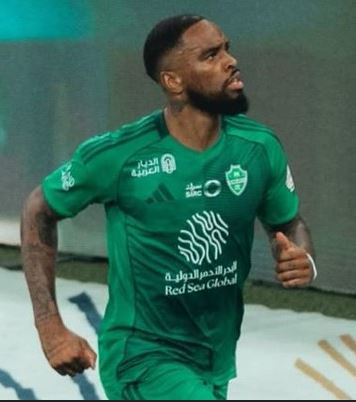
Ivan Toney is not the first name many people attach to England’s World Cup story, but his situation became one of the more revealing threads around the squad today. In an interview published by The Guardian, the Al-Ahli striker explains how he cleared the air with Thomas Tuchel, accepted a more defined role and kept himself ready before England’s meeting with Panama. The point is not simply whether he starts. It is how a high-pressure national team manages finishers, strong personalities and bench options in a tournament where small interventions can reshape a match.
The timing matters. England are preparing for their final group assignment, Reece James has remained a fitness talking point, Declan Rice has returned to training and Tuchel must protect the team’s balance while keeping alternatives alive. Toney speaks like a player who knows his window may be short but meaningful. The Guardian’s key line from him is clear: “We’re on the same path now.” It captures the sporting reset between a demanding head coach and a centre-forward who had to convince beyond his club scoring record.
A Tuchel-Toney reset before Panama
The strongest part of the story is the human relationship with Tuchel. Toney does not pretend that he has overturned England’s hierarchy. He knows Harry Kane is ahead of him, Ollie Watkins is also part of the conversation and his own role is closer to the finisher category. That honesty makes the interview more interesting than a routine demand for minutes. It is a player recognising the structure of the squad, accepting competition and preparing for a targeted impact.
According to The Guardian, Tuchel has previously explained that Kane enjoys playing with Toney because the striker draws attention away from him. That is a simple tactical detail, but a valuable one. In a tense ending, Toney can occupy centre-backs, hold a direct ball, attack a second phase or create pressure in a crowded area. England do not only need a starting eleven; they need profiles who can alter the rhythm when the initial plan needs a different texture.
The language Toney uses is important. He does not frame the conversation as a formal apology. He describes it more as a deeper exchange about who he is and what Tuchel expects from him. That distinction matters inside a national-team camp. Players arrive from different leagues, seasons and emotional states. A head coach does not have months to rebuild every relationship. Clarity becomes a sporting resource, especially for a substitute who must stay engaged without guaranteed minutes.
More than a penalty specialist
Toney knows that his international image is tied to pressure moments. His penalty technique, calmness and individual style have remained part of the story since the previous European Championship. Yet he uses The Guardian interview to push a broader point: he wants to contribute beyond that label. His line “I like to think I bring more than just penalties” matters because it moves the discussion back to open play, not only a very late scenario.
That claim is credible. Toney is a duel striker, a focal point and a presence. He does not offer exactly the same qualities as Kane, whose ability to drop and organise is rare, and he is not built around the same type of running as a more mobile forward. But he gives England a different reference point. In a tournament where teams can retreat into compact defensive shapes, that difference may be useful even if he is not selected from the first whistle.
The lazy editorial mistake would be to reduce him to a shootout option. His career shows a player who has had to relearn patience and then turn that patience into availability. He can come on to press a centre-back, pin defenders on an aerial ball, win territory, extend a cross or simply force opponents to defend differently. Those details do not always dominate headlines, but they can change the feel of a closing spell.
The Saudi chapter matters to the England conversation
Toney’s move to Al-Ahli has often been viewed from England with a degree of distance. The Guardian, however, points to his scoring output in Saudi Arabia and his role in a club that has become important on the Asian stage. The context is useful: Tuchel has not recalled a nostalgic name, but a forward who has continued to score, carry attacking responsibility and play under pressure in a league that is now watched much more closely.
That makes the story relevant across several SokaIQ editorial categories: major players, England, the Saudi Pro League and the World Cup. The Saudi league is no longer just an outside destination in European football discourse. It affects international careers, physical rhythms and how selectors judge players. Toney therefore arrives with a background that can be debated, but not dismissed.
There is still a risk. The precise level of week-to-week opposition, the intensity of matches and the chemistry with England’s established core cannot be read from raw totals alone. That is why Tuchel’s focus on training level, behaviour and group compatibility matters. Toney has to convince in sessions as much as through goals. The interview suggests that he understands that demand and is not asking for automatic status.
What it changes for England
For England, the immediate issue before Panama is not only whether they need a replacement striker. It is whether the entire squad remains ready as the tournament moves toward tighter margins. Toney’s case reveals bench depth, but also the psychological challenge of a player waiting for a chance. A frustrated substitute can become noise. A substitute who understands his role can become a solution.
Tuchel has to manage that border carefully. Kane remains the reference point, the creators around him need clean connections, and the full-backs and midfielders must adapt to fitness updates and form. Within that structure, Toney is a specific lever. He is not necessarily the opening plan, but he can be the plan introduced when England need presence, directness or controlled disruption.
The Panama context gives the story a concrete edge. If England dominate without turning control into chances, Toney’s profile becomes more attractive. If the match demands control and circulation, he may have to wait longer. The value in his message is that he seems to accept that uncertainty without switching off. In a tournament squad, that maturity is a sporting quality as much as a media posture.
A bench story that may matter later
Major competitions often build their public narratives around starters, but they are also shaped by players who accept less visible roles. Toney sits exactly in that space. His reset with Tuchel does not erase England’s hierarchy, but it gives the head coach a clearer option. For a staff, knowing that a player accepts the framework, stays positive in the camp and keeps his confidence can matter almost as much as his record.
What happens next will be decided on the pitch. No serious piece can promise that Toney will become decisive. What the verified sources show today is a high-level forward who has been given a role, understands it and is preparing to meet it. For an England squad scrutinised at every selection turn, that stability around an attacking finisher is not a minor detail.
The image used here comes from Wikimedia Commons and shows Ivan Toney with Al-Ahli in twenty twenty-six. Credit: OmarZi64 / Wikimedia Commons / CC BY 4.0, imported into SokaIQ media storage. Main sources: The Guardian for today’s interview and BBC Sport for background on why Tuchel brought him back into the England squad.