World football
Egypt-Iran in Seattle: why the Pride match is a FIFA test
Egypt’s meeting with Iran in Seattle has become a governance test for FIFA as host-city identity, federation complaints and World Cup preparation collide.
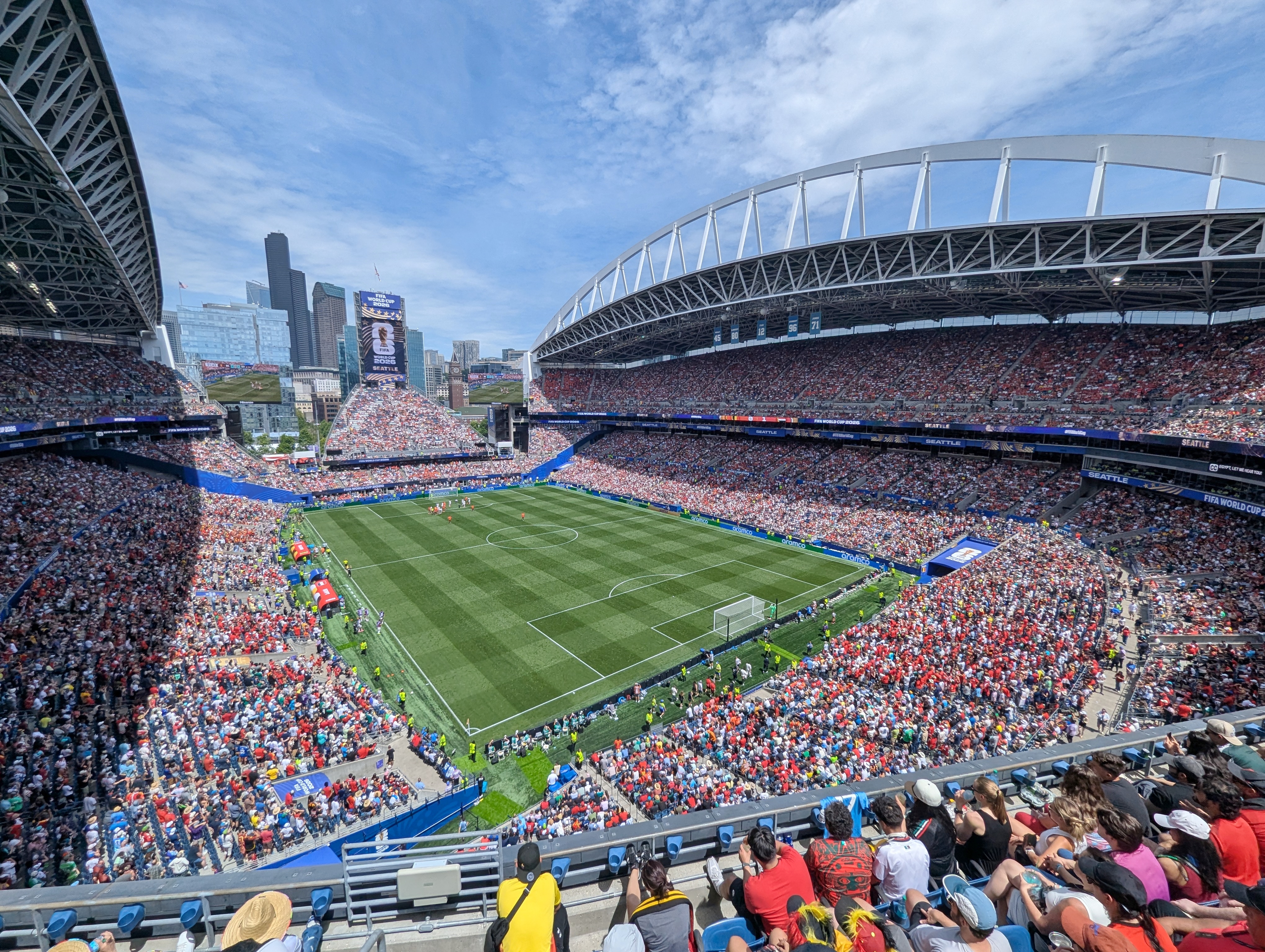
Egypt’s meeting with Iran in Seattle has become more than a group-stage fixture. BBC Sport reports that the match is tied to the host city’s Pride celebrations, while AP News has reported complaints to FIFA from the federations involved. That combination turns a normal World Cup date into a live test of tournament governance: how can organisers respect a host city’s identity without letting a symbolic programme dominate the sporting preparation of two national teams.
The story matters as football, not only as politics, because it touches the daily mechanics of a World Cup. Seattle is not a neutral backdrop. Lumen Field is one of the tournament venues, the city has its own civic calendar, and visiting teams must work inside an environment shaped by local expectations. Today’s development is that the issue is no longer a distant scheduling footnote. It is being reported by major outlets while the fixture moves closer, and that means the match build-up now carries an extra layer for FIFA, the teams and the local organisers.
Seattle’s host-city identity is now part of the match context
World Cup host cities do not simply provide grass, seats and transport plans. They also bring culture, politics, rituals and a public image. Seattle has a strong sporting identity and a visible civic personality, and Lumen Field is designed to feel like a loud event space rather than a detached stadium. A match linked to Pride celebrations fits that local context, especially in a tournament where cities are encouraged to make the global event feel rooted in place.
For Egypt and Iran, though, the first priority remains football. The teams have to manage recovery, tactical meetings, media obligations, supporter pressure and the ordinary tension of a major tournament. If the wider theme becomes the dominant storyline, it can affect the way players and coaches experience the week. Press conferences can shift from team shape and selection to symbolism, protocol and official complaints.
That is why the issue requires careful handling. The host city wants to express itself, the teams want a stable match environment, and FIFA has to keep the tournament coherent. None of those aims are automatically incompatible, but they require clarity. Ambiguity creates the space in which a symbolic event becomes a distraction.
Why the fixture has become sensitive before kick-off
The sensitivity comes from the contrast between the host-city message and the national contexts of the two teams. BBC Sport notes the unusual nature of the pairing, and AP News has reported formal complaints around the scheduling and designation of the match. Once national associations raise concerns with FIFA, the matter moves beyond general commentary. It becomes a governance issue inside the competition.
This kind of friction is also a reminder of what an expanded World Cup looks like in practice. A larger tournament brings more nations, more host cities, more local identities and more cultural differences into the same media space. Football creates a shared stage, but it does not erase the political and social realities that teams, supporters and organisers bring with them.
The immediate risk is not that the match loses its sporting relevance. The risk is that the build-up becomes dominated by questions that players and coaches are not well placed to answer. Tournament squads spend months trying to control the controllables. A symbolic row is the opposite: it is public, emotional and partly outside the dressing room.
FIFA must balance local celebration with tournament neutrality
FIFA’s task is not simple. If it distances itself too much from the host city’s programme, it risks appearing to dilute the personality of the event. If it leans too heavily into the symbolism, it risks making the teams feel that their match has been turned into a statement they did not choose. The balance will probably depend less on slogans and more on operations.
Clear lines matter. Organisers need to define what belongs to the local fan experience, what belongs to official match protocol, what is expected from teams, and what remains optional. Teams can deal with a noisy environment when the rules are predictable. They struggle more when the meaning of the day keeps shifting through headlines, questions and late explanations.
The modern World Cup is built on this tension. It sells unity, but it is staged across cities that have different histories and values. It invites the world in, but it cannot pretend that every participant arrives with the same assumptions. Seattle’s fixture simply makes that tension visible in a way that FIFA cannot ignore.
The dressing rooms need protection from the noise
For Egypt and Iran, the practical objective is to keep the football bubble intact. That means giving players a simple message, limiting unnecessary exposure to the controversy and letting communications staff absorb the most sensitive questions. Tournament football rewards emotional control. Even a strong team can lose focus if every briefing becomes a referendum on issues beyond the match plan.
The coaches will still prepare for familiar football problems: how to manage space, how to defend transitions, how to control rhythm, how to respond to crowd pressure, and how to keep discipline when the game becomes tense. None of those tasks disappear because the match carries a symbolic label. If anything, the extra attention makes those fundamentals more important.
Seattle’s crowd and local organisers also have a role. A stadium can be expressive without becoming hostile. If the atmosphere celebrates the city while allowing the teams to compete normally, the match can remain a World Cup event rather than a communication crisis. That is the best outcome for everyone involved.
What the Seattle case says about this World Cup
The broader lesson is that a World Cup is no longer just a sequence of fixtures. It is a travelling global platform that lands in cities with their own identities, causes and pressures. The football is still the centre, but the surrounding environment can shape how a match is experienced long before the first whistle.
For SokaIQ’s football calendar view, Egypt against Iran in Seattle should be read as a fixture with unusual external pressure. It is not a prediction angle and it does not need to become one. It is a match whose build-up may be shaped by governance, local identity and the way FIFA manages a sensitive host-city theme.
The cleanest outcome would be simple: Seattle stages its event, the teams remain focused, FIFA clarifies the boundaries, and Lumen Field lets the football reclaim the spotlight once play begins. The situation is delicate, but it is also revealing. It shows the central challenge of the modern World Cup: to organise a global celebration while accepting that the world it gathers does not speak with one voice.