News
Faé answers Schweinsteiger: why language around African football matters
Emerse Faé responded to Bastian Schweinsteiger's comments on African football after Ivory Coast's historic World Cup knockout qualification.
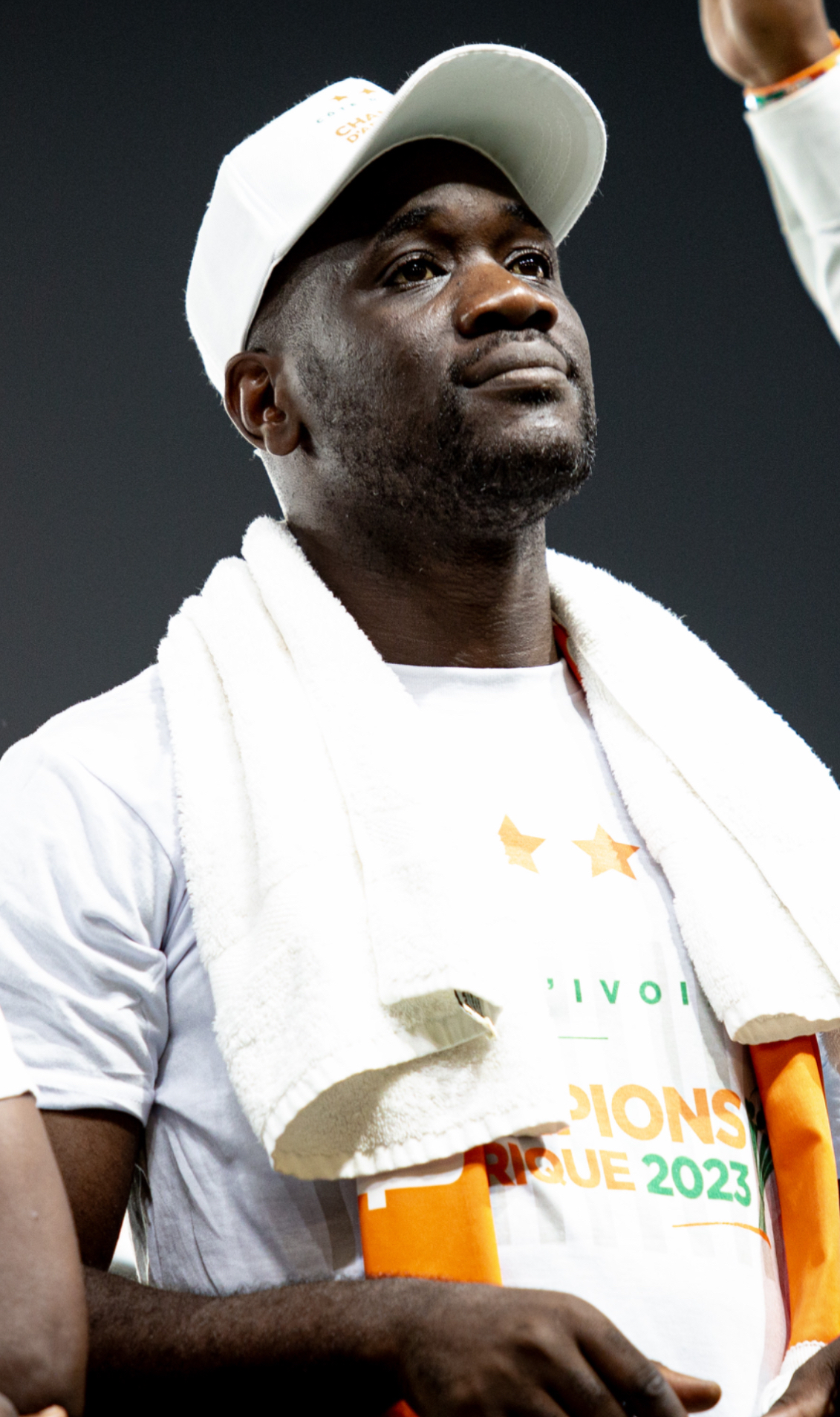
Emerse Faé did not let Bastian Schweinsteiger's wording pass quietly. After Ivory Coast reached the World Cup knockout phase for the first time, the Ivorian coach responded to the former Germany midfielder's comments about “African football”, which Al Jazeera reported as describing the game as “a bit unorthodox”, “a bit wild” and “not quite as tactical”. The Guardian also highlighted Faé's reaction as one of the major talking points of its World Cup live coverage.
The moment is bigger than a punditry dispute. It goes to a wider question: how is African football discussed when its teams progress, win and show clear tactical identity on the global stage? Faé answered with controlled firmness, acknowledging his past admiration for Schweinsteiger while explaining his disappointment at wording he considered hurtful. His message was direct: Africa should not be reduced to a physical or chaotic stereotype.
A strong response inside a historic moment
The context makes Faé's intervention more significant. Ivory Coast had just lived one of the biggest World Cup moments in its history. In that kind of situation, a coach could easily speak only about joy, the dressing room and qualification. Instead, Faé had to answer a question about an outside comment that touched the way his team, and by extension a continent, is perceived.
His tone, as reported by Al Jazeera, matters because it does not begin as a search for controversy. It begins with sadness. Faé explained that he admired Schweinsteiger as a player, especially his intelligence as a midfielder and his understanding of the game. That is why the disappointment lands harder. When a former World Cup winner, someone associated with elite tactical standards, uses such a broad phrase, it carries beyond one television segment.
The Ivorian coach also brought the issue back to the pitch. The point was not only to challenge a word. It was to show through football that African teams can be technical, organised and tactically sophisticated. That answer through performance gives the episode a sporting dimension rather than reducing it to a clash of quotes.
The old shortcut about physical African football
African football has too often been described through a narrow vocabulary: power, speed, instinct, generosity, disorder. Those qualities can exist, as they can in every football culture, but they do not tell the whole story. They become damaging when they erase preparation, coaching work, collective discipline and the tactical progress visible in many national teams.
Faé's response lands at a moment when Ivory Coast are demonstrating the opposite of a lazy reading. His team have had to manage pressure, adjust distances, choose when to press, when to pause, when to attack quickly and when to keep the ball. A successful tournament run is never built only on energy. It depends on positional detail, emotional control and the ability to repeat a plan under stress.
Reducing that to football that is “wild” or “not quite as tactical” misses the reality of the modern game. African national teams now bring together players shaped by different clubs, leagues and tactical schools. They are often asked to adapt roles quickly according to the opponent. Fast cohesion can be a challenge, but that is not the same as an absence of tactical thought.
Why a champion's words carry weight
Schweinsteiger is not an anonymous commentator. His career with Germany and Bayern Munich gives his words particular weight. When a figure of that level speaks, he helps shape how an international audience interprets a match. That is why Faé's emphasis on knowledge is important. The higher someone has played, the more precise the language should be.
The debate is not about banning criticism. An African team can be criticised tactically, just like a European, South American or Asian team. The issue is generalisation. Saying a team defends a zone poorly, presses too late or lacks coordination is analysis. Describing a continental style as naturally less tactical creates a cultural shortcut.
Faé's reaction therefore restates a basic rule of good football analysis: describe what is actually happening on the pitch. If a team is disorganised, explain where and why. If it is physical, explain how that physical edge fits into the plan. But when a team wins through structure, discipline and adaptation, that also has to be recognised.
Ivory Coast can answer through their football
Ivory Coast's strongest response remains the football itself. Faé has built a group that looks capable of moving through different types of matches without losing its thread. The team are not only about running or duels. They seek connections, use their attacking profiles with patience and rely on an organisation that helps them absorb difficult spells.
That progression matters for the image of African football. The continent does not need to be defended through slogans; it needs to be watched with the same precision applied elsewhere. African staffs prepare, innovate, correct and plan. Players read situations, understand triggers and work within complex systems. Elite competition does not give lasting space to any team playing only on instinct.
By placing the discussion on respect and evidence from the pitch, Faé avoids turning the episode into a personal feud. He asks for a fairer reading. That is a legitimate demand at a World Cup where several teams labelled as outsiders have already shown that they can close space, manage tempo and punish mistakes.
A useful moment for the World Cup conversation
The controversy arrives at a useful time because the World Cup is not only a showcase for stars. It is also a place where old assumptions are tested. Old commentary habits can be challenged by current performances. Lazy labels can be corrected by the matches themselves.
Faé chose a response that combines emotion and standards. He expressed disappointment, but he also pointed back to the game. That is what gives his intervention strength. He is not asking for special treatment for Ivory Coast or for Africa. He is asking for normal, complete, demanding analysis that does not trap a continent inside a cliché.
For Ivory Coast, the debate should not steal the light from a major sporting moment. It can instead strengthen the story of a team advancing with talent and structure. For the wider tournament, it raises a simple but important question: the language around football has to develop as quickly as the football it claims to describe.
Photo credit: SonoGrazy / Wikimedia Commons / CC BY-SA 4.0. Real Emerse Faé photo after Côte d'Ivoire's Africa Cup of Nations triumph, imported and cropped by SokaIQ for editorial publication.