FIFA / World Football
Portugal: Ronaldo makes Martinez's balancing act decisive
Cristiano Ronaldo remains a major force for Portugal, but Roberto Martinez must manage his role without making the team too predictable.
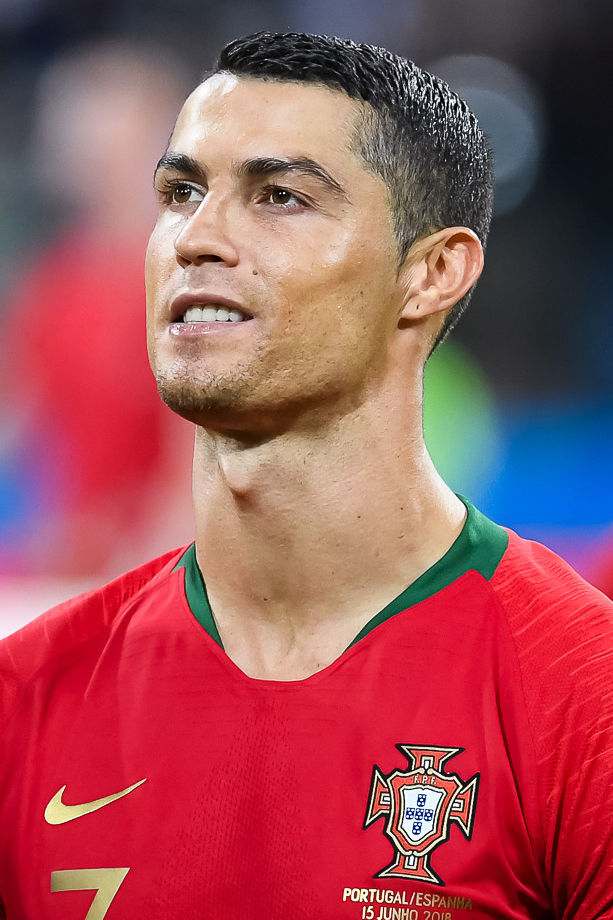
Cristiano Ronaldo enters the World Cup with a question that reaches beyond his own status: how can Portugal use one of the greatest finishers in the history of the game without making their plan too predictable? Sky Sports brought that debate back to the centre of the day by framing this tournament as a possible final major global window for Ronaldo, but also as a management test for Roberto Martinez. FIFA's tournament coverage, meanwhile, places Portugal in the wider competitive picture as a team carrying both talent and expectation.
This is not just a tribute conversation. It goes to the heart of international football. Ronaldo remains a huge name, a leader, a media magnet and a player who still changes how defenders position themselves. But Portugal are no longer a team built only around one icon. Martinez has profiles who can accelerate, combine, press and vary the height of the attack. The challenge is to connect those resources without creating two teams inside one team: the team of the symbol and the team of collective rhythm.
That is why the subject deserves more than nostalgia. Major tournaments punish national sides that confuse reputation with balance. They also punish sides that strip themselves too quickly of personality. Portugal have to find a fine line: respecting what Ronaldo represents while giving the rest of the squad enough air for the football to remain mobile, modern and hard to read.
Ronaldo remains a tactical problem for opponents
Even at this stage of his career, Ronaldo forces opponents to defend differently. His presence in the box attracts centre-backs, fixes attention and changes the distances between goalkeeper, defence and midfield. A team that can cross, attack second balls or accelerate after regaining possession can still benefit from that gravity. The danger comes not only from his runs, but from the fear he creates in decisive areas.
That influence can help Portugal in matches where space disappears. When a national team faces a compact block, the quality of movement and aerial threat can turn sterile possession into genuine pressure. Ronaldo provides that threat. He forces the other team to protect the penalty area seriously, sometimes at the cost of one fewer player being available to step out towards Portugal's midfielders. That is concrete tactical value, not just aura.
But the same gravity can become a trap if Portugal play towards him too early or if team-mates look for his name before reading the situation. Martinez's best Portugal must avoid sentimental automation. Ronaldo has to be a solution, not an obligation. The distinction matters because a World Cup is often decided by details of circulation, timing and patience.
Martinez must manage time, not only status
Roberto Martinez's real work is to manage time. Playing time, momentum, quiet spells, media time and emotional time. With Ronaldo, every decision is visible. A start, a substitution or a more targeted role can immediately be read as a message. The manager still has to make those decisions as a coach, not as the guardian of a museum.
Sky Sports rightly points to that need for management. Portugal may need Ronaldo to establish a threat, but they may also need other profiles to press higher, attack transitions or provide a different kind of width. Martinez must be able to change register without making it look like a collapse of authority. That demands clear communication and an accepted hierarchy inside the dressing room.
So the question is not whether Ronaldo still matters. He does. The question is how he matters. A well-calibrated role can extend his influence and protect the collective. A poorly calibrated role can trap the team inside a permanent debate. In a short tournament, that noise matters almost as much as the duels on the pitch, because it can drain a group before the biggest moments arrive.
Portugal have enough talent to vary the attack
The strength of modern Portugal is that they do not depend on only one type of attack. The squad can combine in the half-spaces, use the flanks, accelerate through mobile players or settle into a more patient sequence. That richness is a privilege, but it also requires a framework. If everything bends towards Ronaldo, the richness becomes decorative. If Ronaldo is integrated into a living structure, it becomes dangerous.
Martinez therefore has to build relationships rather than slogans. Around Ronaldo, Portugal need players who can attack the zones he opens, press when he saves certain efforts, and deliver the ball with the right timing. Without those compensations, Portugal can look brilliant on paper but less fluid against very organised opponents. With them, the team can keep the captain's threat while preserving collective speed.
The same idea applies to the bench. A World Cup rarely rewards eleven fixed names. It rewards squads that can change face without losing identity. Ronaldo can be central to some scenarios and less central to others. What matters is that each scenario is prepared, accepted and understood before tournament pressure turns a football decision into a public controversy.
The emotional dimension can lift or unbalance the side
Ronaldo never plays an ordinary match. His career, his records and his relationship with the Portugal shirt add emotional weight to every appearance. That energy can lift a dressing room. It can also weigh on team-mates if everyone plays as though they must serve a story written in advance. Portugal have to use the emotion without submitting to it.
Great national teams know how to turn symbols into collective strength. They do not ask the other players to disappear behind the icon; they ask the icon to feed the common project. For Ronaldo, that means accepting that the best service to Portugal will not always look the same from one match to the next. Sometimes it will mean starting, occupying the box and drawing defenders. Sometimes it will mean being more targeted, more patient and more surgical.
That maturity will be one of Portugal's central themes. Martinez cannot control all the external noise, but he can control internal coherence. If the squad understands the roles, Ronaldo's presence can become a reference point rather than a source of tension. If the roles stay vague, every choice will feed the storyline, and the football itself may move into the background.
A tournament that will judge Portugal's method
Portugal arrive with status, quality and a captain who continues to draw global attention. That mixture can be a major strength if Martinez turns it into a clear architecture. It can also become fragile if the team keeps moving between nostalgia and modernity without choosing a real method. The debate opened by Sky Sports is therefore less about the end of a career than about coaching: how do you manage a legend inside a team that still has to run, press and adapt?
Portugal's best scenario is not necessarily one in which Ronaldo stamps every match on his own. It is one in which his influence appears at the right moment, in the right role, with enough movement around him that opponents cannot reduce the plan to one man. That is a demanding nuance, but it is exactly the level of nuance a World Cup requires.
Portugal do not need to choose between respect and clarity. They need to combine the two. Ronaldo deserves to be treated as a major player, not as a simple image. That means using him with ambition, but also with measure. If Martinez gets that balance right, the captain's possible final World Cup dance can become more than an individual story: it can become the maturity test of a national side talented enough to aim high without losing its shape.