Premier League
Maresca moves closer to Manchester City: the first test after Guardiola
Manchester City are closing in on Enzo Maresca, according to BBC and Sky Sports. The story says plenty about the transition City want after Guardiola.
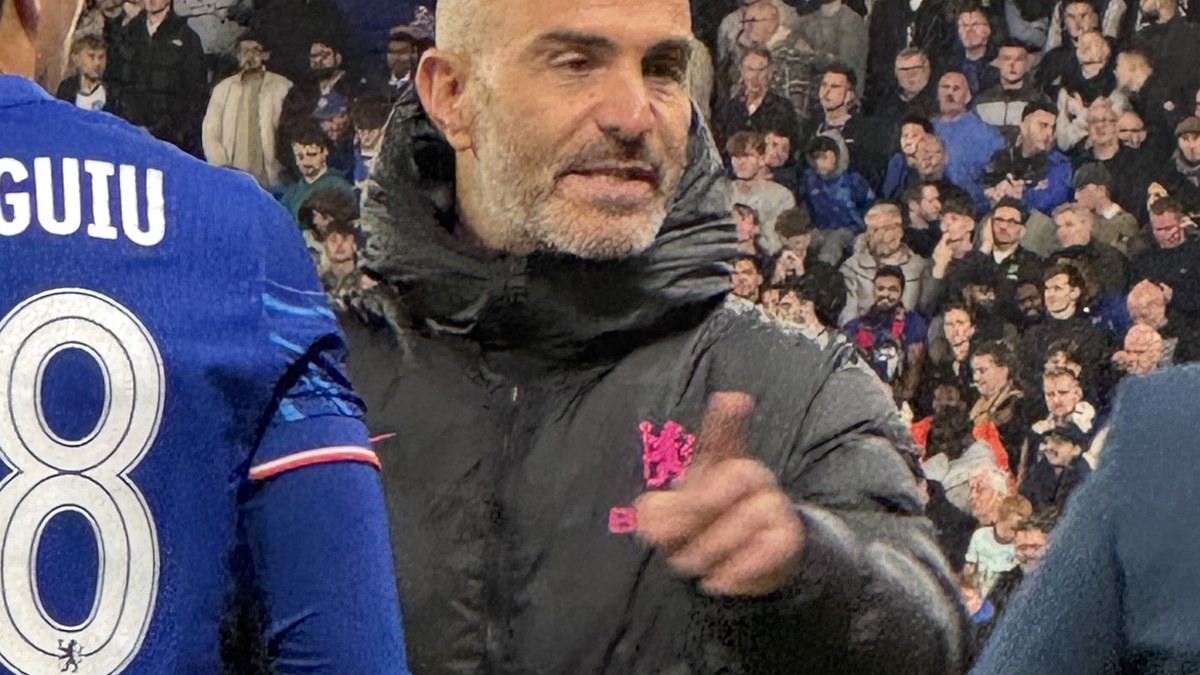
Manchester City are moving towards a major decision for the post-Pep Guardiola era. On Monday 22 June 2026, the BBC reported that the club were closing in on the appointment of Enzo Maresca as manager, with compensation agreed with Chelsea and a three-year deal part of the talks. Sky Sports also framed the story around Maresca's existing connections with City, his understanding of the club's football language and the question of whether that familiarity can become immediate authority in an elite dressing room.
Photo credit: Oscar0123 / Wikimedia Commons / CC BY-SA 4.0. Real Enzo Maresca touchline photo from Chelsea v Gent in 2024, cropped by SokaIQ for editorial publication.
The wording matters. This is not yet a Manchester City club statement announcing the appointment as complete. The British reporting describes a club moving strongly towards the Italian after progress on the necessary conditions. For a football newsroom, that is already a significant moment, because Guardiola's successor is not just another Premier League bench decision. It affects the continuity of an idea of football that has shaped the European game for years.
Maresca would not arrive as an outsider to the ecosystem. His past inside the City structure, his coaching trajectory and his recent experience in the high-pressure environment of Chelsea make the story more than a simple market move. The challenge would be to turn a logical profile into a leader able to impose decisions during a sensitive transition.
Continuity, but not a copy of the old era It will be tempting to present Maresca as the continuity choice. That reading is understandable. He has worked in an environment close to Guardiola's, understands the demands of build-up play, territorial control and coordinated pressing, and Sky Sports is right to note that his links with the club make the deal coherent. But replacing Guardiola cannot simply mean repeating a known tactical grammar.
City are not only looking for a coach who can speak the same football language. They need a manager who can evolve that language without breaking the identity. That is where the potential Maresca appointment becomes interesting. His advantage would be understanding the principles; his risk would be being judged constantly against an impossible comparison with the manager who shaped the previous era.
Continuity can reassure players, executives and supporters. It avoids a brutal rupture in recruitment, technical profiles and possession expectations. But it does not automatically create authority. A new manager has to show quickly what belongs to him: his hierarchy, his management of the calendar, his treatment of younger players, his reading of elite matches and his capacity to correct problems without relying on the memory of the previous cycle.
Guardiola's shadow makes the job different The Manchester City bench is not a normal role in European football. After Guardiola, every tactical decision will become a comparison. A clean build-up sequence will recall the old system. A loss of midfield control will revive questions about the inheritance. A brave rotation call will be judged against what Guardiola might have done. Maresca, if appointed, would therefore need a subtle relationship with that shadow: accepting it without being trapped by it.
That is exactly why his profile makes sense. A coach who knows the house can reduce the adaptation period. He can understand the training standards, the analysis culture, the internal pressure and the recruitment logic more quickly. But knowledge of the club is only a starting point. The Premier League quickly punishes managers who look like they are extending an idea without giving it new energy.
The first battle would be psychological. The squad would have to feel that Maresca is not merely the caretaker of a Guardiola museum. He has to become the face of the present. That means concrete decisions: a clear hierarchy, redistributed responsibility, management of senior leaders and the ability to absorb doubt without the team constantly looking back.
The dressing room will expect immediate answers Manchester City have been built to win now. That is a major difference from projects where a new coach is granted months to install a culture. Guardiola's successor would inherit a squad used to titles, European demands and dominance through the ball. He would have to convince players who already know the details of the highest level and identify uncertainty quickly.
Maresca has arguments. His recent path exposed him to media pressure, the management of numerous talented players and the need to provide a readable structure. But City would ask another question: can he earn the trust of a dressing room that does not only need ideas, but a direction strong enough to hold across a full season?
The answer would not come from a press conference. It would come from the first weeks: clarity of roles, quality of training, management of attacking profiles and balance between control and vertical threat. Post-Guardiola City cannot afford to be merely tidy on the ball. They have to remain dangerous, because opponents will immediately test the transition spaces and the mental strength of the new cycle.
Chelsea remain part of the story The BBC's reporting that compensation has been agreed with Chelsea adds another layer. Maresca would not simply be a former City ecosystem coach returning home. He would also be a manager coming from a direct rival, with experience of a club where exposure and turbulence are part of daily life. That detail could shape how the move is perceived.
For Chelsea, seeing their manager targeted in such a story would confirm the value of the profile while creating another zone of instability. For City, moving on compensation suggests the club want to secure their choice quickly, without allowing the saga to disturb sporting preparation. In modern football, the timing of a managerial appointment can matter almost as much as the name itself.
The situation also underlines how strategic the coaching market has become. Major clubs are no longer only looking for tacticians. They are looking for model-carriers, internal communicators, asset managers and figures able to embody direction for supporters, media and potential signings.
Why the move could define City's summer If Manchester City finalise Maresca's arrival, the message would be clear: the post-Guardiola era is not intended as an identity revolution, but as a controlled transition. The choice would preserve structure while opening a new phase. The danger would be believing that structure alone is enough. At the biggest clubs, successful transitions require personal authority as much as institutional coherence.
That is why the story deserves close attention. The BBC and Sky Sports reporting shows advanced movement, but the official announcement remains the step that would turn momentum into a confirmed fact. Until then, the fairest reading is that City have chosen their preferred direction and are working to close the file quickly.
For Maresca, the opportunity would be enormous. He would not simply be taking over a strong team. He would be taking over an idea, an expectation and a historic pressure. For City, the challenge is to prove that the sporting architecture can survive the departure of its most visible architect. That is why this approach is far bigger than a normal managerial rumour: it could become the first major chapter of a new Manchester City.