World football
Messi becomes the World Cup’s all-time leading scorer
Lionel Messi has moved beyond the men’s World Cup scoring record. The landmark changes Argentina’s tournament story and extends his international legacy.
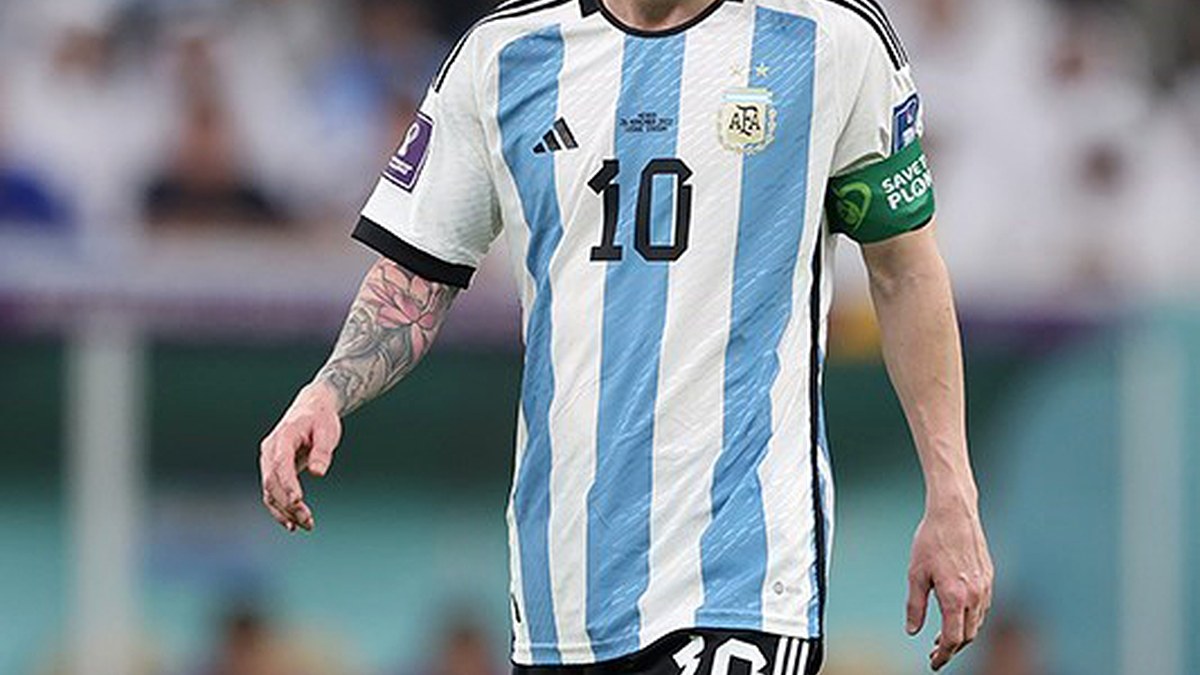
Lionel Messi has added another major line to a career that already seemed full of history. On Monday 22 June 2026, The Guardian and Sky Sports confirmed that the Argentina captain became the leading scorer in men's World Cup history after scoring against Austria. The landmark is symbolic, but it is more than a number: it puts Argentina back at the centre of the tournament and reshapes the story of a player who is still deciding the heaviest moments.
Photo credit: Hossein Zohrevand / Tasnim News Agency / Wikimedia Commons / CC BY 4.0. Real Lionel Messi Argentina photo from the 2022 FIFA World Cup, cropped by SokaIQ for editorial publication.
The news was picked up by major football outlets during the evening. The Guardian described Messi as the new leading scorer in men's World Cup history, while Sky Sports noted that he moved beyond Miroslav Klose with his seventeenth goal in the competition. The BBC also carried video of the moment, underlining its immediate weight in the match flow. For SokaIQ, the editorial point is clear: this is not just a statistical record, but an event that changes the reading of the tournament, Argentina and Messi's place in modern football history.
The timing matters. Messi is no longer being judged only as the genius who once carried Argentina to the top. He is now being watched as a veteran still able to extend his influence in a World Cup that is broader, longer and physically demanding. Every acceleration, drop into space and finish becomes a question: how long can he keep controlling decisive phases at the highest international level?
A record about longevity as much as brilliance The power of this record starts with longevity. Becoming the leading scorer in men's World Cup history is not the reward for one perfect week or one exceptional tournament. It requires goals across editions, in different contexts, with changing teams around you and under pressures that evolve with age. Messi has lived through overwhelming expectation, criticism, lost finals, a world title and now this new stage of permanence.
That is why the comparison with Klose is so interesting. The former Germany striker represented repeat efficiency, penalty-box presence and the ability to score across time. Messi reaches the top by another route. He has never been only a finisher. He builds, attracts defenders, fixes the rhythm, creates and then finishes. His record does not simply say that he scored a lot of goals. It says that a total creator can also dominate the most unforgiving column in football: goals.
That nuance matters historically. Messi has not merely moved past a name in a ranking. He has shifted the idea of a World Cup goalscorer. The record no longer belongs only to the pure centre-forward profile; it belongs to a player who combined vision, dribbling, passing and finishing across almost his entire international career.
Argentina gain a psychological lever For Argentina, the moment can also become a collective trigger. A record of this level changes the energy around a team. It gives team-mates an emotional reference point, supporters another reason to believe and opponents further proof that Messi can still create the defining event even when a match looks tight.
Argentina remain built around a delicate balance. They have to protect Messi without becoming passive around him, use him as an accelerator without reducing their football to waiting for the decisive touch. When he scores in a moment like this, it is tempting to explain everything through individual genius. But Argentina's real task is to turn that genius into structure: coordinated pressing, technical support, runs around him and clear management of weaker phases.
The record brings confidence, but it also creates responsibility. Opponents will close the spaces around Messi even more aggressively. They know Argentina can tilt a game through one touch, one scan, one shooting lane. The rest of the tournament will show whether this team can exploit the fear Messi creates, or whether it risks becoming too predictable when every route bends towards him.
A mark that goes beyond the generation debate Every Messi record revives the generation debate, but this one carries particular force because it belongs to the World Cup. Club and league records shape a career. World Cup records create a shared memory, one understood by audiences who may not follow the same domestic league, calendar or club rivalry.
In that setting, Messi's seventeenth goal becomes a simple historical image: the player who had already won the competition is still adding chapters to it. He is not just protecting his legacy. He is expanding it in football's most universal arena. That matters because many great champions see their final World Cup years become a farewell tour. Messi is still producing moments that force the tournament to reorganise its story around him.
The record also says something about the evolution of international football. Careers last longer, preparation is more scientific, players manage their bodies more carefully and elite stars can extend their usefulness in more targeted roles. Messi does not need to run like he did in his mid-twenties to dominate a sequence. He needs to choose the right zone, the right second and the right angle.
The tournament now sounds different around him The 2026 World Cup already had several strong storylines: heat, the expanded format, shifting continental balances, ambitious African sides, European stars under pressure and outsiders capable of troubling favourites. Messi's record adds an even stronger thread. Every Argentina match now becomes a stage on which history can keep moving.
This kind of moment also changes the media frame. Tactical debates, selection calls and group dynamics remain essential, but they are pulled into a larger question: how far can Messi push this last great global phase? That is not always comfortable for a team, because the attention can become heavy. But Argentina know this territory. They have already learned how to live with constant light around their captain.
For opponents, the challenge is double. They must prepare for Argentina as a complete team, with midfield connections, full-back positioning, cover runs and transitions. But they must also prepare for a player who has just reached a historic summit and can use that energy as fuel. That is where psychology meets tactics.
Why this record will stay in the 2026 story Messi's record will remain because it is immediately readable. Even a casual supporter understands what it means: nobody has scored more in the men's World Cup. But it will also remain because it has arrived in an edition where Argentina are not simply celebrating the past. They are still trying to build a present.
The coming matches will decide whether this moment becomes the start of another Argentine surge or a magnificent individual page. Either way, world football received an image on Monday that went beyond the match itself. Messi took control of a mythical ranking, pushed a symbolic boundary further away and reminded everyone that a great tournament is often defined by the players who can turn one action into collective memory.
For Argentina, the urgent work remains sporting: advance, correct, manage bodies and avoid letting emotion replace the game plan. For Messi, the record is already there. It needs no further validation. It simply adds another piece of evidence to an idea that crosses generations: the very greatest do not just inhabit history; they continue writing it when everyone thinks the story is already complete.