FIFA
Oyarzabal shows why Spain are more than the Yamal story
César Azpilicueta’s BBC Sport column puts Mikel Oyarzabal back at the centre of Spain’s deeper World Cup strength: squad depth.
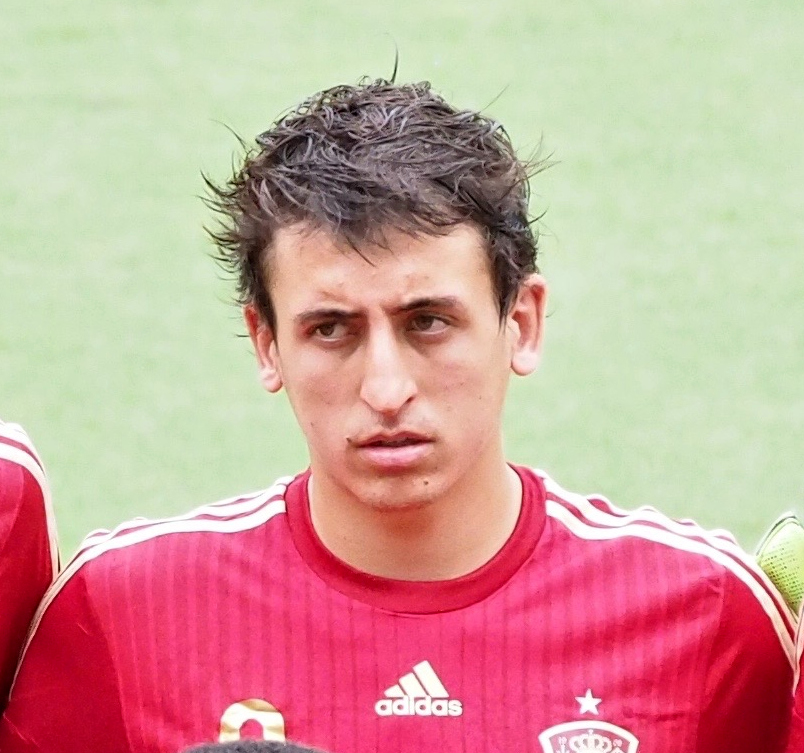
Today, Spain are again being discussed through the brightest names at the World Cup. Lamine Yamal naturally pulls attention, while the build-up around Norway against France has pushed much of the wider conversation towards Erling Haaland and Kylian Mbappé. But César Azpilicueta’s BBC Sport column makes a deeper point: Spain cannot be understood only through their most spectacular player. La Roja look dangerous because Luis de la Fuente has built a broad squad, one already used to sharing responsibility, and because players such as Mikel Oyarzabal can shape a match when it demands more than one flash of individual brilliance.
Oyarzabal does not carry the noise of a superstar centre-forward. His value is quieter: availability, collective reading, composure, attacking flexibility and the ability to stay connected to the plan even when he is not the first name on the team sheet. In a long World Cup, with heat, travel, repeated fixtures and constant physical management, that kind of depth can become as important as the talent everyone sees first. That is why this story deserves more than a passing mention. It explains how a major national team protects its balance when the tournament begins to test bodies, nerves and assumptions.
Oyarzabal shows why Spain are not a one-player story
Spain know what it means to play with a magnetic footballer. Yamal changes defensive shapes, attracts double coverage, stretches opponents and gives the game a spark few players can produce. Yet Azpilicueta’s central point is hard to ignore: no country goes through a World Cup on one prodigy alone. The challenge is not producing one great moment. The challenge is repeating a level, surviving absences, changing the rhythm of a match and finding solutions when the original plan becomes readable.
Oyarzabal is a form of collective insurance in that landscape. He can operate as a mobile centre-forward, a supporting attacker or a flexible reference point depending on what Spain need. He understands spaces between the lines, does not slow the ball by demanding every attack to pass through him, and usually contributes to the first pressing action with discipline. His profile gives De la Fuente a way to alter the attack without breaking the possession identity. Spain can keep circulating, combining and pressing high while adding a player calm enough to arrive in decisive areas.
That nuance matters because La Roja are no longer judged only on technical control. Opponents know how to close central lanes, slow build-up routes and force Spain into long spells of sideways circulation. As a tournament moves forward, games tend to become tighter, margins shrink and substitutes often change the emotional direction of a contest. Oyarzabal is therefore not a secondary option in the weak sense. He is a piece that allows the coach to extend the match without abandoning the principles that brought Spain here.
De la Fuente’s continuity matters more than the star narrative
De la Fuente’s strength has been building a squad in which hierarchy exists but does not freeze everyone else. Spain have shown under him that a major competition can be managed with a wide group rather than a fixed core asked to carry everything. That creates a healthy tension. Starters know they must keep their level. Bench players know they may receive a real task. The team does not shrink to the eleven names announced before kick-off.
Oyarzabal fits that culture perfectly. He does not need the whole side to be built around him to be useful. He can enter a tight match, protect possession with his back to goal, occupy a defender, attack a cross or guide the press. That versatility gives Spain a quiet strategic advantage. It helps reduce the burden on Yamal, supports the midfield when circulation slows, and gives the full-backs different runs to find beyond the first line of pressure.
International football leaves little time for complex automatisms. Patterns have to be clear, repeatable and compatible with several profiles. Oyarzabal suits that requirement because he does not demand a new system. He fits inside the structure. He accepts intermediate zones. He knows when to speed the game up and when to calm it down. That intelligence is less dramatic than a viral dribble, but in matches where emotional control matters as much as technique, it becomes a tournament skill.
The real test is surviving the heavy part of the tournament
This World Cup demands a fresh view of depth. National teams have to handle long travel, difficult conditions and a schedule that punishes every drop in intensity. A side that leans too heavily on one player can look irresistible for a spell, then vulnerable once fatigue or targeted marking begins to bite. Spain are trying to avoid exactly that trap.
Oyarzabal gives De la Fuente an answer to several match states. If an opponent leaves little space, he can offer more patient occupation of the box. If Spain need to defend from the front, he can help the first collective effort. If the game becomes tense, his experience and simplicity can settle the sequence. These are not highlight-reel qualities. They are tournament qualities.
There is also a dressing-room dimension. When a player outside the loudest spotlight becomes decisive, or simply very useful, it reinforces the idea that everyone can matter. Great national teams live on that belief. Substitutes train with more purpose, starters accept rotation more easily, and the group moves through difficult moments with less panic. Oyarzabal carries that message through his role and his history with Spain. He is not there merely to decorate the squad. He is there because he can make the collective stronger when the obvious route is blocked.
A harder Spain for opponents to read
Spain’s opponents will naturally prepare for Yamal. They also have to prepare for the movements of the midfielders, the width of the wingers and the speed with which Spain try to recover the ball after losing it. But if the scouting report stops there, it misses a layer. Oyarzabal adds uncertainty because he can change the height and texture of the attack without changing the overall shape.
He can appear in half-spaces, free a wide lane, connect play or finish a move. That mobility forces centre-backs to make choices: hold the line or step out, protect the box or follow him into a pocket. In a World Cup match, that small hesitation can be enough to shift the pattern of an entire half. Spain’s threat, then, is not just the promise of one brilliant action. It is the blend of talent, structure and bench quality. The genius attracts the light, but the depth stops the team from becoming predictable.
For De la Fuente, Oyarzabal is one of the faces of that depth. He understands low moments, accepts patience and can make the collective sharper without asking the team to revolve around him. That is a rare profile in a tournament where many sides have attacking names but fewer have attacking balance.
Why the story matters now
The 26 June discussion places Spain in a phase where every management detail matters. Debates around Mbappé, Haaland and Yamal are natural because major stars shape the imagination of the World Cup. But Azpilicueta’s reminder on BBC Sport is useful because it brings the conversation back to how a potential champion is actually built. A national team does not win only with its poster image. It wins with connectors, bench solutions, players able to accept changing roles and calm minds when the match refuses to open.
Oyarzabal personifies that second layer. He does not reduce Yamal’s importance; he protects Spain from being read too simply. He does not make La Roja cautious; he gives them another way to insist. If Spain go deep, their tournament will probably be remembered through strong images of their brightest players. Behind those images, however, there will also be the stability of profiles such as Oyarzabal, players able to keep the plan alive when the obvious answer is not enough.
Photo credit: Tam Tam / Wikimedia Commons / CC BY-SA. Real photo of Mikel Oyarzabal with Spain’s youth national team, imported under SokaIQ media for editorial use.